Planting
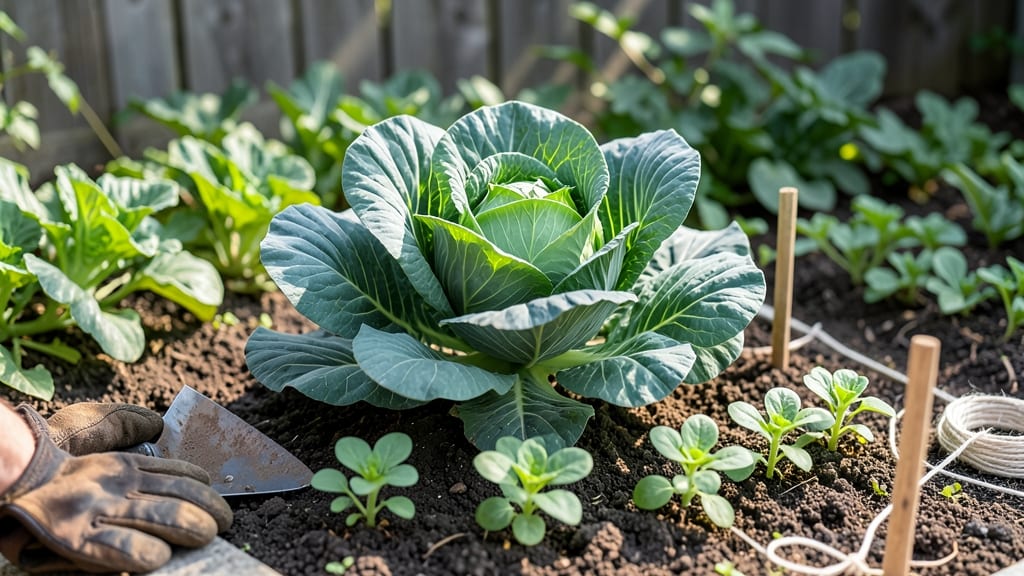
Proper cabbage garden spacing is the difference between plump, market-ready heads and sad, stunted veggies fighting for space.
Struggling to grow cabbage with thick, healthy heads? The secret isn’t just sunlight and water—it’s the spacing between plants. Crowded rows lead to stunted growth, while too much space wastes garden real estate. Here’s how to get it right for maximum yield.
Whether you’re growing 🥬 green, red, or savoy varieties, the right spacing keeps air circulating and prevents disease. Too close, and your cabbage will compete for nutrients; too far, and you’ll leave precious garden real estate empty. Let’s break down the ideal distances for every type.
From 18 inches apart for dwarf varieties to 30 inches for large heads, I’ll show you how to space your cabbage for the biggest, healthiest harvests—plus how to fix common mistakes before they ruin your crop.
Optimal cabbage plant spacing by variety: row distances for perfect heads
Getting the cabbage spacing right is the difference between lush, market-ready heads and sad, stunted plants. Every cabbage variety needs different room to grow—from the compact heads of bok choy to the heavyweight savoy cabbages.
I’ve grown all these varieties, and trust me, the right spacing prevents disease, improves air circulation, and ensures those perfect heads you dream of.
Most gardeners focus on sunlight and water, but plant-to-plant spacing and row distances are just as critical. Crowded cabbages compete for nutrients, leading to small, loose heads and increased pest risks.
Meanwhile, over-spaced plants waste precious garden real estate. Let’s break down the exact measurements for each type, including my best tips for both in-ground and container gardens.
Why spacing matters: Cabbage heads need room to expand. A green cabbage planted too close will develop a misshapen head, while a red cabbage with too much space may not form a tight, vibrant center. Savoy cabbages, with their crinkled leaves, need even more room to prevent leaf damage during harvest.
| Variety | Plant-to-Plant Spacing (in) | Row-to-Row Spacing (in) | Mature Head Size | Best For |
|---|---|---|---|---|
| Green Cabbage (e.g., Golden Acre) | 12-18" | 24-36" | 6-8" | In-ground, containers (5+ gal) |
| Red Cabbage (e.g., Ruby Perfection) | 15-20" | 30-36" | 8-10" | In-ground, raised beds |
| Savoy Cabbage (e.g., Savoy King) | 18-24" | 36-48" | 10-12" | In-ground, large containers (10+ gal) |
| Bok Choy (e.g., Toy Choy) | 6-8" | 12-18" | 4-6" | Containers, small gardens |
| Mini Cabbage (e.g., Miniature Green) | 8-12" | 18-24" | 3-5" | Containers, urban gardens |
For green cabbage varieties, I recommend 12-18 inches between plants and 24-36 inches between rows. This gives the head enough room to expand without competing for sunlight.
If you’re growing red cabbage, increase the spacing to 15-20 inches apart—their larger heads need extra room to develop that deep color and firm texture.
Savoy cabbages are the divas of the cabbage family. Their crinkled leaves and heavy heads require 18-24 inches between plants and 36-48 inches between rows.
I once tried growing them too close, and the heads split open from lack of space. Trust me, you don’t want that mess at harvest time!
If you’re growing bok choy or mini cabbage varieties, you can get away with tighter spacing—6-12 inches apart—since their heads are much smaller. These are perfect for container gardening or small urban plots.
Just make sure your pots are at least 5 gallons for bok choy and 10 gallons for larger mini varieties.
For container gardening, I use 5-gallon buckets for bok choy and 10-gallon grow bags for green or red cabbage. Place one plant per container, and ensure the pot has drainage holes to prevent root rot.
If you’re growing multiple plants in a large container, follow the same spacing guidelines as in-ground planting.
Pro tip: If you’re short on space, consider succession planting. Harvest your first batch of cabbage, then replant the space with a faster-maturing variety like bok choy. This keeps your garden productive all season long without needing extra real estate.
Remember, proper spacing isn’t just about the numbers—it’s about giving your cabbage the best chance to thrive. Well-spaced plants mean better air circulation, which reduces the risk of disease like clubroot, and easier harvesting without damaging neighboring plants. Now grab your measuring tape and get planting!
Common cabbage spacing mistakes and how to fix them
Even experienced gardeners make spacing mistakes with cabbage that lead to disappointing harvests. Overcrowding is the #1 culprit, causing plants to compete for nutrients and sunlight. I’ve seen entire rows of cabbage produce tiny, misshapen heads because they were planted too close—don’t let that happen to your garden!
Another frequent error is uneven row spacing, where plants cluster in some areas and leave gaps elsewhere. This creates weak spots in your garden layout and makes harvesting a nightmare. Let’s fix these issues before your next planting season.
⚠️ Warning: These Spacing Mistakes Are Sabotaging Your Cabbage
Overcrowding (plants <12" apart) causes:
- Stunted growth
- Poor head formation
- Increased disease risk
Solution: Thin seedlings to 18-24" apart for standard varieties. Use a 36" row spacing for proper airflow.
Ignoring soil compaction from foot traffic or heavy tools is another hidden spacing mistake. Compacted soil restricts root growth, making plants struggle even with perfect spacing. Always walk between rows and use boardwalks if your garden gets heavy use.
Yellowing leaves often signal root-bound stress from improper spacing. When roots can’t spread, they compete for moisture and nutrients, leading to nutrient deficiencies. The fix? Space plants according to their mature size—dwarf varieties need 12-18" while standard types require 24".
Poor head formation happens when plants don’t have enough vertical space to develop properly. Tall varieties like Savoy cabbage need 30" spacing to prevent heads from touching. I’ve seen gardeners sacrifice yield by ignoring this simple rule—don’t make the same mistake!
Finally, pest attraction increases with crowded cabbage. Tight spacing creates humid microclimates that attract cabbage moths and aphids. Proper spacing improves airflow, reducing these risks. For organic gardens, 18-24" spacing is ideal to deter pests naturally.