Tools
The ideal garden bed width makes all the difference between a rewarding harvest and a back-breaking chore.
Picture this: you’re reaching midway into a narrow bed, your arm stretched just to pluck a tomato—only to realize you’ve missed the sweet spot. That’s why 30–36 inches is the magic number for most gardeners.
It’s wide enough for a full row of plants but narrow enough to reach from both sides without straining.
Too wide, and you’ll spend more time stepping on soil than tending to your 🌱. Too narrow, and you’ll crowd plants, stunting growth. The right width isn’t just about space—it’s about easy access, better airflow, and less wasted effort.
In this guide, I’ll break down the science behind those dimensions, how to adjust for raised beds or containers, and why your next garden layout should start with a tape measure—not just guesswork.
Optimal garden bed width for easy access and plant health
Designing the perfect garden bed isn’t just about aesthetics—it’s about creating a space that works with your body and your plants. Research shows that the ideal garden bed width of 30–36 inches balances ergonomic reach with plant health, making weeding, harvesting, and maintenance far more manageable.
This range lets you stand comfortably on either side without overreaching, while also allowing enough space for roots to thrive without competition.
Think about it: if your bed is too narrow, you’ll waste space; if it’s too wide, you’ll strain your back and compact the soil from walking on it. The science behind this width comes from studies on human reach (about 24–30 inches comfortably) plus a buffer for plant spacing.
For example, tomatoes and peppers need at least 18 inches of space, while carrots or radishes can fit into tighter gaps—but only if the bed isn’t wider than your arm’s reach.
Here’s the kicker: raised beds and in-ground beds handle width differently. Raised beds often benefit from slightly narrower widths (24–30 inches) to prevent soil compaction from foot traffic, while in-ground beds can stretch to 36 inches if you’re willing to step into them occasionally.
The key is soil health—compacted soil equals stunted roots and lower yields.
Let’s break down the best dimensions for different garden types, so you can design a bed that’s as productive as it is comfortable to tend.
Now that you know the ideal widths, let’s talk about why 30–36 inches is the gold standard for most home gardens. This range ensures you can stand on either side of the bed without overreaching, reducing strain on your back and knees.
It also aligns with the plant spacing needs of most vegetables—think 18–24 inches for tomatoes or 12 inches for leafy greens like kale. If you’re growing vining plants like cucumbers or pole beans, you’ll need to adjust spacing but keep the bed width manageable.
One common mistake? Assuming wider beds mean more plants. In reality, beds over 4 feet wide force you to step on the soil, compacting it and limiting root growth.
For larger gardens, consider creating parallel beds with 12-inch pathways between them. This setup mimics the French intensive method, which maximizes space while keeping beds narrow and accessible.
For raised beds, the narrower width (24–30 inches) also helps with moisture retention and temperature regulation. The sides of raised beds act as insulation, keeping roots warmer in spring and cooler in summer—critical for cool-season crops like broccoli or peas.
Plus, you won’t accidentally step on the soil and disturb young seedlings.
If you’re working with a small space, like a balcony or patio, don’t despair. Narrow beds (12–24 inches) can still be highly productive if you focus on compact varieties like bush beans, dwarf tomatoes, or microgreens.
Just remember to add mulch to retain moisture and suppress weeds, since narrow beds dry out faster.
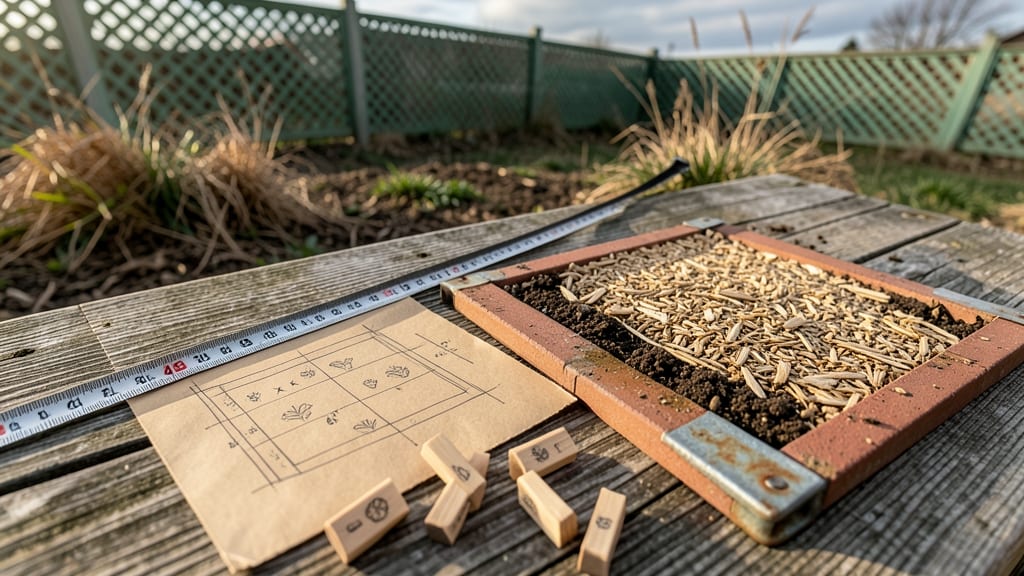
Pro tip: Use string lines or wooden stakes to mark your bed dimensions before planting. This ensures you’re not guessing at plant spacing, which can lead to overcrowding or wasted space.
And if you’re new to gardening, start with a 3-foot-wide bed—it’s forgiving, productive, and won’t overwhelm you with maintenance.
Finally, consider the long-term health of your garden. Beds that are too wide force you to trample the soil, which can lead to soil compaction and poor drainage. Over time, this reduces yields and makes it harder for roots to access nutrients.
By sticking to the 30–36 inch rule, you’ll save time, protect your body, and give your plants the best chance to thrive.
Ready to design your perfect garden bed? Grab a tape measure, sketch out your layout, and remember: the best garden beds are the ones that work for you—and your plants. 🌱
How to calculate garden bed width for your space and plants
Calculating the perfect garden bed width starts with your reach and plant types. Most gardeners find 30–36 inches ideal—wide enough for full rows of tomatoes or peppers but narrow enough to tend from both sides without stepping on soil.
This simple measurement prevents overcrowding and reduces disease risk by improving airflow.
Before grabbing your tape measure, consider your garden layout. If you’re working with raised beds, the same 30–36-inch rule applies, but in-ground beds may need slight adjustments based on plant spacing requirements. For example, vining plants like cucumbers need more width than bushy herbs like basil.
Here’s how to calculate it step-by-step—plus common mistakes to avoid:
- 📏 Measure your reach: Stand with arms extended. The distance from your fingertips to your shoulder should be about 24–30 inches. Add 6–12 inches for plant spacing, landing you at 30–36 inches.
- 🌱 Account for plant types: Vining plants (e.g., pole beans) need 12–18 inches of width per row, while bushy plants (e.g., peppers) fit in 6–12 inches. Multiply by rows to get total width.
- 🚫 Avoid these mistakes: Skipping pathways for beds wider than 36 inches leads to soil compaction. Overcrowding plants reduces yield and airflow, inviting pests and disease.
- 📐 Adjust for containers: If using raised beds or pots, subtract 2–4 inches from the outer edge to account for plant root zones. Example: A 24-inch pot may only have 18 inches of usable width.
- 🌿 Test your layout: Walk through your design. Can you reach the center of the bed without straining? If not, narrow the width or add a pathway.
Let’s say you’re planting two rows of tomatoes (each needing 12 inches) and one row of basil (6 inches). Your total width would be 30 inches—perfect for easy access. For vegetable gardens, this width also allows room for mulch and irrigation lines without crowding.
Pro tip: Use string lines or stakes to mark your bed width before digging. This ensures straight edges and precise spacing, especially for long, narrow beds. If your space is limited, consider vertical gardening or multi-level beds to maximize yield without sacrificing accessibility.
Remember, the goal is balance: enough width for productivity, but not so much that maintenance becomes a chore. With these calculations, you’ll design a bed that’s as efficient as it is enjoyable to tend—no more stretching or guessing! 🌱