Pruning
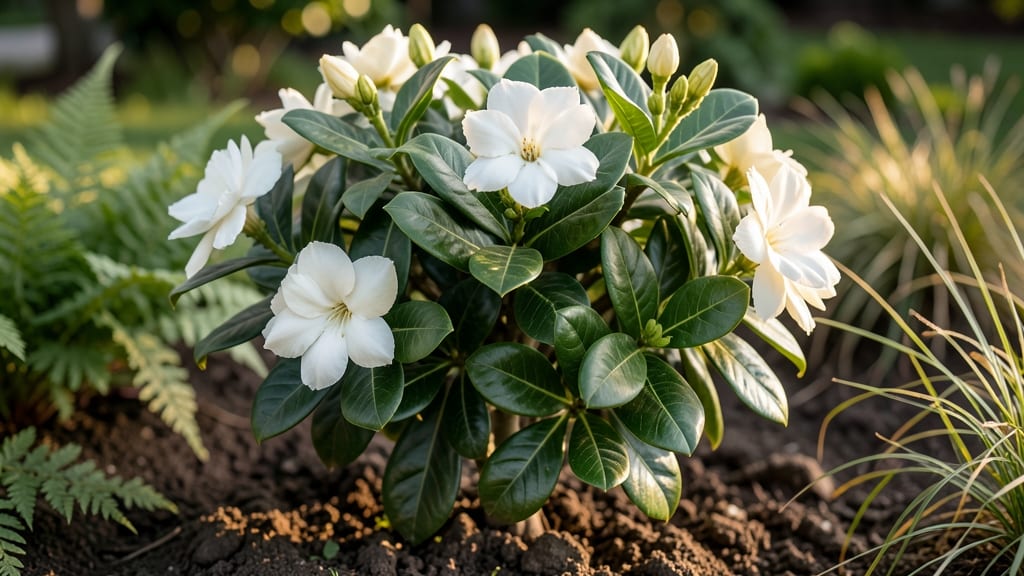
A gardenia bush can grow anywhere from 3 to 6 feet tall, but its height depends on pruning, sunlight, and the variety you choose 🌸.
Struggling to control your gardenia bush’s wild growth? Whether you dream of a neatly trimmed compact shrub or a towering statement plant, understanding how to influence gardenia bush height is the key to achieving your vision.
Most gardenias start small—just 1 to 2 feet in their first year—but with the right care, they can reach 6 feet or more by maturity. The difference between a shrub and a small tree often comes down to pruning timing and technique.
In this guide, I’ll break down how sunlight, soil, and pruning shape your gardenia’s growth, plus the best methods to keep it at 3 feet or let it soar to 6 feet—without sacrificing those fragrant blooms.

Natural factors that determine gardenia bush height and growth patterns
Your gardenia bush’s height isn’t just luck—it’s a mix of natural factors you can control. From the sunlight exposure it receives to the soil composition beneath its roots, each element plays a role in whether your gardenia grows as a compact shrub or a towering statement plant.
Understanding these factors helps you shape your gardenia’s growth pattern intentionally.
First, let’s talk about sunlight exposure, which directly influences height. Gardenias thrive in partial shade—typically 3-6 hours of morning sun followed by afternoon shade.
Too much direct sun can cause stunted growth or even leaf scorch, while too little light leads to leggy, weak stems that struggle to support their own weight. Finding that sweet spot is key to encouraging balanced, healthy growth.
Next, consider the soil type and pH levels. Gardenias are acid-loving plants, preferring a pH range of 5.0-6.5. If your soil is too alkaline (high pH), nutrients like iron and manganese become unavailable, leading to yellowing leaves and reduced vigor.
Amending your soil with peat moss or sulfur can help maintain the ideal pH, promoting stronger root development and taller, healthier growth.
Watering habits also play a critical role in determining your gardenia’s height. These plants love consistent moisture but hate soggy roots. Overwatering can lead to root rot, which weakens the plant and stunts its growth, while underwatering causes stress that results in shorter, woody stems.
Aim for deep watering 2-3 times per week, ensuring the top 2-3 inches of soil stay moist but not waterlogged.
The gardenia variety you choose is another major factor. For example, Gardenia jasminoides typically reaches 4-6 feet tall at maturity, while dwarf varieties like Gardenia augusta 'Radicans' stay under 2-3 feet.
Even within the same species, growth habits can vary. If you’re aiming for a compact bush, select a dwarf cultivar, while larger varieties will naturally grow taller unless pruned.
Seasonal growth cycles also affect your gardenia’s height over time. These plants experience rapid growth in spring and early summer, while growth slows significantly in fall and winter as they enter dormancy.
If you prune at the wrong time—like during dormancy—you risk delaying spring growth or even damaging new buds. Timing is everything, especially if you’re aiming for a specific height goal.
Another often-overlooked factor is nutrient availability. Gardenias need a balanced fertilizer with equal parts nitrogen, phosphorus, and potassium (e.g., 10-10-10) to support healthy growth. Too much nitrogen can lead to leafy but leggy growth, while too little phosphorus can stunt root development.
Feed your gardenia every 4-6 weeks during the growing season to encourage strong, upright growth.
Finally, consider the root environment. Gardenias have shallow but extensive root systems, so they benefit from well-draining, aerated soil. Compacted soil restricts root growth, which can limit the plant’s ability to reach its full height potential.
Amending your soil with compost or organic matter improves drainage and aeration, helping your gardenia thrive and grow to its desired height.
By mastering these natural factors, you’ll gain full control over your gardenia’s height and growth pattern. Whether you’re growing a compact bush for a small garden or a towering specimen as a focal point, understanding these elements is your first step to success.
Start with the right variety, provide ideal growing conditions, and watch your gardenia flourish exactly as you envision it.
Pruning techniques to control gardenia bush height: step-by-step guide
Pruning is the most effective way to shape your gardenia bush into a compact shrub (under 3 feet) or a towering statement plant (6+ feet). The key lies in timing, technique, and knowing which cuts to make—or avoid—to encourage healthy growth while maintaining those fragrant blooms 🌸.
For most gardenia varieties, the best time to prune is right after flowering, typically in late spring or early summer. This timing allows the plant to recover before winter dormancy and ensures new growth appears in time for next year’s blooms.
If you’re aiming for a larger, tree-like gardenia, you’ll prune less aggressively, while compact shapes require more frequent, strategic cuts.
Step-by-Step Pruning Guide
-
Step 1: Gather Tools
- Sharp bypass pruners (for clean cuts)
- Sterilized hand pruners (for small branches)
- Garden gloves (to protect from thorns)
- Disinfectant (e.g., rubbing alcohol)
-
Step 2: Assess Growth Goals
- For compact growth (3 ft): Prune 1/3 of new growth annually.
- For tall growth (6+ ft): Prune only to remove dead or crossing branches.
-
Step 3: Sterilize Tools
Wipe pruners with rubbing alcohol to prevent disease spread between cuts.
-
Step 4: Cut at the Right Angle
- Make cuts just above a leaf node at a 45-degree angle.
- Avoid cutting into old wood (brown stems), as gardenias struggle to regrow from there.
-
Step 5: Shape for Compact Growth
For a bushy, compact look, trim outer branches to encourage inward growth. Focus on upper third of the plant to maintain a rounded shape.
-
Step 6: Encourage Tall Growth
To promote height (6+ ft), prune only lower branches to open the center. Avoid cutting top growth unless removing dead wood.
-
Step 7: Post-Pruning Care
- Apply mulch around the base to retain moisture.
- Water deeply (1-2 gallons) to reduce stress.
- Avoid fertilizing for 4-6 weeks to let cuts heal.
After pruning, your gardenia may look sparse for a few weeks as it redirects energy to new growth. To minimize stress, avoid pruning during hot summer months or winter dormancy.
Instead, focus on late spring when the plant is actively growing but hasn’t yet set buds for the next flowering cycle ✂️.
For dwarf varieties like Gardenia jasminoides ‘Radicans,’ prune more frequently—every 3-4 months—to maintain their 2-3 foot height. In contrast, standard varieties like Gardenia augusta can handle annual pruning to reach their full 6-foot potential. Always step back and visualize the final shape before making cuts!
Pro tip: If your gardenia blooms heavily on old wood, prune lightly to preserve next year’s flowers. Heavy pruning can reduce blooms, so balance height control with flowering goals. With patience and precision, you’ll achieve the perfect gardenia height for your space 🌿.