
Fertilization
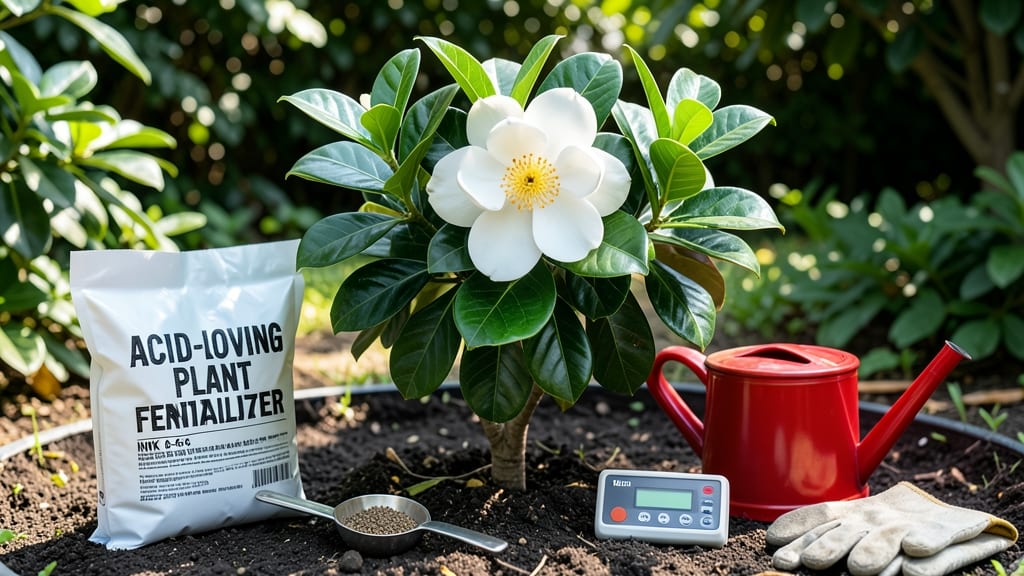
A gardenia fertilizer ratio of 10-10-10 or 8-3-9 unlocks those dreamy, fragrant blooms your plant is begging for.
You’ve probably fed your 🌸 gardenia with generic fertilizer, only to watch it throw out leaves instead of flowers. That’s because gardenias aren’t like your average shrub—they demand a precise balance of nitrogen, phosphorus, and potassium to reward you with those intoxicating blooms.
Too much nitrogen? Lush foliage, zero flowers. Too little phosphorus? Buds drop before they open. The key is feeding them just enough phosphorus to encourage blooms while keeping potassium levels steady for root health—without overdoing it in zones like 6a where summers can get intense.
In this guide, I’ll break down the exact ratios to use, when to apply them (hint: spring and summer are critical), and how to spot the signs of over- or under-fertilizing so you never waste another bag of plant food.
Optimal N-P-K ratio for gardenia blooms: the science behind the fragrance
Your gardenia’s fragrant blooms are directly tied to its N-P-K ratio—get this wrong, and you’ll get leafy greenery instead of those coveted white flowers. Gardenias thrive on a balanced yet phosphorus-rich formula, but understanding the science behind nitrogen, phosphorus, and potassium is key to unlocking year-round fragrance.
The magic ratio for gardenias is 8-3-9 or 10-10-10, but timing and application matter just as much. Too much nitrogen (N) pushes leaf growth at the expense of blooms, while phosphorus (P) and potassium (K) fuel flower production and root strength.
Let’s break down how to use these numbers to your advantage.
⚠️ CRITICAL: Gardenias are acid-loving plants (pH 5.0-6.5). Pair your fertilizer with sulfur or peat moss to maintain acidic soil—alkaline conditions lock out nutrients, even with the right ratio.
| Nutrient | Role in Gardenia Growth | Ideal Ratio Range | Seasonal Focus |
|---|---|---|---|
| Nitrogen (N) | Leafy growth, chlorophyll production | Low (5-10%) | Spring (new growth) |
| Phosphorus (P) | Flower production, root development | Moderate-High (8-15%) | Spring-Summer (blooming season) |
| Potassium (K) | Stress resistance, disease prevention | Moderate (8-12%) | Summer-Fall (stress periods) |
| Micronutrients | Iron, magnesium, zinc (for fragrance) | Trace amounts | Year-round (via chelated fertilizers) |
Phosphorus (P) is the bloom booster—aim for 8-15% P in your fertilizer to encourage abundant, fragrant flowers. A 10-10-10 formula is a safe starting point, but switch to 8-3-9 during peak blooming season (spring/summer) to reduce nitrogen overload, which can stunt flowers.
Potassium (K) strengthens your gardenia’s disease resistance and helps it recover from stress (like heatwaves or pests). Look for fertilizers with 8-12% K, especially in late summer when blooms start fading. Potassium deficiency shows as weak stems or yellowing leaves between veins.
Reading fertilizer labels can be confusing—focus on the first three numbers (N-P-K) and the fourth number (calcium/magnesium). For gardenias, avoid fertilizers with high nitrogen first (e.g., 30-10-10) unless you’re growing for foliage. Instead, opt for balanced or bloom-specific formulas like 12-6-6 or 10-20-20.
Seasonal adjustments are critical: Feed lightly in spring (to encourage new growth), increase phosphorus in summer (for blooms), and reduce feeding in fall/winter (dormancy period). Over-fertilizing in winter can lead to root burn and stunted growth when spring arrives.
Watch for signs of imbalance: Yellow leaves? Too much nitrogen. No blooms? Phosphorus deficiency. Brown leaf edges? Potassium or calcium shortage. Adjust your ratio and monitor for 4-6 weeks before changing again—gardenia roots are sensitive to sudden shifts.
Pro tip: Slow-release fertilizers (like Osmoote or Espoma Gardenia tone) are ideal—they feed your plant steadily without risk of nutrient burn. For organic options, use bone meal (high P) and kelp meal (high K) in spring, then switch to compost tea in summer for micronutrients.
Remember, gardenias reward patience. Stick to the 8-3-9 ratio in summer, feed every 4-6 weeks, and maintain acidic soil—your fragrant blooms will thank you. 🌸
Step-by-step guide: applying the right fertilizer ratio for gardenias
Getting your gardenia’s fertilizer ratio right is like hitting the sweet spot on a musical instrument—too much or too little, and you lose that beautiful harmony of blooms. Gardenias thrive on a balanced 10-10-10 or 8-3-9 ratio, but applying it incorrectly can lead to root burn or stunted growth.
The key is precision: timing, dilution, and consistency.
Whether you’re using synthetic granules or organic compost tea, the process starts with understanding your plant’s needs. Gardenias need phosphorus-rich food to produce flowers, but too much nitrogen will send your plant into a leafy frenzy instead of blooming.
Let’s break it down step by step to ensure your gardenia gets exactly what it needs—no more, no less.
How to Apply the Perfect Gardenia Fertilizer Ratio
- 1 Choose the Right Fertilizer: Opt for a balanced 10-10-10 or 8-3-9 fertilizer labeled for acid-loving plants. For organic options, mix compost with bone meal (high in phosphorus).
- 2 Dilute Liquid Fertilizers: If using a liquid fertilizer, mix it to half-strength (e.g., ½ tsp per gallon of water). Over-concentration causes root burn, which kills blooms faster than you can say "gardenia."
- 3 Apply in Early Spring: Start feeding when you see new growth (around April-May in USDA Zone 6a). Sprinkle 1 tbsp of granules around the root zone, 3-4 inches from the stem.
- 4 Feed Every 4-6 Weeks: During summer blooming season, apply fertilizer every 4-6 weeks. Reduce to every 8 weeks in late summer to avoid over-fertilization, which stresses the plant.
- 5 Avoid Fall/Winter Feeding: Stop fertilizing by September to let your gardenia rest. Resuming in spring ensures healthy blooms for next season.
- 6 Water Deeply After Feeding: Always water thoroughly after applying fertilizer to help nutrients reach the root zone. Avoid wetting the leaves to prevent fungal diseases.
- 7 Monitor for Signs of Stress: Yellow leaves? Too much nitrogen. Dropping buds? Phosphorus deficiency. Adjust your ratio or feeding schedule accordingly—your gardenia will thank you with fragrant blooms all season.
One of the biggest mistakes gardeners make is over-fertilizing in hopes of bigger blooms. But too much fertilizer—especially high-nitrogen varieties—can burn roots and leave your gardenia struggling to produce flowers. Always follow the "less is more" rule: start with half the recommended dose and increase gradually if needed.
For potted gardenias, use a slow-release fertilizer like osmocote pellets to avoid nutrient spikes. These pellets dissolve over time, giving your plant a steady supply of N-P-K without the risk of root burn.
Pair this with a monthly dose of fish emulsion in spring to boost phosphorus for blooming.
Remember, gardenias are acid-loving plants, so always pair your fertilizer with a soil pH test. Aim for a pH of 5.0-6.5. If your soil is too alkaline, your plant won’t absorb nutrients efficiently, no matter how perfect your fertilizer ratio is.
Adjust with sulfur or peat moss if needed.
With this step-by-step approach, your gardenia will reward you with abundant, fragrant blooms from spring to fall. The secret? Patience