Size
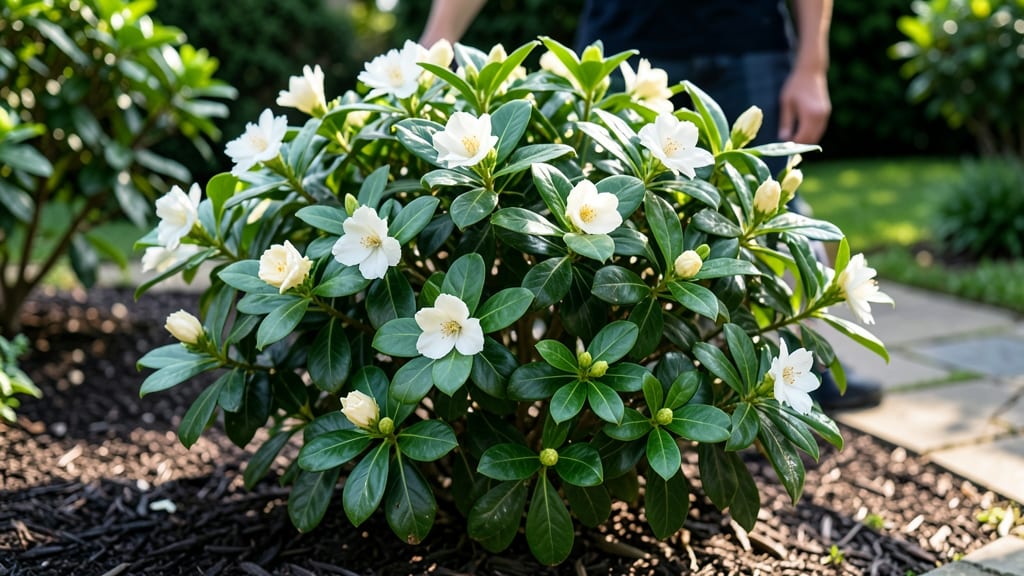
A gardenia shrub’s size determines everything from pruning strategy to patio placement, and knowing the exact range for your variety is the key to keeping it thriving.
If you’ve ever wondered whether your gardenia shrub will tower over your patio or stay neatly contained, knowing its mature size is key—especially before pruning season begins. The wrong cut can stifle growth, while the right one ensures lush blooms and a perfect fit in your landscape.
Most gardenias reach between 3 and 6 feet at maturity, but dwarf varieties stay under 3 feet, making them ideal for small gardens or containers. Standard types like Gardenia jasminoides can stretch taller, while semi-dwarf hybrids offer a middle ground.
Understanding these ranges helps you plan spacing, sunlight exposure, and even how much to trim back each year.
Below, I break down the height and spread of the most popular varieties, share pruning tips tailored to each size, and reveal how sunlight, soil, and fertilizing can either encourage or stunt growth.
Whether you’re dealing with a compact 2-foot bush or a 6-foot beauty, you’ll learn how to manage its size for years of fragrant blooms.

Gardenia shrub size by variety: mature height and spread guides
Choosing the right gardenia variety can make all the difference in your garden’s layout. Some gardenias grow tall and statuesque, while others stay compact—perfect for small spaces or container gardening. Understanding mature height and spread helps you plan pruning, spacing, and even companion planting for optimal blooms.
For example, a 6-foot gardenia needs more room than a 2-foot dwarf variety, but both thrive with proper care.
Most gardenias belong to the Gardenia jasminoides species, but varieties like Gardenia augusta and Gardenia radicans offer unique sizes and growth habits. Whether you’re designing a foundation planting or a container garden, knowing these dimensions ensures your gardenia fits seamlessly.
Below, I’ll break down the most popular varieties, their typical mature sizes, and how to manage their growth for healthy, blooming shrubs.
If you’re working with limited space, dwarf varieties like 'Mystery' or 'Prosperity' are ideal—they top out at just 2–3 feet and spread only 2–3 feet. These are perfect for container gardening or placing near patios where you want to avoid overcrowding.
On the other hand, varieties like 'Fortuniana' or Gardenia augusta can reach 10–15 feet, making them better suited for large landscapes or as focal points in tropical gardens.
For hedges or foundation plantings, the 'Kleim's Hardy' variety is a top choice. Its 4–6 foot height and rounded shape create a neat, uniform look when pruned regularly. Meanwhile, trailing varieties like 'Radicans' or 'Summer Snow'
How to prune gardenias based on their natural size and growth patterns
Pruning gardenias correctly keeps them healthy and blooming while respecting their natural growth patterns. Dwarf varieties like 'Radicans' need gentle trims, while standard types like 'Gardenia jasminoides' can handle more aggressive shaping.
The key is understanding how size affects timing and technique—over-pruning can stress small shrubs, while under-pruning lets larger ones become unruly.
Your gardenia’s mature size determines pruning frequency and intensity. Dwarf gardenias (2–3 feet tall) only need light shaping once a year, while standard varieties (4–6 feet) may require annual pruning to maintain their shape. Always prune after blooming or in late winter to avoid cutting off next year’s flower buds.
- 1 Assess your gardenia’s size—dwarf (2–3 ft), semi-dwarf (3–4 ft), or standard (4–6 ft). Use this to determine pruning intensity.
- 2 Prune after blooming (late spring/early summer) for standard gardenias to encourage new growth. For dwarf varieties, prune lightly in late winter to shape without stressing the plant.
- 3 Use sharp, clean pruners—bypass pruners work best for smaller branches, while loppers handle thicker stems in standard gardenias. Always sterilize tools with rubbing alcohol to prevent disease.
- 4 Trim selectively: Remove dead or crossing branches first. For dwarf gardenias, limit cuts to 10–15% of the plant. Standard gardenias can tolerate 20–30% pruning but avoid cutting into old wood.
- 5 Shape for airflow—open the center of the shrub to reduce humidity and fungal risks. Dwarf gardenias benefit from light thinning, while standard types may need structured pruning to maintain a rounded shape.
For dwarf gardenias, focus on light maintenance pruning—just enough to remove dead growth and encourage a bushier shape. Standard gardenias, however, thrive with structured pruning every 1–2 years to control their height and width.
Always step back after pruning to check for balance—uneven cuts can lead to lopsided growth.
After pruning, apply a balanced, acid-loving fertilizer (like 8-4-8) to help your gardenia recover. Dwarf varieties may need less fertilizer, while larger shrubs benefit from a mid-season boost. Water deeply after pruning to reduce stress, especially in hotter climates where gardenias thrive.
Remember, pruning frequency depends on your gardenia’s size and growth rate. Dwarf gardenias might only need pruning every 2–3 years, while standard types may require annual attention. Observe your plant’s response—if it’s overgrown but not blooming, it’s time for a more aggressive trim.