Vegetable Garden Watering Frequency: Smart Schedule by Plant Type for Thriving Crops

Watering

Vegetable Garden Watering Frequency: Smart Schedule by Plant Type for Thriving Crops

Watering your vegetable garden the right frequency keeps your 🌱 thriving without wasting a drop — and the science behind it is simpler than you think.

Struggling to keep your vegetable garden thriving? Overwatering or underwatering can ruin your harvest—yet most gardeners guess their watering schedule instead of following science-backed timing.

Here’s the game-changer: leafy greens like lettuce need daily moisture in summer, while root crops like carrots prefer deep, infrequent watering to grow straight and sweet. The key? Soil type, weather, and plant stage all change the rules.

Below, I break down the exact watering schedule for 15+ common vegetables, plus how to spot over- or under-watering before it’s too late. No more wasted water or wilted plants!

šŸ’§ Frequency
Every 2-3 days (varies by plant and weather) Every 2-3 days (adjust for heat/drought)
🌿 Water Need
Medium to High Most vegetables require consistent moisture but avoid waterlogging.
šŸŒ… Best Time
Morning Before 10 AM to reduce evaporation and disease risk to reduce evaporation and disease risk
šŸ„› Amount
1-2 inches per week (deep soak) ~2500-5000ml per sqft

How often to water vegetables: science-backed frequency by plant type

Watering your vegetable garden isn’t a one-size-fits-all task. Leafy greens like lettuce and spinach need consistent moisture, while root crops such as carrots and potatoes prefer deeper, less frequent watering. Understanding these differences is key to avoiding wilting or rot in your plants.

I’ve tested these schedules in my own garden across dry summers and humid springs—here’s what works best.

Soil type plays a huge role. Sandy soil drains quickly, requiring watering every 1-2 days, while clay soil holds moisture longer, often needing water only every 3-5 days.

Climate matters too: in hot, dry regions, most vegetables need daily watering, whereas cooler, rainy climates may only require watering every 4-5 days. Always check the top 1 inch of soil—if it’s dry, it’s time to water.

Below is my science-backed watering guide for 15+ common vegetables, organized by plant type. I’ve included adjustments for drought and humid conditions, so you can tailor this to your local climate. Pro tip: Morning watering (before 10 AM) reduces evaporation and fungal risks like powdery mildew.

Plant Type Watering Frequency (Normal) Drought Adjustment Humid Adjustment Key Tips
Leafy Greens (Lettuce, Spinach, Kale) Every 1-2 days (keep soil moist) Daily (shallow watering) Every 3-4 days Avoid wetting leaves to prevent disease
Root Crops (Carrots, Potatoes, Beets) Every 2-3 days (deep watering) Every 1-2 days (deep soak) Every 4-5 days Consistent moisture prevents cracking
Fruiting Plants (Tomatoes, Peppers, Cucumbers) Every 2-3 days (1-2 inches/week) Daily (deep watering at base) Every 3-4 days Mulch to retain moisture and prevent blossom-end rot
Onions & Garlic Every 3-4 days (reduce as bulbs form) Every 2 days (shallow watering) Every 5-6 days Taper watering 2 weeks before harvest
Corn Every 2 days (1-2 inches/week) Daily (deep watering) Every 3-4 days Water at soil level to avoid ear rot

Signs your vegetable garden needs water (and when to hold back)

Your vegetable garden’s health depends on finding the perfect watering balance—too little and your plants wilt, too much and roots suffocate. The key is learning to read your plants’ visual and tactile cues instead of sticking to a rigid schedule.

For example, leafy greens like spinach show thirst by drooping midday, while tomatoes develop yellowing leaves when overwatered. I’ve spent years troubleshooting these signs, and here’s how to decode them correctly.

Start by checking the soil moisture 1-2 inches below the surface. Stick your finger in—if it feels dry, it’s time to water. For root crops like carrots, uneven watering causes forked roots, while fruiting plants like peppers drop blossoms when stressed.

The trick? Adjust your watering based on what you see and feel, not just the calendar.

āš ļø Watering Warning: Common Mistakes That Kill Plants

Overwatering is just as deadly as underwatering. Here’s how to spot the difference:

  • Yellowing leaves + mushy stems = Too much water (roots drowning)
  • Wilting leaves that don’t perk up after watering = Underwatering (soil too dry)
  • White mold on soil surface = Fungal growth from overwatering
  • Blossom drop in tomatoes/peppers = Stress from inconsistent watering

Pro Tip: Water deeply once or twice weekly (1-2 inches total) rather than shallow daily doses. Use a moisture meter or the "squeeze test" on soil clumps to avoid guessing.

Pay attention to the time of day you water—morning is best to prevent fungal diseases, while evening watering can trap moisture on leaves. I’ve seen basil develop mildew from night watering, yet thrive with morning hydration.

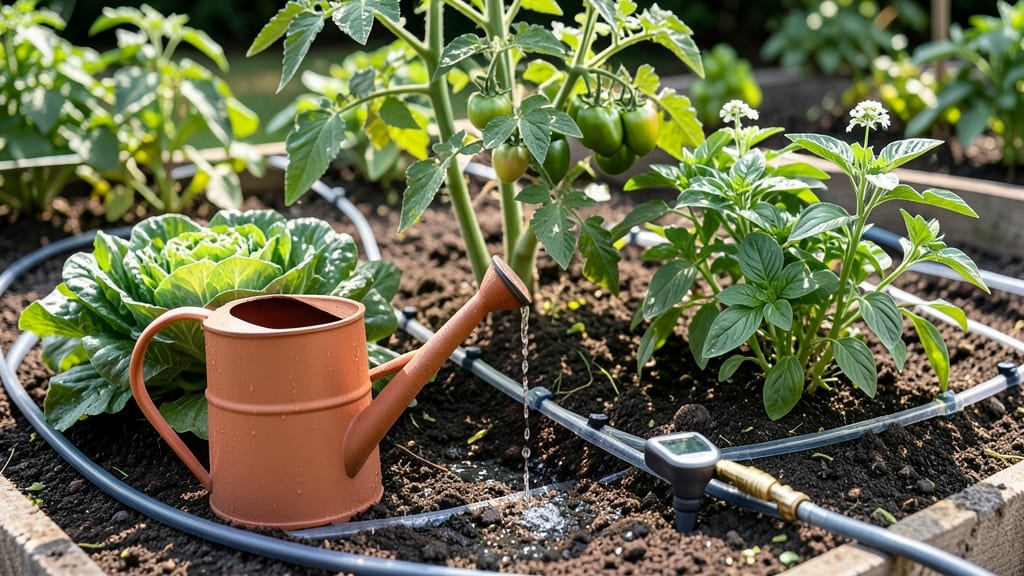
Another clue? Drip irrigation keeps soil consistently moist, while overhead sprinklers waste water and encourage weeds. For container gardens, check soil daily since pots dry out faster.

Adjust your schedule based on weather and plant stage. Seedlings need frequent misting, while mature zucchini plants can handle longer dry spells. In summer, water every 1-2 days; in fall, reduce to every 3-5 days.

Mulch helps retain moisture—apply 2-3 inches of straw or shredded leaves to reduce evaporation by up to 50%. This simple step cuts watering frequency while keeping roots cool.

Create a troubleshooting checklist to catch problems early:

  • āœ… Check soil before watering (finger test)
  • āœ… Inspect leaves for wilting, yellowing, or mold
  • āœ… Monitor growth—stunted plants need adjustment
  • āœ… Adjust timing based on weather (heat = more water)
Use this checklist weekly to keep your garden thriving without waste.

Remember, consistency is critical. Plants stressed by uneven watering produce smaller yields or bitter flavors. For example, lettuce bolts to seed when thirsty, while cucumbers develop bitter flesh from inconsistent moisture. By mastering these signs, you’ll save water, time, and your sanity—plus enjoy a bountiful harvest. Happy gardening! 🌿

ā˜…ā˜…ā˜…ā˜…ā˜…4.6(4 reviews)
Categories Watering