Picking
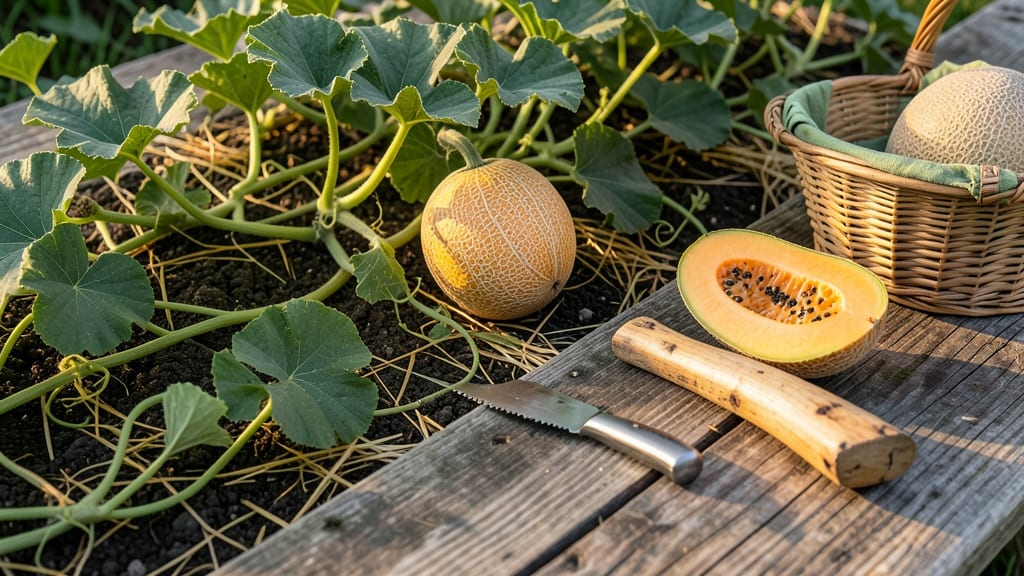
Harvesting cantaloupe from your garden at the right time means the difference between a sweet, juicy melon 🍈 and a bland or mushy disappointment.
Picking too early means bland, underripe fruit—but waiting too long can turn your harvest into a mealy mess. The key is learning the three telltale signs that your cantaloupe is ready for harvest, so you never miss that perfect window between July and August.
Start by checking the rind near the stem—it should shift from white to a creamy tan color. Then, give the fruit a gentle twist: if it separates easily from the vine, that’s your cue. Finally, take a sniff near the stem; a strong, sweet aroma means peak ripeness.
Below, I’ll walk you through these visual cues, plus how to test for ripeness beyond just looks—so you can enjoy cantaloupe at its sweetest every time.


3 Visual signs your cantaloupe is ready for harvest
There's nothing worse than slicing into a cantaloupe only to find it's either rock-hard or mushy inside. The good news? With just a few simple visual checks, you can tell exactly when your cantaloupe is at its peak ripeness.
I've learned these tricks over years of growing my own melons, and they'll help you avoid those disappointing harvests. The key is focusing on three specific areas: the rind color, the stem attachment, and the beard—that fuzzy patch near the stem.
Cantaloupes don't all ripen at the same time, so it's important to check your fruits regularly once they've reached their mature size. Most varieties take between 70-90 days from planting to harvest, but these visual cues will give you the final confirmation.
Remember, the perfect cantaloupe should give just slightly when pressed near the stem—like a ripe avocado. Let's break down exactly what to look for in the field.
Rind Color Change
Look for a cream or tan blush near the stem—this replaces the white or green color you saw earlier. The rest of the melon may still have its net pattern, but that creamy area is your first sign!
Stem Separation Test
Gently twist the cantaloupe near its stem attachment. If it slips free with slight resistance, it's ready! If it stays firmly attached, wait 1-2 days. Never pull hard—this can damage the vine.
The 'Beard' Test
That fuzzy patch near the stem (called the beard) should be easily removable. If it pulls off with minimal effort, your cantaloupe is prime for picking. A stubborn beard means more time on the vine.
Pro tip: Check your cantaloupes in the morning when temperatures are cooler. The rind color change is most noticeable then, and the fruit will be firmer, making it easier to assess ripeness.
I like to use a small notebook to track which melons show these signs first—this helps me predict when the rest will be ready.
One common mistake I see is focusing only on the fruit's overall color. While the net pattern should be fully developed, the real ripeness indicator is that cream blush near the stem.
I've harvested cantaloupes that looked perfectly colored but tasted bland because I ignored this key detail. Always prioritize the stem area when checking ripeness.
If you're growing cantaloupes in containers, these visual signs still apply, but you'll need to check more frequently since potted plants can ripen faster. The same rules go for trellised varieties—just be extra gentle when testing the stem separation, as the vines might be more delicate.
I've found that container-grown cantaloupes often ripen about 3-5 days earlier than their in-ground counterparts.
Remember that cantaloupes won't continue ripening once picked, so timing is everything. If you see all three signs but the fruit still feels firm, give it 24 more hours before harvesting. The last thing you want is a melon that's overripe by the time you get to it.
I usually harvest in the morning and let them sit in a cool, shady spot for a day to fully develop their sweetness before eating.
For gardeners in hot climates, cantaloupes may ripen faster due to higher temperatures. In these areas, check your fruits every 2-3 days once they've reached mature size. The visual cues remain the same, but the timeline might be slightly accelerated.
I've seen cantaloupes go from unripe to overripe in just 48 hours during heatwaves, so stay vigilant during peak summer months.
Once you've mastered these three visual signs, you'll never second-guess your cantaloupe harvest again. The combination of the cream-colored rind, easy stem separation, and removable beard creates a foolproof system.
Next time you're in your garden, grab a melon and give these tests a try—you'll be amazed at how much sweeter your harvest tastes when picked at the perfect moment!
How to test cantaloupe ripeness beyond visual clues
Sometimes visual cues alone aren't enough to guarantee a perfectly ripe cantaloupe. That’s why I rely on three extra tests—scent, sound, and texture—that reveal ripeness secrets even before the fruit fully changes color.
These methods work especially well in hot summer months when cantaloupes ripen quickly and may overmature if you’re not watching closely.
Start with the sniff test, the simplest way to confirm ripeness. A ripe cantaloupe emits a strong, sweet aroma near its stem when gently squeezed. If it smells faint or musky, it’s not ready yet.
This scent test is foolproof because cantaloupes naturally release more volatile organic compounds as they ripen, making the aroma your best indicator of sugar development.
Next, try the nail test on the rind near the stem. Press your fingernail into the skin—if it pops back slightly and leaves a tiny indentation, the fruit is ripe. A hard surface means it’s too early, while a soft, mushy feel signals overripeness.
This test works because ripe cantaloupe rinds become slightly softer due to increased sugar content and cell breakdown.
Finally, the thumping test reveals internal ripeness. Hold the cantaloupe in one hand and gently tap the blossom end with your knuckles. A ripe melon produces a deep, hollow sound, like thumping a watermelon.
If it sounds dull or flat, it’s underripe. This method checks the internal flesh’s firmness and moisture balance, which change as the fruit matures.
Cantaloupe Ripeness Test Methods
Sniff Test
Pros: Instant, no tools needed
Cons: Subjective scent perception
Nail Test
Pros: Tests rind softness accurately
Cons: Requires gentle pressure
Thumping Test
Pros: Checks internal ripeness
Cons: Can bruise delicate rinds
Stem Twist
Pros: Confirms vine separation
Cons: May damage vine if overused
Combine these tests for 100% ripeness confidence—especially in hot climates where melons ripen faster.
For maximum accuracy, combine these tests with the visual cues you’ve already learned. For example, if a cantaloupe passes the sniff test but still has a greenish rind, give it 1-2 more days to fully ripen on the vine.
Conversely, if it smells sweet but sounds dull when thumped, it’s likely overripe and best eaten immediately.
Remember that cantaloupes continue ripening slightly after harvest, but only for 24-48 hours. Once picked, their sugar development slows dramatically, so timing your harvest is critical. Store ripe cantaloupes at room temperature until fully ripe, then refrigerate to extend freshness.
With these extra tests in your toolkit, you’ll never guess whether a cantaloupe is ready—you’ll know for sure, every single time. Happy harvesting! 🍈