
Tools
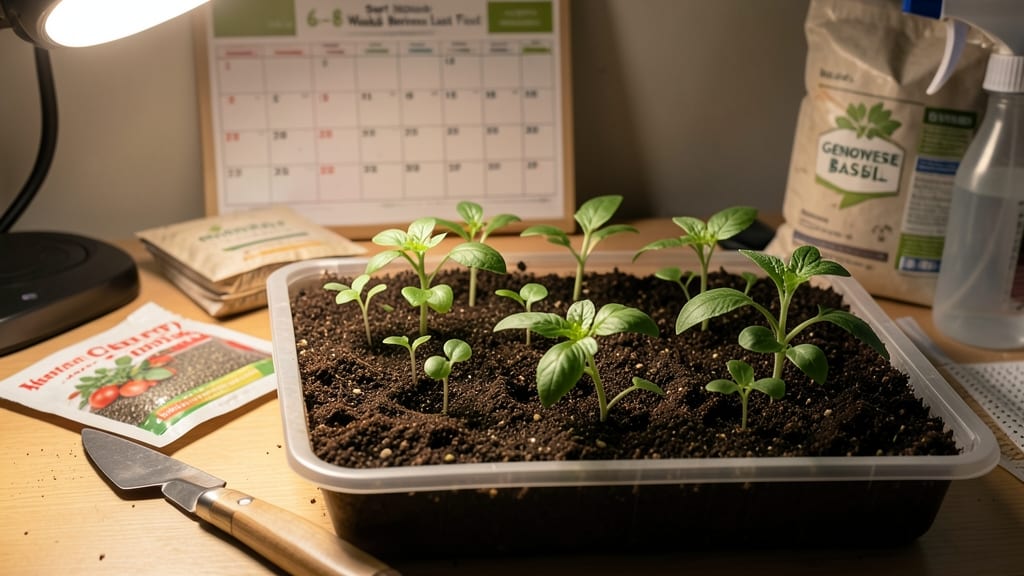
Starting garden seeds at the right time means the difference between a thriving harvest and a season of disappointment — and the key is knowing how many weeks before your last frost to begin.
Picture this: You’ve spent hours under grow lights, nurturing tiny seedlings, only to watch them bolt in the heat or freeze before they even reach the garden. It happens more often than you’d think, and the culprit is almost always poor timing.
Whether you’re growing tomatoes, herbs, or cool-season greens, your local climate and crop type dictate the perfect window — not guesswork.
In this guide, I’ll walk you through how to calculate your last-frost date, adjust for your USDA zone, and pinpoint the exact weeks to start seeds for 20+ popular crops.
We’ll also cover how to tweak your schedule for greenhouses, containers, and tricky microclimates so you never waste another seed packet.
By the end, you’ll have a customized seed-starting calendar that accounts for your region, your garden setup, and the unique needs of each plant — no more second-guessing, just confident planting.
How to calculate your last-frost date for perfect seed-starting timing
Timing your garden seed starts wrong can mean the difference between a thriving garden and wasted effort. Most gardeners rely on guesswork, but calculating your last-frost date ensures you start seeds at the perfect time for your climate zone and crop type.
This method combines USDA zone maps, historical data, and local microclimate adjustments to create a foolproof schedule.
Your last-frost date marks the average final frost of spring, calculated over 30 years of weather records. For example, in USDA Zone 6a, this typically falls around April 15.
To find yours, check the USDA Plant Hardiness Zone Map or use local weather station data from sources like the National Oceanic and Atmospheric Administration (NOAA).
Once you have your last-frost date, the next step is adjusting for seed-starting windows. Warm-season crops like tomatoes and peppers need 6–10 weeks of indoor growth before transplanting, while cool-season crops like lettuce and spinach can handle direct sowing just weeks before the last frost.
Here’s how to calculate it:
For warm-season crops, like peppers and eggplants, start seeds indoors 10–12 weeks before your last frost. These plants are sensitive to cold and need a long growing season.
In contrast, cool-season crops such as kale and radishes can handle cooler temperatures and often tolerate light frosts, making them ideal for direct sowing 4–6 weeks before the last frost.
Pro Tip: Subtract 12–16 weeks from your last-frost date for warm-season crops (like tomatoes) and 8–10 weeks for cool-season crops (like lettuce). Adjust for indoor vs. greenhouse starts, and always account for your local microclimate.
For example, a greenhouse can extend your growing season by 2–4 weeks, while a container garden may require earlier starts due to slower soil warming.
Don’t forget to factor in succession planting for crops like bush beans or zucchini. These plants produce heavily for a short window, so starting new seeds every 2–3 weeks ensures a continuous harvest.
Use your last-frost date as a baseline, then space out subsequent plantings based on the crop’s days to maturity.
Common mistakes include starting seeds too early (resulting in leggy, weak seedlings) or too late (missing the optimal planting window). To avoid these pitfalls, keep a gardening journal to track your local frost dates and seed-starting success over time.
Over 3–5 years, you’ll refine your schedule to match your unique climate.
Finally, verify your calculations with seed packet guidelines. Many packets include a planting chart that aligns with USDA zones and last-frost dates. Cross-reference this with your local data to ensure accuracy. With this method, you’ll never again guess when to start your seeds—just calculate and cultivate!
| Crop Type | Seed Start Window (Weeks Before Last Frost) | Days to Germination | Transplant Age |
|---|---|---|---|
| Tomatoes | 6–8 | 6–14 | 6–8 weeks |
| Peppers | 8–10 | 7–21 | 8–10 weeks |
| Lettuce | 4–6 (direct sow) / 8–10 (start indoors) | 7–14 | <