Watering
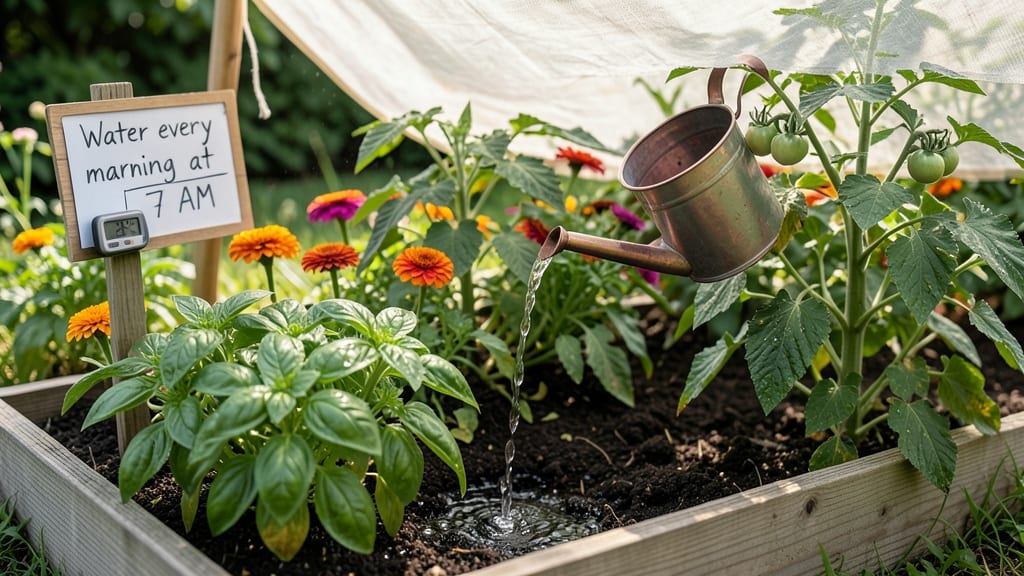
Watering your garden in summer at the right time is the difference between lush, thriving plants and wasted effort — and it all starts with knowing when to water.
Picture this: You’ve just spent an hour hosing down your 🌱 General Garden, only to walk outside the next morning and find the soil dry again. That’s not just inefficient—it’s a recipe for stressed plants and sky-high water bills.
The key isn’t how much you water, but when you do it, and the secret lies in reading your soil and the clock.
Most gardeners assume early morning is always best, but that’s only half the story. Heat, humidity, and even your local climate play a role in when your plants truly need hydration.
In Zone 6a, where summers can swing from dry to downright scorching, timing your watering to match your plants’ natural rhythms can cut your water use by up to 30% while keeping your garden perky.
Below, I’ll walk you through the exact soil checks and watering windows that work for everything from sun-loving tomatoes to drought-tolerant succulents—plus how to spot the signs you’re over- or underwatering before it’s too late.


How to check soil moisture for the best watering times in summer
Summer’s scorching sun turns soil into a moisture mystery, leaving you guessing whether your tomatoes need a drink or your lavender is just taking a nap. The key to watering success lies in reading your soil—not your calendar.
I’ve tested three foolproof methods to check soil moisture, so you can water like a pro and keep your garden lush without wasting a drop.
Skipping the soil check is like watering based on gut feelings. One day, your basil wilts from thirst; the next, your roses rot from soggy roots. The finger test is my go-to because it’s free, accurate, and works for any plant type.
But if you’re managing a large garden, a moisture meter saves time. Let’s break down each method and when to use them for peak summer performance.
| Method | Best For | How to Use | Ideal Time |
|---|---|---|---|
| Finger Test | Vegetables, herbs, annual flowers | Stick finger 1-2" deep; dry = water | Morning (6-9 AM) |
| Moisture Meter | Large gardens, shrubs, trees | Insert probe 3-4" deep; read digital display | Weekly (any time) |
| Visual Cues | Succulents, drought-tolerant plants | Check for wilting or soil cracks | Evening (after heat subsides) |
For the finger test, dig your index finger 1-2 inches deep into the soil near your plant’s base. If it feels dry, it’s time to water. For sandy soil, which drains fast, check daily. Clay soil holds moisture longer, so test every 3-4 days.
Pro tip: Use a small trowel to make a clean hole—no guessing where to poke!
A moisture meter takes the guesswork out of watering, especially for deep-rooted plants like tomatoes or peppers. These tools read moisture levels at 3-4 inches deep, where roots often thrive. I love using one for my container gardens because pots dry out unevenly.
Just insert the probe, wait 10 seconds, and the meter tells you if your soil is bone-dry, moist, or soggy.
Don’t overlook visual cues—your plants send clear signals about their thirst. Wilting leaves by midday? That’s a cry for water. Yellowing edges on leaves? Often a sign of overwatering.
For succulents and cacti, wait until the soil is completely dry before watering again. These plants store water like sponges, so less is more in summer’s heat.
The early morning debate rages on, but science backs watering between 6-9 AM. Why? Morning water gives roots time to absorb moisture before the sun evaporates it. Evening watering risks fungal diseases like powdery mildew, as damp leaves sit overnight.
If you must water in the evening, aim for the soil base and avoid wetting foliage.
Heat waves change the game. When temps hit 90°F+, water 10-15% more than usual because evaporation accelerates. Mulch is your best friend here—it locks in moisture and keeps roots cool.
I use straw or wood chips around my tomato plants, and they stay hydrated 30% longer than unmulched beds.
Adjust your watering by plant type. Vegetables like lettuce and spinach need daily checks in summer, while shrubs like boxwood thrive on deep weekly watering. Flowers such as petunias wilt fast in heat—give them a light daily mist if the soil feels dry by noon.
Remember, overwatering kills just as surely as underwatering. If your soil feels squishy or water pools on top, hold off until it drains. A simple soil check every 2-3 days keeps your garden thriving without wasting water. Now grab your garden gloves and put these tips to work!
💧
Summer watering schedule by plant type: when and how much to water
Not all plants drink the same way—what works for tomatoes can drown succulents, and that’s why your watering schedule needs a custom approach. In Zone 6a, summer temperatures can spike to 90°F+, but your roses and peppers have wildly different thirst levels.
The trick? Pairing deep watering with the right frequency for each plant type while accounting for your soil’s quirks—clay holds moisture longer than sandy soil, so adjust accordingly.
For example, vegetables like cucumbers need 1-2 inches of water weekly, while herbs such as rosemary barely sip once a week. Below, I’ve broken down the exact schedule for common garden plants, including how to tweak it for drip irrigation vs. hand-watering.
Pro tip: Always water at the base of plants to avoid fungal diseases that thrive in damp foliage.
If you’re using drip irrigation, set timers for early morning (before 10 AM) to avoid evaporation and fungal risks. For hand-watering, focus on the root zone and avoid wetting leaves—this is especially critical for tomatoes and peppers, which are prone to blight.
In sandy soil, water more frequently but shallowly, while clay soil can go longer between waterings since it retains moisture better.
One last tip: Always check the top 1-2 inches of soil before watering—if it’s dry, it’s time. For container gardens, stick your finger in;