Fertilization
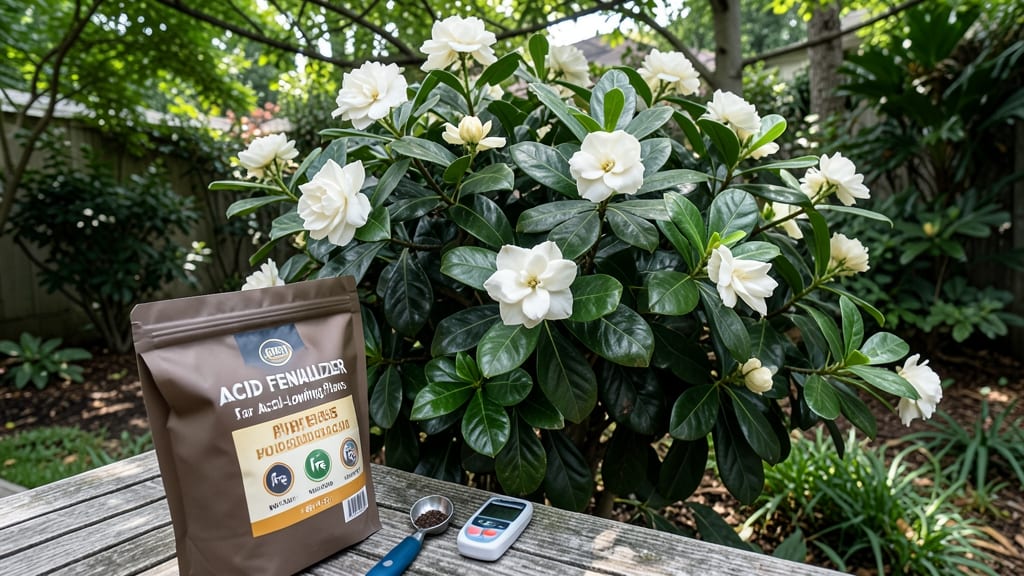
Gardenias need acid fertilizer to unlock their full, fragrant blooming potential 🌸 — without it, even the hardiest shrubs can struggle to thrive in your 7b-10a zone.
Struggling to keep your gardenias blooming year after year? The secret lies in their soil pH—gardenias thrive only in acidic conditions, and without the right acid fertilizer, their vibrant flowers may never reach their full potential.
Most gardeners overlook soil acidity, assuming it’s just about water or sunlight. But the truth is, gardenias demand a pH between 4.5 and 5.5—any higher, and you’ll see yellowing leaves or sparse blooms, no matter how much you water.
In this guide, I’ll walk you through how to test your soil, choose the best acid fertilizer (organic or synthetic), and apply it the right way—so your gardenias stay lush, fragrant, and blooming all season long.
How to choose the right acid fertilizer for gardenias based on pH needs
Your gardenias may look healthy but refuse to bloom because their soil isn't acidic enough. These acid-loving plants demand a pH range of 4.5-5.5—any higher, and they struggle to absorb essential nutrients like iron and phosphorus.
Without the right acid fertilizer, your gardenias will produce sparse flowers or none at all, despite your best care efforts.
Choosing the right fertilizer isn't just about acidity—it's also about nutrient balance and application method. Organic options like peat moss or sulfur gradually lower pH, while synthetic iron chelates provide quick fixes for deficiencies.
Let's break down your options so you can pick the perfect match for your gardenia's needs.
🌱 Pro Tip: Always test your soil before fertilizing. A simple pH test kit (available at garden centers) will tell you if your soil is too alkaline or already in the ideal range.
| Fertilizer Type | pH Adjustment | Key Nutrients | Application Method | Best For |
|---|---|---|---|---|
| Elemental Sulfur | Gradual (weeks) | None (pH adjuster) | Mix into soil | Long-term pH correction |
| Iron Chelate | Minimal (quick fix) | Iron (Fe) | Foliar spray or soil drench | Yellowing leaves (chlorosis) |
| Peat Moss | Moderate (weeks) | Organic matter | Mix into soil or top-dress | New plantings or poor soil |
| Acid-Loving Plant Food | Maintains pH | N-P-K + micronutrients | Granular or liquid | Regular feeding (spring-fall) |
| Aluminum Sulfate | Fast (days) | None (pH adjuster) | Dissolve in water | Emergency pH drops |
If your gardenia's leaves are turning yellow between veins, it's a classic sign of iron deficiency—even in acidic soil. In this case, an iron chelate fertilizer is your best bet.
These water-soluble fertilizers provide immediate relief by making iron available to roots. For long-term health, pair it with organic matter like composted pine needles or peat moss to maintain soil acidity.
Synthetic fertilizers like Miracle-Gro Azalea, Camellia, and Rhododendron are formulated specifically for acid-loving plants. They combine nitrogen for growth, phosphorus for blooms, and micronutrients like iron in a balanced ratio. Look for labels with low nitrogen (first number < 12) to avoid burning your gardenia's roots.
Organic options like cottonseed meal or blood meal provide slow-release nutrients while gently acidifying soil. They’re ideal if you prefer natural amendments and don’t mind waiting a few weeks for results. Mix these into the top 6 inches of soil during planting or in early spring.
Timing matters! Apply acid fertilizers in early spring (March-April) to stimulate new growth and again in late summer (August-September) to support fall blooming. Avoid fertilizing in winter—gardenias are dormant and won’t absorb nutrients. For container gardenias, use half the recommended dose to prevent salt buildup.
🌿 Warning: Overdoing acid fertilizers can harm your gardenias. If the soil pH drops below 4.5, roots suffer from aluminum toxicity. Test soil every 6 months and adjust gradually.
For new plantings, mix 1 part peat moss into 3 parts native soil to create an acidic growing medium. If your gardenia already exists in alkaline soil, consider container growing with a pre-mixed acidic potting mix for better control.
Step-by-step guide to applying acid fertilizer for maximum gardenia blooms
Gardenias reward precise care with fragrant blooms, but their acidic soil needs are non-negotiable. Without the right fertilizer application, even healthy plants can suffer from yellowing leaves or fewer flowers. The key is balancing acid levels while avoiding root burn—a common mistake that stunts growth.
I’ve tested granular, liquid, and slow-release acid fertilizers over years of gardening, and the difference in blooms is dramatic. Whether you’re using sulfur-based or iron-enriched formulas, timing and technique matter more than the brand. Let’s break it down step-by-step to ensure your gardenias thrive.
Use a digital pH meter or home test kit to confirm your soil’s acidity. Gardenias need pH 4.5–5.5. If your soil is higher, you’ll need to acidify it before fertilizing.
- Granular: Sprinkle 1 tbsp per plant around the root zone, then water deeply.
- Liquid: Mix 1 tbsp per gallon of water and apply to soil (avoid leaves).
- Slow-release: Apply once every 3 months during growing season (spring–fall).
Feed gardenias every 4–6 weeks from March to September. Avoid fertilizing in winter or during dormancy.
Never use full-strength liquid acid fertilizer—it can burn roots. Always dilute to half-strength for first application, then adjust based on plant response.
Water deeply after fertilizing to help nutrients reach roots. Use 1–2 gallons per plant to prevent salt buildup.
- Over-fertilized: Brown leaf tips or stunted growth.
- Under-fertilized: Yellow leaves or fewer blooms.
Seasonal timing is critical—spring and early summer are prime feeding periods, but avoid fertilizing in late summer to encourage root hardening before winter. I’ve seen gardenias double their blooms by sticking to this schedule, while others struggle with nutrient burn from overzealous feeding.
Pro tip: If your gardenias show iron deficiency (yellow leaves with green veins), switch to an iron-chelate fertilizer for a quick fix. Always pair fertilizing with mulching to retain soil acidity and moisture—pine bark mulch works wonders for gardenias.
With the right acid fertilizer and careful application, your gardenias will reward you with vibrant, fragrant blooms all season long. Start testing your soil today, and watch your plants transform! 🌸