Tools
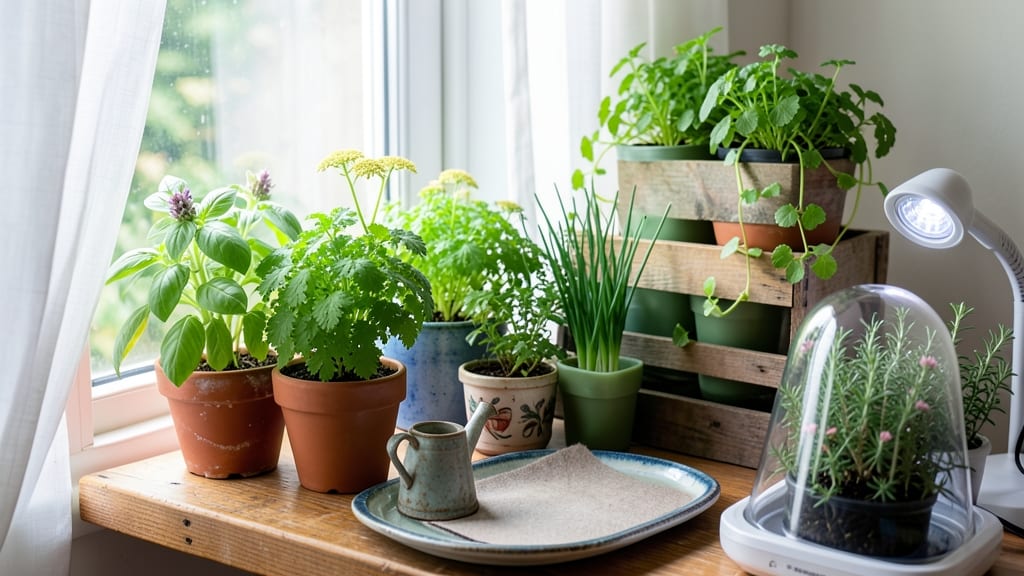
To have a garden in an apartment, you don’t need a backyard—just a little creativity and the right setup for your Apartment-Friendly Herb Garden 🌿.
Picture this: your tiny balcony or kitchen windowsill bursting with fresh basil, mint, and thyme, all within arm’s reach of your kitchen. No yard? No problem. With vertical gardening, you can turn even the smallest space into a thriving green oasis—no green thumb required.
Whether you’re working with a sunny windowsill, a cramped patio, or just a corner of your living room, the key is choosing plants that love small spaces and containers.
We’re talking herbs, leafy greens, and trailing vines that grow upward instead of outward, saving square footage while adding life to your home.
Below, I’ll walk you through the easiest vertical setups, the lowest-maintenance plants for beginners, and how to keep everything lush without overcomplicating your routine. Ready to turn your apartment into a garden?
Best vertical gardening systems for small apartments
Living in an apartment doesn’t mean you have to say goodbye to gardening. With the right vertical gardening systems, you can create a lush, green space that maximizes every inch of your limited area.
These innovative setups transform walls, shelves, and even corners into productive growing zones—perfect for herbs, leafy greens, and flowering plants that thrive in small spaces.
Vertical gardening isn’t just about saving space—it’s also about adding beauty and functionality to your home. Whether you have a sunny balcony or a dimly lit kitchen, there’s a system that will work for you.
From sleek wall-mounted planters to cascading hanging gardens, these solutions are designed to fit seamlessly into your apartment while keeping your plants happy and healthy.
Here’s a comparison of the top vertical gardening systems for apartments, including their pros, ideal plants, and ease of use. This will help you choose the perfect setup for your space and lifestyle.
If you’re short on space but long on enthusiasm, wall-mounted planters are the easiest way to start. They’re lightweight, customizable, and perfect for growing herbs like basil and mint right next to your kitchen.
Plus, they add a decorative touch to any room. For a more dramatic look, consider a hanging garden, which can create a stunning visual cascade from your ceiling or balcony railing.
For those who love the idea of a modular shelving unit, think of it as a vertical farm in your living room. These systems allow you to grow everything from leafy greens like kale to dwarf tomatoes without taking up floor space.
The best part? You can mix and match plants based on their light and water needs, creating a layered ecosystem that’s both functional and beautiful.
DIY enthusiasts might prefer a pallet wood garden, which is budget-friendly and customizable. You can paint the wood to match your decor or leave it natural for a rustic look.
This system works especially well for root vegetables like carrots and loose-leaf lettuce, which don’t need deep soil. Just ensure the pallet is treated and stable before planting.
Finally, if you want a sleek and modern solution, vertical planter boxes are a great choice. These can be mounted on walls or even freestanding and are ideal for succulents and small flowering plants.
They’re low-maintenance and perfect for beginners who want to add greenery without the hassle of complex setups.
No matter which system you choose, the key to success is selecting plants that thrive in your specific conditions. Pay attention to light levels, watering needs, and the size of your plants at maturity.
With the right setup, your apartment garden can become a year-round oasis of fresh produce and vibrant blooms—no yard required!
Ready to transform your space? Start small with one system, then expand as your confidence and green thumb grow. Happy gardening! 🌱
Top 5 low-maintenance plants perfect for apartment gardens
When space is limited, choosing the right plants can make all the difference in keeping your apartment garden thriving with minimal effort. I’ve tested these top 5 low-maintenance plants in my own vertical setups, and they consistently deliver beauty and productivity without demanding constant attention.
Whether you’re dealing with low light or just want to reduce watering chores, these plants are your best allies for small-space gardening.
First, let’s talk about pothos (Epipremnum aureum)—the ultimate beginner-friendly vine. This hardy plant thrives in low to bright indirect light and can grow in almost any container, making it perfect for hanging baskets or wall planters.
Its trailing vines add a lush, tropical feel to any room, and it only needs watering every 1-2 weeks. Plus, it’s nearly indestructible—even if you forget to water it occasionally, it’ll bounce back.
🌱 Pothos
Thrives in low light; water every 1-2 weeks; purifies air
🌿 Snake Plant (Sansevieria)
Survives drought; needs bright indirect light; great for bedrooms
🪴 Succulents (Echeveria, Haworthia)
Needs minimal water; loves sunlight; perfect for sunny windowsills
🌱 Microgreens (Broccoli, Radish)
Grows in 1-2 weeks; needs bright light; harvest fresh greens
🌿 Spider Plant (Chlorophytum comosum)
Produces baby plants; tolerates low light; water weekly
Next up is the snake plant (Sansevieria), a true survivor that can handle neglect like a champ. This plant stores water in its leaves, so you only need to water it every 2-3 weeks.
It’s also one of the best air-purifying plants, making it a great addition to bedrooms or offices. Place it in a corner where it can get some bright indirect light, and it’ll reward you with striking, upright foliage.
For those who love a pop of color and texture, succulents are a must-have. Varieties like echeveria and haworthia are compact, drought-tolerant, and perfect for sunny windowsills. These plants need well-draining soil and should only be watered when the soil is completely dry—usually every 3-4 weeks.
Group them together in a shallow tray for a stunning desert-inspired display.
If you’re craving fresh greens without the fuss, microgreens are the answer. They grow incredibly fast—often ready to harvest in just 1-2 weeks—and can be grown in small containers on a sunny windowsill.
Try broccoli or radish microgreens for a peppery kick. Just keep the soil moist and provide bright light, and you’ll have a continuous supply of nutritious greens year-round.
Finally, don’t overlook the spider plant (Chlorophytum comosum), a cheerful plant that produces baby plants on long stems. It’s incredibly forgiving and thrives in low to bright indirect light, making it ideal for kitchens or bathrooms.
Water it once a week and watch it multiply effortlessly. Plus, it’s non-toxic, so it’s safe to have around pets and kids.
With these five low-maintenance plants, you can create a lush, green apartment garden that requires minimal effort. Start with one or two, and gradually expand as you gain confidence.
Before you know it, your space will be filled with life, color, and the satisfaction of growing your own greenery—no backyard required! 🌿