Watering
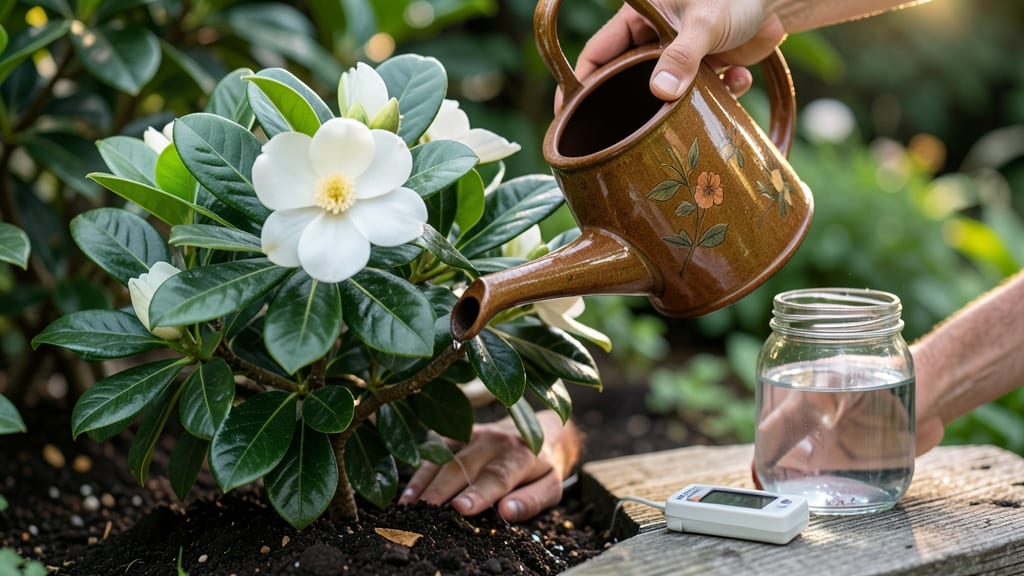
Your gardenia’s water requirements are the secret to those fragrant blooms you’ve been dreaming of—get them wrong, and you’ll end up with droopy leaves or no flowers at all.
Picture this: you’re watering your gardenia every day, but the soil stays soggy, and the leaves turn yellow. Or maybe you’ve been skipping waterings, thinking it’s drought-tolerant, and now the buds are dropping before they even open. These are classic signs you’re not hitting the sweet spot for moisture.
Gardenias love consistent moisture but hate soggy roots—think of it like a tropical spa day, not a swamp. In-ground plants need deep watering every 3-5 days, while container gardenias dry out faster and may need daily checks in summer heat.
In this guide, I’ll break down exactly how to read your gardenia’s thirst cues, adjust for your climate, and keep those blooms coming back year after year—no guesswork required.
How often to water gardenias for optimal growth and blooms
Gardenias thrive on consistent moisture, but their water needs shift with seasons and climate. As a tropical shrub, they despise soggy roots but also wilt under drought. The key is deep, infrequent watering that mimics their natural habitat—humid, well-drained soils.
I’ve learned through trial (and a few drooping leaves) that timing and soil type make all the difference.
In USDA Zones 6-10, gardenias need 1-2 inches of water weekly during active growth (spring-fall). However, sandy soils dry faster than clay, so adjust accordingly. Container gardenias demand even more attention—their small pots dry out in 2-3 days versus 4-6 days for in-ground plants.
Let’s break down the exact schedule you need.
| Season | Climate Zone | Soil Type | Watering Frequency | Notes |
|---|---|---|---|---|
| Spring | Zones 6-8 | Sandy | Every 2-3 days | Increase if temps exceed 80°F |
| Spring | Zones 9-10 | Clay | Every 4-5 days | Mulch to retain moisture |
| Summer | All Zones | Sandy | Daily (morning) | Avoid evening watering |
| Summer | All Zones | Clay | Every 2-3 days | Check top 2" of soil |
| Fall | Zones 6-8 | Any | Every 5-7 days | Reduce as temps drop |
| Winter | Zones 6-8 | Any | Bi-weekly | Only if no snow cover |
| Year-Round | Containers | Any | Every 2-3 days | Use self-watering pots |
In spring, when gardenias are pushing new growth, I water every 3-4 days in cooler zones (6-8) but ramp up to daily in Zone 10’s heat. The trick is to water deeply—soak the soil until water drains from the bottom of containers or 6 inches down in-ground.
This encourages roots to grow downward, making your plant more resilient.
Summer is critical: gardenias hate wilting, and heat stress causes buds to drop. I water early in the morning (before 10 AM) to prevent fungal diseases from evening moisture. For sandy soils, this might mean daily watering, while clay soils can stretch to every 2-3 days.
Always check soil moisture—stick your finger 2 inches deep; if it’s dry, water.
Fall signals a slowdown in growth, so I reduce watering to every 5-7 days. This helps harden off the plant for winter. In Zones 9-10, where winters are mild, I maintain a light schedule (every 10-14 days) to prevent root rot.
Mulching with pine bark helps retain moisture and regulates soil temperature—two birds, one stone!
Winter care depends on your zone. In Zones 6-8, I water bi-weekly only if the ground isn’t frozen. Gardenias are semi-dormant then, so overwatering is a real risk. In Zones 9-10, they stay active, so I water every 10-14 days unless it’s unusually dry.
Pro tip: Group gardenias with other tropical plants like camellias to create a microclimate that retains humidity.
Container gardenias are the most finicky—their small root systems dry out fast. I’ve found that terracotta pots (which breathe) work better than plastic, but they need watering every 2-3 days in summer.
Move containers to partial shade during peak heat to reduce evaporation. A self-watering pot or saucer with pebbles and water can buy you a few extra days between waterings.
Watch for yellowing leaves, which often signal overwatering, and crispy edges, a sign of underwatering. I’ve made both mistakes—once, my gardenia’s leaves turned mushy from sitting in soggy soil, and another time, they curled up like parchment from neglect.
The fix? Adjust your schedule based on soil type and weather, and always prioritize morning watering to give foliage time to dry.
For new gardenias, the first year is about establishing roots. Keep soil evenly moist but not waterlogged. I use a moisture meter for peace of mind—aim for 50-60% moisture in the
Signs your gardenia needs more or less water (and how to fix it)
If your gardenia’s leaves are turning yellow and mushy, or worse, falling off, you’re likely drowning its roots. On the flip side, crispy brown edges or buds dropping before opening? That’s your plant screaming for a drink. Gardenias are tropical divas—they demand consistent moisture but can’t handle soggy soil.
First, check the soil 1-2 inches deep—if it’s dry, it’s time to water. For container gardenias, stick your finger in the soil daily in summer; in-ground plants need a weekly soil check.
The key is deep watering (1-2 gallons per plant) to encourage strong root growth, not light sprinkles that barely reach the roots.
🌸
⚠️ Gardenia Water Requirements
Overwatering: Yellow leaves, mushy stems, and roots that smell rotten. Fix: Let soil dry slightly between waterings and improve drainage with perlite or sand.
Underwatering: Wilting, dry leaf edges, and buds dropping. Fix: Water deeply until it drains from the bottom of the pot or soil.
Perfect Balance: Soil should feel like a damp sponge—never soggy or bone-dry.
Container gardenias dry out faster than in-ground plants, so monitor them closely. In summer heat, you might need to water daily, while winter slows evaporation—reduce to bi-weekly waterings when growth slows. Pro tip: Use a moisture meter ($10 at garden centers) to avoid guesswork.
For in-ground gardenias, mulch with 2-3 inches of pine bark to retain moisture and keep roots cool. Avoid mulching too close to the stem, though—leave a 2-inch gap to prevent rot.
If your gardenia’s leaves feel dull or sticky, it’s often a sign of underwatering stress or even pests like spider mites.
Adjust your watering based on the season: spring and summer demand more frequent watering, while fall and winter require less. If your gardenia’s buds aren’t opening, it might be thirsty—or too stressed from inconsistent watering. Stick to a routine, and those fragrant blooms will thank you.
💧