
Landscaping
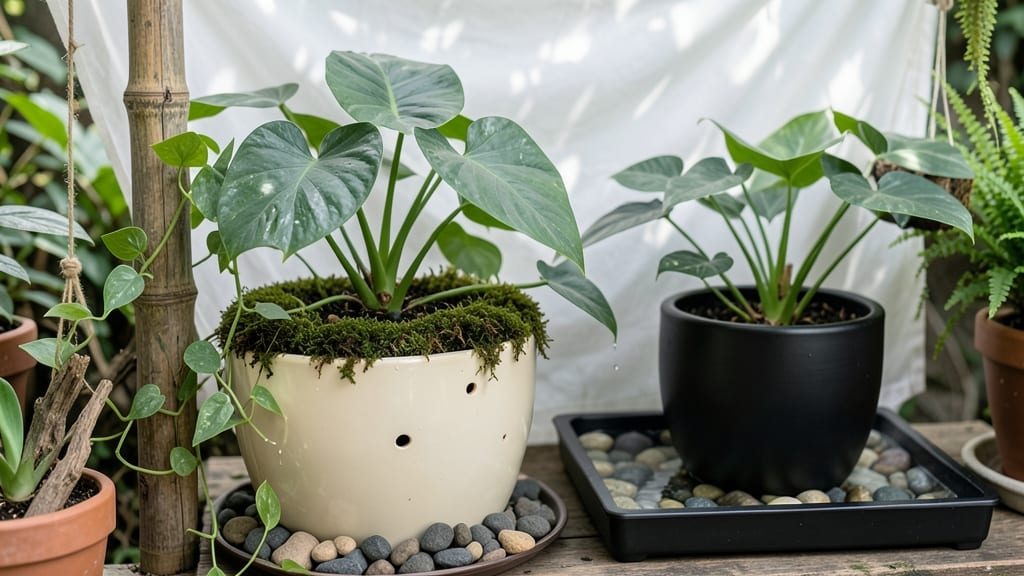
Garden ideas with alocasia can turn any space into a lush, tropical escape 🌿—whether you’re working with a cozy patio or a sprawling backyard.
Picture this: arrow-shaped leaves in deep greens, velvety purples, or striking reds catching the light, creating a bold statement that feels like a vacation in your own yard. The secret isn’t just planting them—it’s arranging them to play off their dramatic shapes and textures.
From container gardens that spill onto balconies to understory plantings that frame pathways, alocasia thrives when paired with the right companions. Think ferns for soft contrast, calatheas for layered depth, or even a splash of vibrant annuals to brighten up the mix.
Ready to dive in? I’ll walk you through five standout layouts, how to mix plants for maximum impact, and the care tricks that keep your alocasia looking showstopping all year—no matter where you live.
Creative alocasia garden layouts for small and large spaces
Alocasia plants like 'Polly', 'Black Velvet', and 'Frydek' are nature's statement pieces—perfect for adding tropical flair to any garden, no matter its size. The key is arranging them to highlight their dramatic foliage while creating harmony with your space.
Whether you're working with a tiny balcony or a sprawling backyard, these layouts will help you maximize impact without sacrificing growth conditions.
For small spaces, focus on container groupings and vertical arrangements, while larger areas can accommodate sprawling understory plantings and bold focal points. Each design balances aesthetics with practical care, ensuring your alocasia thrives while stealing the show. Let’s explore how to adapt these layouts to your unique space.
| Layout Type | Best For | Key Features | Care Tips |
|---|---|---|---|
| Container Groupings | Small spaces, balconies, patios | 3-5 alocasia varieties in mixed heights, trailing plants | Use well-draining pots, rotate for even light |
| Understory Plantings | Shady garden beds, woodland areas | Layer with ferns, calatheas, and hostas | Mulch to retain moisture, avoid foot traffic |
| Focal Point Arrangement | Large yards, entryways, garden paths | Single large alocasia surrounded by contrasting textures | Stake tall varieties, prune for shape |
| Vertical Garden | Urban spaces, small yards | Wall-mounted planters with cascading alocasia | Check moisture daily, use self-watering systems |
| Mixed Border | Medium to large gardens | Combine with hellebores, astilbes, and hydrangeas | Divide clumps every 2-3 years for vigor |
Start with container groupings if you're limited on space. Place 3-5 alocasia plants in varying heights—like 'Polly' in the center with 'Black Velvet' trailing over the edges—for a dynamic look. Use terracotta pots to complement the earthy tones of their foliage, and add a few moss-covered stones for extra texture.
This setup works beautifully on balconies or patio corners where you can rotate the containers for even light exposure.
For larger gardens, create an understory planting beneath taller trees or shrubs. Alocasia thrives in shade, making it perfect for pairing with ferns, calatheas, and hostas. Space plants 18-24 inches apart to allow their leaves to sprawl naturally.
A 3-inch layer of organic mulch will keep the soil moist and suppress weeds, while also adding a polished finish to the bed.
If you want to make a bold statement, try a focal point arrangement. Place a single large 'Frydek' alocasia at the center of a garden bed, surrounded by contrasting textures like silver-leafed plants or deep purple heucheras.
This creates a stunning visual anchor that draws the eye. For extra drama, add a few upright grasses or ornamental cannas around the base to frame the alocasia’s height.
Don’t overlook vertical gardens if you're working with limited square footage. Mount wall planters at varying heights and let 'Polly' or 'Black Velvet' trail down for a lush, cascading effect. This approach maximizes your growing space while adding a tropical vibe to urban walls or fences.
Just be sure to use a self-watering system to keep the soil consistently moist without overwatering.
Finally, for medium to large gardens, consider a mixed border that incorporates alocasia with other shade-loving perennials. Combine 'Frydek' with hellebores, astilbes, and hydrangeas for a layered look that changes with the seasons.
This layout not only highlights the alocasia’s striking foliage but also adds year-round interest with blooms and varying textures.
No matter which layout you choose, always prioritize well-draining soil and bright indirect light. Alocasia plants are forgiving but will reward you with lush growth when given the right conditions. With these creative arrangements, your garden will feel like a tropical retreat—no passport required!
How to pair alocasia with complementary plants for stunning contrast
Alocasia’s dramatic foliage deserves companions that make it pop—think of it like styling a bold outfit with the right accessories. The key is balancing textures, colors, and heights to create visual harmony while keeping care requirements in sync.
Since alocasia thrives in shady, humid conditions, I focus on shade-loving plants that complement its tropical vibe without competing for light or water.
Start with color coordination: Pair deep purple alocasia varieties like 'Black Velvet' with silver or chartreuse foliage for striking contrast. For example, 'Silver Queen' pothos or 'Raven' calathea will make your alocasia stand out like a jewel.
If you love height variation, try tucking alocasia between tall ferns and low-growing fittonias to create a layered jungle effect.
Here’s how to mix and match for maximum impact:
- 🌿 Height Contrast
- Pair tall alocasia (4-6 ft) with low-growing plants like fittonia or moss to frame its stature.
- Use medium-height companions like calatheas or peperomias to create a balanced mid-layer.
- Add vertical elements like ferns or bamboo for drama and texture.
- 🎨 Color Harmony
- Match deep purple alocasia with silver or lime-green foliage (e.g., 'Silver Queen' pothos).
- Combine red-veined alocasia with chartreuse calatheas for a vibrant pop.
- Use monochromatic schemes (e.g., all greens) for a serene, cohesive look.
- 💧 Care Synergy
- Group alocasia with high-humidity plants like ferns, philodendrons, and peace lilies.
- Avoid pairing with sun-loving plants—stick to shade-tolerant varieties.
- Use self-watering containers for mixed plantings to maintain even moisture.
For container gardens, try this winning combo: Place a large alocasia (like 'Polly') at the center, surround it with trailing pothos for softness, and tuck fittonia around the edges. The pothos will spill over the sides, while the fittonia adds a splash of color.
In ground plantings, create a moisture-loving understory by pairing alocasia with hostas, astilbes, and Japanese painted ferns for a lush, woodland feel.
Don’t forget to rotate your containers occasionally to ensure even light exposure—alocasia’s leaves grow toward the light, and uneven growth can make them look lopsided. A little adjustment goes a long way in keeping your tropical oasis looking intentional and well-cared-for.
Pro tip: Add a splash of annuals like impatiens or begonias in spring and summer to inject seasonal color. These thrive in shade and bloom profusely, giving your alocasia garden a fresh, dynamic look without altering the tropical vibe. Just remove them in fall to avoid overcrowding.