
Tools
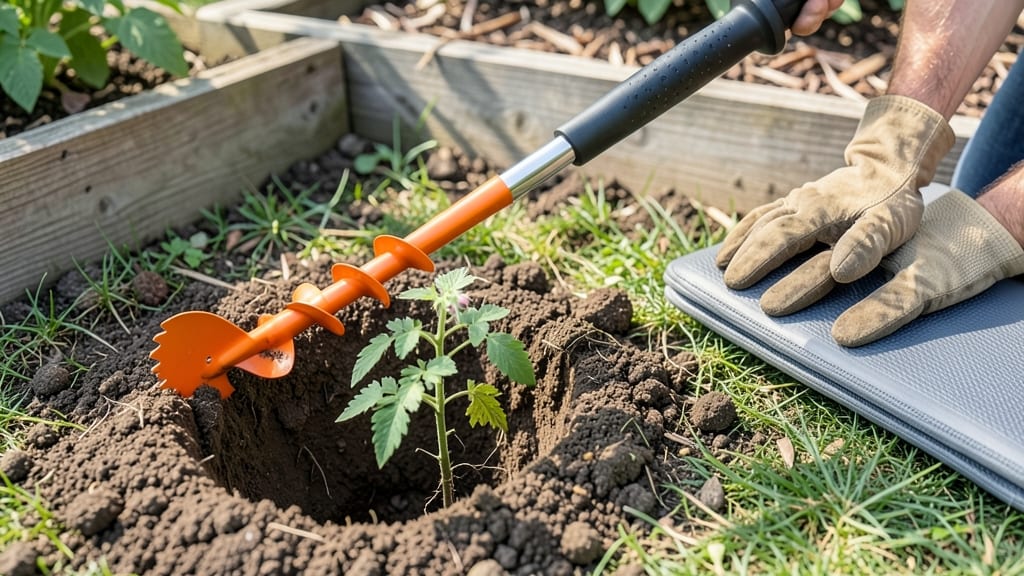
Selecting the best auger for garden tasks depends on your soil conditions, planting depth needs, and project size—hand-cranked augers excel for small-scale digging, while electric or gas-powered models handle larger-scale planting with greater efficiency and torque.
Your garden's soil type and project scope directly determine which auger will save you time and effort. 🌱 For rocky or compacted soil, a gas-powered auger delivers the heavy-duty torque needed, while electric models offer a good balance of power and convenience for medium-sized gardens.
Hand augers remain the go-to for precision tasks like planting small shrubs, where control matters more than speed. I always recommend checking the auger's maximum depth rating—most hand models top out around 12 inches, while power augers can easily handle 3 feet or deeper for tree planting.
Don't overlook the drill bit material—high-carbon steel bits resist wear in tough soils, while spiral augers with sharp cutting edges make quick work of organic matter. For frequent use, consider a model with an adjustable handle to reduce strain on your back.
The right auger transforms tedious digging into a manageable task, whether you're planting a single rose bush or preparing a large garden bed.
💡 In This Article
- Garden Auger Types and Their Best Uses
- Key Features to Compare When Buying a Garden Auger
Garden auger types and their best uses
Garden augers work by twisting into the soil to create precise holes with minimal effort, but their effectiveness depends entirely on the type you choose. Hand-cranked augers use manual leverage—typically requiring 10-15 pounds of force per turn—to penetrate soil up to 12 inches deep.
They're ideal for loose, well-drained soils like sandy loam where resistance is low, but struggle with clay or rocky terrain where the torque needed exceeds human strength.
The spiral design of these augers lifts soil upward through the hollow center, making them perfect for planting small shrubs or bulbs where precision matters more than speed.
Electric augers bring power to the task, delivering 50-100 foot-pounds of torque depending on the model, which translates to effortless drilling through most garden soils down to 3 feet.
These are the workhorses for medium-sized projects like planting trees or installing fence posts, as they combine convenience with sufficient power. Battery-operated versions offer cordless freedom but may lack the continuous torque of corded models, which can handle tougher conditions like compacted clay. The trade-off?
Electric augers require proper grounding to prevent electrical hazards in wet conditions.
For heavy-duty tasks like installing large trees or breaking through rocky soil, gas-powered augers deliver 200+ foot-pounds of torque and depths exceeding 5 feet.
The two-stroke engines generate enough force to shear through roots and compacted earth, but they come with trade-offs: loud operation (typically 90-100 decibels), fumes, and higher maintenance. I've found these indispensable for orchards or vineyards where soil conditions vary dramatically, though they're overkill for most home gardens.
The soil's moisture content dramatically affects performance—wet clay can reduce hand auger efficiency by 40% due to increased friction, while power augers handle moisture better thanks to their consistent torque delivery. Augers with adjustable depth stops prevent over-drilling, which is crucial when planting delicate root systems.
For example, a 6-inch deep hole for a rose bush requires different precision than a 24-inch hole for a small tree—this is where auger type becomes a game-changer.
Consider this comparison: A hand auger might take 2-3 minutes to dig a 6-inch hole in sandy soil, while an electric auger accomplishes the same in 30 seconds. However, that electric auger would struggle with the same task in hardpan clay, where a gas-powered model would excel.
The right choice depends on your garden's specific challenges and the scale of your planting projects.
One often-overlooked factor is the auger's flighting design—the spiral pattern that moves soil upward. Wider flighting clears debris faster but may reduce depth capability, while tighter flighting increases depth but can clog with wet soil.
For most gardeners, a 1.5-inch diameter auger strikes the best balance between speed and precision for planting shrubs and small trees.