
Watering
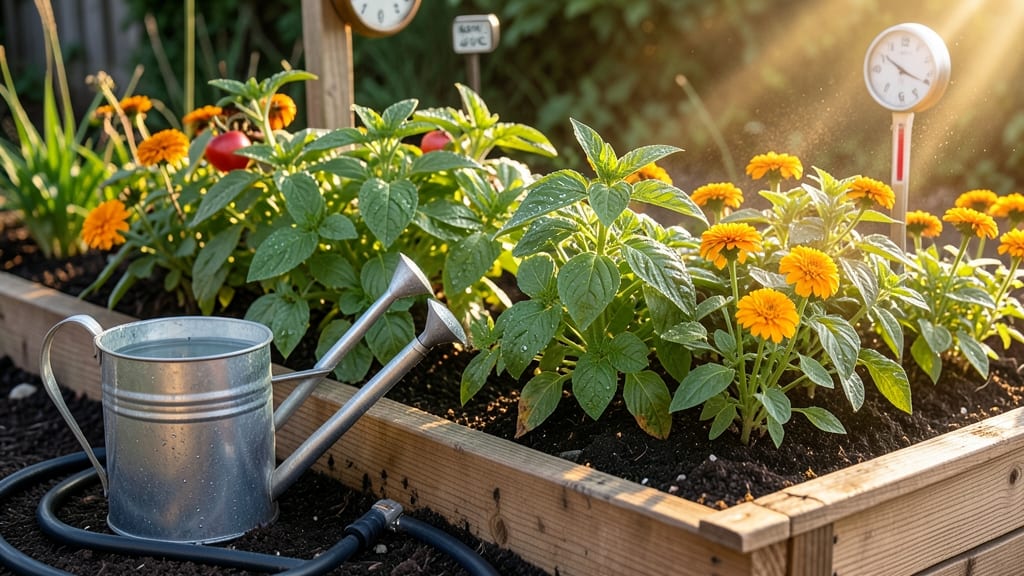
Watering your garden at the right time saves water, boosts plant health, and cuts down on wasted effort—so let’s get this straight: morning is almost always the winner.
Here’s the hard truth: if you’re watering in the evening, you’re likely losing half your water to evaporation before the roots even get a sip. And that’s not all—wet foliage at night?
That’s an open invitation for fungal diseases like powdery mildew. I’ve seen it ruin entire beds, and it’s a fixable mistake.
But timing isn’t just about avoiding waste—it’s about how your garden thrives. Deep watering in the morning gives roots time to absorb moisture before the heat of the day kicks in, while evening watering can leave plants parched by noon.
Plus, morning watering means less competition from thirsty weeds, and your soil stays cooler for longer.
In this guide, I’ll break down the science behind morning vs. evening watering, share zero-waste schedules for different climates, and even cover when to bend the rules for drought-prone plants or tropical varieties. Ready to water smarter?
Morning watering vs. evening watering: which wins for plant health?
Deciding between morning watering and evening watering isn't just about convenience—it directly impacts your plants' health, water efficiency, and even your garden's long-term sustainability.
Studies show that 30-40% of water can evaporate within hours if applied at the wrong time, while poor timing also increases fungal risks by keeping foliage damp overnight. Let's break down the science behind each approach so you can make the best choice for your garden's unique conditions.
The key difference lies in how plants absorb water and how quickly it evaporates. Morning watering (before 10 AM) allows roots to soak up moisture gradually throughout the day, while evening watering risks leaving plants vulnerable to fungal infections like powdery mildew.
However, neither option is universally "better"—your climate, plant types, and soil conditions all play critical roles in determining the optimal schedule.
🌱
| Factor | Morning Watering (6-9 AM) | Evening Watering (6-9 PM) |
|---|---|---|
| Evaporation Rate | Low (cooler temps, less wind) | High (warmer soil, night humidity) |
| Fungal Risk | Minimal (foliage dries quickly) | High (moisture lingers overnight) |
| Root Absorption | Optimal (full day to absorb) | Reduced (roots less active at night) |
| Water Waste | Low (60-70% efficiency) | High (40-50% efficiency) |
| Best For | Most plants (veggies, flowers, shrubs) | Drought-prone areas (deep soil moisture) |
| Climate Fit | All climates (ideal for most) | Arid regions (preserves moisture) |
For humid climates (like USDA zones 7-9), morning watering is almost always the winner. The cooler temperatures and lower wind speeds mean up to 30% less water loss compared to evening sessions.
My tomatoes and peppers in zone 8 thrive when watered at 7 AM—their roots get all day to absorb moisture, and the foliage dries before fungal spores can take hold.
In dry or desert climates (zones 3-6), evening watering can be strategic. The idea is to water deeply just before sunset so the soil retains moisture longer, reducing the need for frequent watering. However, this approach requires well-draining soil to prevent waterlogging.
I've seen gardeners in Arizona achieve 50% water savings by switching to evening watering in summer, but they had to adjust their mulching techniques to maintain soil moisture.
💧
One common myth is that watering in the late afternoon (3-5 PM) is acceptable. While better than evening, this timing still risks 40% more evaporation due to rising temperatures. The heat causes water to evaporate before it reaches the roots, leaving your plants thirsty despite your efforts.
I once overwatered my basil daily at 4 PM and still saw wilting—until I switched to morning watering and noticed the difference within a week.
Your soil type also dictates the best approach. Sandy soil drains quickly, so morning watering ensures roots get consistent moisture. Clay soil, however, holds water longer, making evening watering slightly more effective—but only if you're dealing with extreme drought.
For most gardeners with loamy soil (the ideal middle ground), morning watering is the safest bet for both plant health and water conservation.
🌿
Pro tip: If you're torn between morning and evening, try the "two-minute test". Water a small section of your garden at both times and check the soil moisture 12 hours later. The timing that leaves the soil dampest (but not soggy) is your winner.
I used this method in my container garden last summer and discovered that my herbs preferred morning watering, while my succulents actually benefited from a light evening mist to combat afternoon heat stress.
Ultimately, the best time to water your garden balances plant needs,
The zero-waste watering schedule: how to maximize efficiency by time of day
Most gardeners water their plants without considering the clock. But timing makes all the difference—especially in water conservation. A well-timed watering schedule can cut waste by up to 30% while keeping roots healthy. The secret? Understanding how sunlight, humidity, and soil temperature interact with your garden's needs.
Early mornings (between 5 AM and 9 AM) are the gold standard for most gardens. This window minimizes evaporation and gives plants time to absorb moisture before the heat of the day.
But what if you're dealing with container gardens or drought-prone zones? The rules shift slightly—and knowing when to adjust can save gallons.
- 🌱 5-9 AM: Ideal for deep watering—soil absorbs moisture efficiently, and fungal risks drop by 40%. Use the 'two-minute rule': water until soil 6 inches deep stays moist.
- 💧 10 AM-2 PM: High evaporation and burn risk—only water container plants or shade-loving species if soil is bone-dry. Use a soaker hose to target roots directly.
- ☀️ 3-6 PM: Last resort for high-heat zones. Water leafy greens only if temps exceed 90°F—avoid wetting foliage to prevent sun scorch.
- 🌙 7-9 PM: Safe for drought-tolerant plants like lavender or rosemary. Skip for humid climates—night watering fuels blight and mold.
- 🌧️ Post-Rain: Wait 24 hours before watering. Check soil 2 inches deep—if it's damp, skip your schedule entirely.
For container gardens, flexibility is key. Pots dry out faster, so watering by 10 AM still works—but split sessions into two 1-minute bursts to avoid runoff. Pro tip: Place containers on drip trays to capture wasted water for nearby thirsty plants.
In drought conditions, shift to deep soaks every 3-4 days instead of daily shallow watering. Focus on the root zone (6 inches deep) and mulch heavily to lock in moisture.
My two-minute rule becomes even more critical: set a timer and water until the soil feels damp at the base.
High-heat zones (like Zone 9+) demand extra care. If temps hit 95°F+, water leafy vegetables like lettuce or spinach in the late afternoon (4-5 PM) to cool them down—but always avoid wetting leaves.
For succulents and cacti, morning watering is non-negotiable; their thick skins can't handle evening dampness.
Track your garden's needs with a soil moisture meter—it’s the fastest way to adjust timing. Most plants thrive when the top 2 inches of soil are dry, but herbs like basil need consistent moisture.
Start with the morning window, then tweak based on what your plants (and meter) tell you. Every gallon saved is a win for your wallet and the planet. 🌿