
Plants
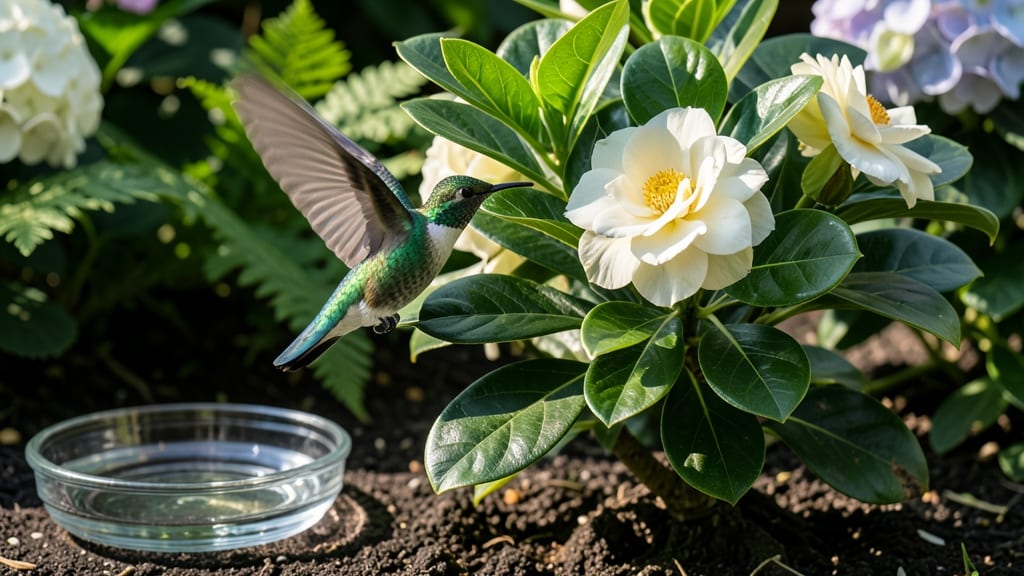
Hummingbirds don't like gardenias because these fragrant flowers prioritize attracting butterflies and bees over birds, while their tightly clustered blooms don't provide the easy access hummingbirds need to their nectar. Choose plants like salvia, bee balm, or fuchsia instead to draw them to your garden.
Gardenias may look stunning in your yard, but their scent and flower structure make them a poor choice for hummingbird gardens. 🌸 These plants evolved to appeal to butterflies and bees, which are drawn to their heavy fragrance and abundant pollen.
Hummingbirds, however, rely on bright colors and open, tubular blooms packed with accessible nectar—something gardenias simply don't offer. The key difference lies in their pollination strategy: gardenias favor insects, while hummingbirds thrive on plants that provide both visual cues and easy nectar access.
For successful hummingbird gardening, focus on plants with red, orange, or tubular flowers that bloom consistently. Salvia and bee balm are excellent choices because their vibrant colors and abundant nectar create irresistible feeding stations.
These alternatives not only attract hummingbirds but also support their high-energy diets during migration and breeding seasons.
💡 In This Article
- Why Gardenias Aren’t Hummingbird-Friendly Flowers
- Top Hummingbird-Attracting Alternatives to Gardenias
Why gardenias aren’t hummingbird-friendly flowers
Gardenias evolved primarily to attract butterflies and bees, not hummingbirds. Their strong, sweet fragrance—often described as a mix of jasmine and citrus—contains volatile organic compounds like linalool and benzyl acetate that specifically trigger the olfactory receptors of insects.
These same compounds are far less appealing to hummingbirds, whose keen vision relies more on visual cues than scent. 🌸 The flowers' waxy, creamy-white petals also reflect light in ways that don't create the high-contrast signals hummingbirds use to spot food sources.
The real issue lies in nectar accessibility. Gardenia blooms have tightly clustered, shallow nectar pools hidden deep within their trumpet-shaped flowers. Hummingbirds need flowers with long, straight tubes (2-3 inches minimum) that allow their 2-inch beaks to reach nectar efficiently.
Gardenias typically measure only 1-1.5 inches in depth, forcing hummingbirds to work harder for minimal reward. In contrast, salvia flowers often reach 3-4 inches, providing both deeper nectar access and more abundant sugar content (up to 25% sucrose concentration compared to gardenias' 10-15%).
Ecologically, gardenias compete with hummingbirds for the same pollinator niche but lose because their reproductive strategy favors insects.
Butterflies and bees are more efficient at transferring pollen between gardenia flowers due to their fuzzy bodies that brush against stamens, while hummingbirds' sleek feathers make them less effective pollinators for this plant.
This mismatch explains why you'll see bees swarming gardenias while hummingbirds completely ignore them. 🐝 The flowers' 1-inch diameter also makes them ideal for butterflies' landing patterns, whereas hummingbirds prefer 2-3 inch blooms that they can hover beside without touching.
Color plays a crucial role too. Gardenias' pale white petals blend with their dark green foliage, creating low visual contrast that hummingbirds scan past during their 500 beats-per-minute flight.
In contrast, hummingbird favorites like red salvia or orange bee balm use ultraviolet patterns invisible to humans but clearly visible to birds, acting like neon signs in their vision spectrum.
These plants also bloom repeatedly throughout the growing season, while gardenias typically produce 3-5 flowers per stem over just 2-3 weeks in late spring.
What most gardeners don't realize is that hummingbirds make food choices based on energy efficiency. A gardenia might produce 0.1 milliliters of nectar per flower, but a single salvia bloom can yield 0.5 milliliters—five times more sugar per visit.
This makes salvia a 50% more efficient feeding source for hummingbirds during migration when they need to consume half their body weight in nectar daily. The difference in feeding success explains why hummingbirds will ignore gardenias even when they're blooming nearby. 🌿