
Light Requirements
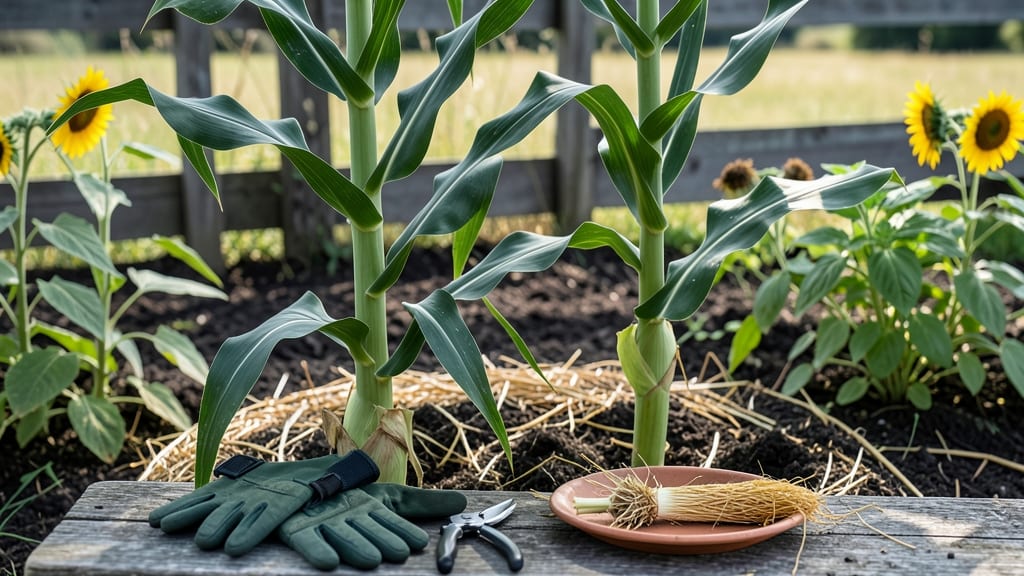
Whether you need to detassel corn in your garden depends on your goals: skip it for homegrown table corn to save time, but remove tassels when growing seed corn or preventing cross-pollination. Most varieties still pollinate effectively without this step.
Detasseling corn—removing the pollen-producing tassels—isn't mandatory for most gardeners growing corn for eating. 🌽 The plant's silks naturally catch pollen from nearby tassels or wind, so your harvest will still form ears.
However, if you're saving seeds or growing hybrid varieties, detasseling prevents unwanted cross-pollination that could ruin your seed quality. For home gardens, the process adds unnecessary work unless you have specific breeding goals.
This step becomes critical when working with open-pollinated varieties or when aiming to preserve true-to-type seeds. Without detasseling, pollen from one variety can fertilize another, altering the genetic traits of your saved seeds.
The timing matters too—tassels should be removed just before they shed pollen, typically when they're about half-developed but before the silks emerge from the husks.
💡 In This Article
- How Corn Pollination Works Without Detasseling
- When to Detassel Corn and Best Removal Methods
How corn pollination works without detasseling
Corn plants rely on wind for pollination, a process that begins when the tassel at the top of the stalk releases pollen. Each tassel produces millions of tiny pollen grains that travel through the air, landing on the silks—long, thread-like structures—emerging from the husks at the ear.
Without detasseling, pollen from one plant's tassel fertilizes the silks of another, creating the corn ears you harvest. This natural process works efficiently even in home gardens with just 12-20 plants per variety, as the wind carries pollen effectively over short distances.
The key to successful pollination lies in the timing: silks emerge from the husks about 1-2 days before the tassels shed pollen. This staggered timing ensures that even without detasseling, pollen has a window to reach the silks.
For most home gardeners, this means you can skip detasseling entirely unless you're growing seed corn or dealing with hybrid varieties. The wind's role is critical—studies show that corn yields drop by only 5-10% in small plots without detasseling, proving this step isn't essential for table corn.
However, the story changes when you're saving seeds. Without detasseling, pollen from one variety can fertilize another, leading to cross-pollination and ears that don't match the parent plant's traits.
For example, if you grow Golden Bantam (a popular heirloom) near Silver Queen, the resulting seeds may produce ears with mixed characteristics. This is why seed savers and breeders detassel: to maintain genetic purity.
The process ensures that only the intended pollen fertilizes the silks, preserving the variety's true form.
Another factor is plant density. In larger fields, detasseling becomes more critical because pollen travels farther, increasing the risk of cross-contamination. But in a home garden with 50 feet or more between varieties, wind dispersal is less of a concern.
The natural pollination process remains robust, and you can enjoy sweet corn without the extra work. This is why most gardeners skip detasseling—it's not just about saving time, but also about trusting the plant's built-in mechanisms.
For those curious about the science, corn's pollination system is a fascinating example of anemophily (wind pollination). Each silk is actually a single ovule waiting to be fertilized, and the plant produces thousands per ear to maximize the chances of successful pollination.
Even with detasseling, the silks remain receptive for about 5-7 days, giving pollen plenty of time to reach them. This resilience is why corn thrives in diverse growing conditions, from small home gardens to vast commercial fields.
So, if your goal is fresh, sweet corn for the table, you can confidently skip detasseling. The plants will pollinate just fine, and you'll save hours of backbreaking work.
But if you're saving seeds or working with hybrids, detasseling becomes a necessary step to ensure the quality and integrity of your harvest. 🌾