
Tools
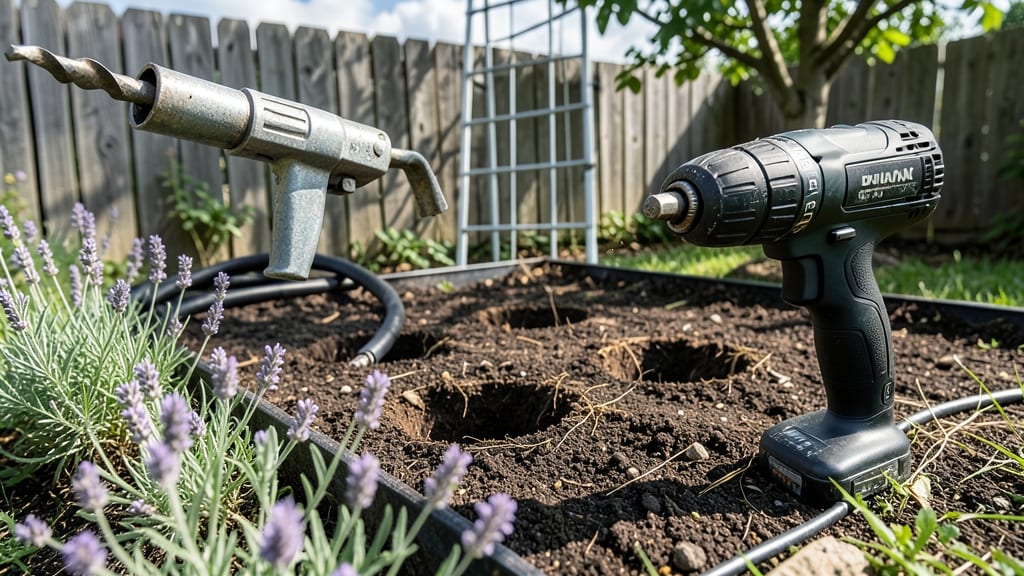
Drill attachments for gardens turn power drills into game-changing tools for planting, digging post holes, mixing soil, and tackling heavy landscaping projects. The right attachments—like augers, spade bits, and edging tools—handle everything from delicate seed holes to tough concrete work.
These attachments work by converting your drill's rotational power into precise cutting or drilling action, adapting to different materials and tasks. 🌱 For example, an auger bit creates clean post holes in minutes, while a spade bit mixes soil effortlessly—both tasks that would take hours with manual tools.
The key is matching the attachment to your project: hole saws for transplanting shrubs, edging tools for clean lawn borders, and masonry bits for concrete work. Cordless drills are ideal for mobility, but heavier tasks often require corded power for consistent torque.
What sets these attachments apart is their ability to handle multiple materials—wood, soil, concrete—without switching tools. I've used them to install trellises, aerate lawns, and even mix large batches of potting soil, saving time and reducing strain.
The right setup turns your drill into a multi-purpose powerhouse for any garden project.
💡 In This Article
- How Drill Attachments Transform Gardening Efficiency
- Top 5 Garden Drill Attachments and Their Best Uses
How drill attachments transform gardening efficiency
Drill attachments work by converting your power drill's rotational force into specialized cutting or drilling action, making them perfect for garden tasks that would otherwise require multiple tools. The key mechanism lies in their design: each attachment is engineered to handle specific materials and resistances.
For example, an auger bit transforms your drill into a post-hole digger by using spiral blades that efficiently remove soil, while a spade bit's flat edge mixes soil like a tiller.
The drill's torque—measured in foot-pounds—determines how much force the attachment can apply, with 150-300 ft-lb being ideal for most garden work.
Speed settings are equally critical. Augers for post holes typically require low RPM (600-1200) to maintain control, while spade bits for soil mixing benefit from medium-high RPM (1800-2400) to create a finer texture.
The material compatibility is where these attachments shine: augers handle loose soil, spade bits cut through roots, and masonry bits crack concrete for fence posts.
What's fascinating is how the drill's variable speed trigger lets you adjust pressure—too much force on an auger can cause it to bind, while too little slows progress to a crawl.
This versatility eliminates the need for specialized tools like manual post hole diggers or soil mixers. I've used a 18V cordless drill with an auger to plant a 6-foot fence in under 30 minutes—something that would take hours with a manual auger.
The attachments also reduce physical strain by handling the heavy lifting, making tasks like aerating lawns or mixing large batches of potting soil significantly easier.
The drill's power source matters too: cordless drills offer mobility but may struggle with deep post holes, while corded drills provide consistent torque for heavy-duty work.
Here's what happens under the hood: when you engage an attachment, the drill's chuck grips the shank (the attachment's neck), transmitting rotational force to the cutting edges.
For example, a 3-inch auger bit can dig a 4-foot hole in minutes by using its spiral design to eject soil upward, while a spade bit with 12 serrated edges chops through roots like a chainsaw.
The difference in material resistance explains why you'd never use a spade bit for concrete—it lacks the carbide-tipped edges needed to cut through 3,000-psi concrete.
The efficiency gain comes from eliminating tool-switching. Instead of grabbing a shovel for soil, a post hole digger for fence posts, and a trowel for mixing, you attach the right bit to your drill and go. This is especially valuable for DIY gardeners who juggle multiple projects.
For instance, I've used the same drill to install a trellis (with a 1/2-inch wood bit), aerate my lawn (with a core aerator attachment), and even mix 50 gallons of potting soil in a wheelbarrow—all without changing tools.
The time saved isn't just about speed; it's about precision and reducing fatigue.
Consider the science of soil resistance: clay soil has 30% more compaction than sandy loam, requiring more torque to penetrate. A 300 ft-lb drill handles clay with ease, while a 150 ft-lb model struggles. The attachment's design also matters—augers with helical blades cut through roots better than straight-shank bits.
This is why professional landscapers swear by drill attachments: they turn a single tool into a multi-purpose solution that adapts to any garden challenge.