
Tools
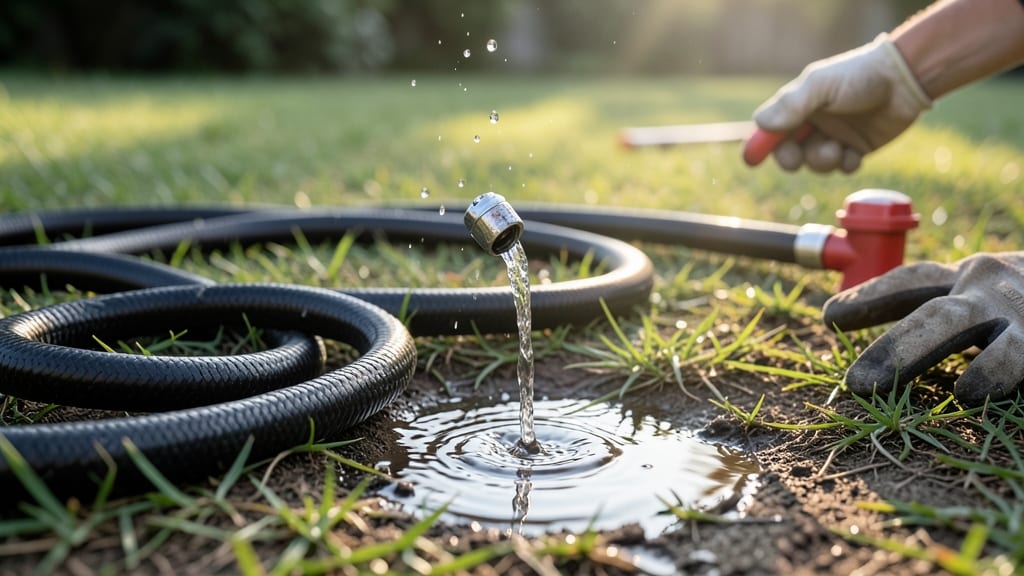
A garden hose leaking at the swivel usually happens because the rubber gasket is worn, the metal threads are corroded, or the connectors are stripped from repeated use. You can often fix it by tightening the coupling, using hose thread sealant, or replacing the rubber ferrule without buying a whole new hose.
A leaky swivel is often the result of normal wear and tear—especially if you use your hose frequently.
The rubber gasket inside the connector dries out over time, while metal threads can corrode from exposure to water and minerals. 🔧 Even slight loosening from turning the hose on/off repeatedly creates gaps where water escapes. The good news?
Most leaks can be stopped with basic tools and a little elbow grease—no need to replace the entire hose unless the damage is severe.
Before you start troubleshooting, check if the leak occurs when the hose is on or off. A steady drip while the water's running usually means the gasket is failing, while leaks that appear only when you turn the water on/off often point to stripped threads.
I always recommend starting with the simplest fix—tightening the coupling with a wrench—before moving to more involved solutions like sealant or part replacement.
💡 In This Article
- Why Garden Hose Swivel Leaks Happen
- Step-by-Step Swivel Leak Repair Guide
Why garden hose swivel leaks happen
The rubber gasket inside your hose swivel is the first line of defense against leaks. Over time, this gasket—typically made of neoprene or synthetic rubber—dries out and cracks from repeated exposure to water, UV rays, and temperature fluctuations.
When it degrades, it loses its ability to create a perfect seal between the male and female connectors. You'll often notice a slow, steady drip when the water is running, as high water pressure forces water past the compromised gasket. 🔥
Metal threads on the connectors are another common culprit. These threads corrode from mineral deposits in tap water, especially in areas with hard water. The corrosion creates tiny gaps where water can escape, even when the swivel is tightened.
Stripped threads from over-tightening or improper alignment also prevent a proper seal. Unlike the gasket, which fails gradually, thread issues often cause leaks that worsen with each use, sometimes even spraying water when you turn the hose on/off.
Water pressure plays a critical role in how leaks develop. Most residential systems operate at 40-60 PSI, but spikes can reach 80 PSI or higher. This pressure forces water through even microscopic gaps in the gasket or threads.
The swivel joint itself is designed to flex slightly when you turn the hose, but repeated bending weakens the metal and rubber components over time. 💫 This is why leaks often appear after years of regular use—even with high-quality hoses.
Another factor is the quality of the hose itself. Budget hoses often use thinner rubber and lower-grade metal connectors that wear out faster.
For example, a 3/4-inch diameter hose with a thin-walled rubber layer may show leaks within 2-3 years, while a heavy-duty 1/2-inch hose with reinforced connectors can last 5+ years.
The swivel's design also matters—some have exposed metal parts that rust quickly, while others feature plastic or coated metal that resists corrosion.
Environmental conditions accelerate wear. Hoses left coiled in direct sunlight experience 30-50% faster rubber degradation due to UV exposure. Freezing temperatures can cause the rubber to become brittle, while extreme heat softens it, both reducing its sealing effectiveness.
Even proper storage doesn't guarantee longevity if the hose is stored in a damp area, as moisture promotes mold growth on the rubber and corrosion on metal parts. ✨
Finally, how you use your hose matters. Frequent connections and disconnections—especially with force—strip the threads and wear down the gasket faster.
For example, gardeners who move their hose frequently between sprinklers and faucets may see leaks develop in 1-2 years, while those who use it seasonally might not notice issues for 4-5 years. The key takeaway is that swivel leaks are almost always preventable with proper care and maintenance.