
Planting
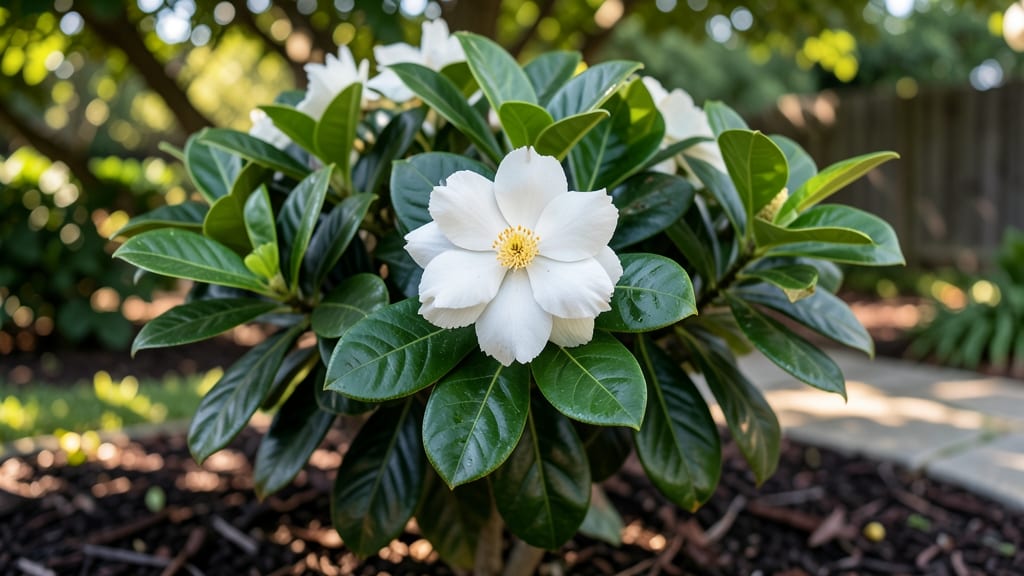
This gardenia hardy zone thrives best in USDA zones 8 through 11, where they can withstand winter temperatures without protection. In cooler zones like 7b, they need extra care—such as mulching, windbreaks, or container growing—to survive frost.
Gardenia's tropical roots explain why they struggle in colder climates—even a light frost can damage leaves and stunt growth. 🌱 The key is creating a sheltered microclimate: south-facing walls, thick mulch layers, or insulated containers can push their limits into zone 7b. I've seen gardeners in zone 7a succeed by overwintering potted plants in unheated garages, then moving them back outside in spring.
The trick is mimicking their natural warm, humid environment while protecting them from sudden temperature drops.
For container growers, drainage and insulation matter just as much as sunlight. Use pots with built-in saucers to prevent root rot from winter moisture, and wrap containers in bubble wrap or burlap for extra frost protection.
These adjustments let you enjoy gardenias' intoxicating blooms even when your zone falls outside their ideal range.
💡 In This Article
- Gardenia Cold Sensitivity: Why Zones 8-11 Are Critical
- Microclimate Hacks for Gardening Gardenias Outside Their Native Zone
Gardenia cold sensitivity: why zones 8-11 are critical
Gardenias originate from tropical regions of Asia and Africa, where temperatures rarely drop below 40°F (4°C). Their leaves contain delicate cells that begin to suffer irreversible damage when exposed to 32°F (0°C)—the threshold where ice crystals form in plant tissues.
Unlike deciduous trees that enter dormancy, gardenias remain metabolically active year-round, making them particularly vulnerable to cold snaps. Even a single night below 28°F (-2°C) can cause leaf blackening and bud drop, while prolonged exposure to 20°F (-7°C) or lower will kill the plant entirely.
The root system is equally sensitive, with fibrous roots that lack the protective insulation of woody stems. When soil temperatures drop below 50°F (10°C), root activity slows dramatically, reducing the plant's ability to absorb water and nutrients.
This creates a vicious cycle: as roots struggle, the plant becomes more susceptible to cold stress above ground. In zones 8-11, gardenias naturally experience mild winters with minimal temperature fluctuations, allowing them to maintain consistent growth patterns throughout the year. 🌿
Temperature fluctuations are the real enemy for gardenias. A sudden drop from 75°F (24°C) to 30°F (-1°C) within 24 hours can cause cellular shock, even if the final temperature isn't lethal.
This explains why gardenias in marginal zones (like 7b) often show symptoms of stress—yellowing leaves, stunted growth—before actual frost damage occurs. The plant's natural defense mechanisms, like producing antioxidants to combat cold stress, become overwhelmed when exposed to rapid temperature changes beyond their evolutionary adaptation range.
What most gardeners don't realize is that gardenias have a critical nighttime temperature threshold of 45°F (7°C) for optimal growth. Below this point, photosynthesis slows to a crawl, and the plant begins diverting energy toward survival rather than flowering.
This is why you'll often see gardenias in zone 8 struggling to bloom if they experience frequent nights below 40°F (4°C)—their energy reserves are being used to maintain cellular integrity rather than producing flowers.
The tropical origin isn't just about heat preference; it's about consistent thermal stability that gardenias evolved to depend upon.
Even in ideal zones, gardenias show their tropical nature through other adaptations. Their thick, waxy leaves help conserve moisture in humid environments, while their glossy surface reflects excess sunlight during peak tropical sun.
These same features make them particularly sensitive to dry, cold winds—common in transitional zones—which is why windbreaks become such an essential microclimate tool. The plant's entire physiology is finely tuned to a narrow range of conditions that simply don't exist in most temperate climates outside zones 8-11.
Understanding these biological limits explains why gardenias in cooler zones often require more intensive care than other tropical plants. While hibiscus or bougainvillea might survive brief cold snaps, gardenias have virtually no cold tolerance built into their genetic makeup.
This isn't just about surviving winter—it's about maintaining the delicate balance of cellular processes that allow them to produce their signature intoxicating fragrance and abundant blooms. 🌸