Aphids
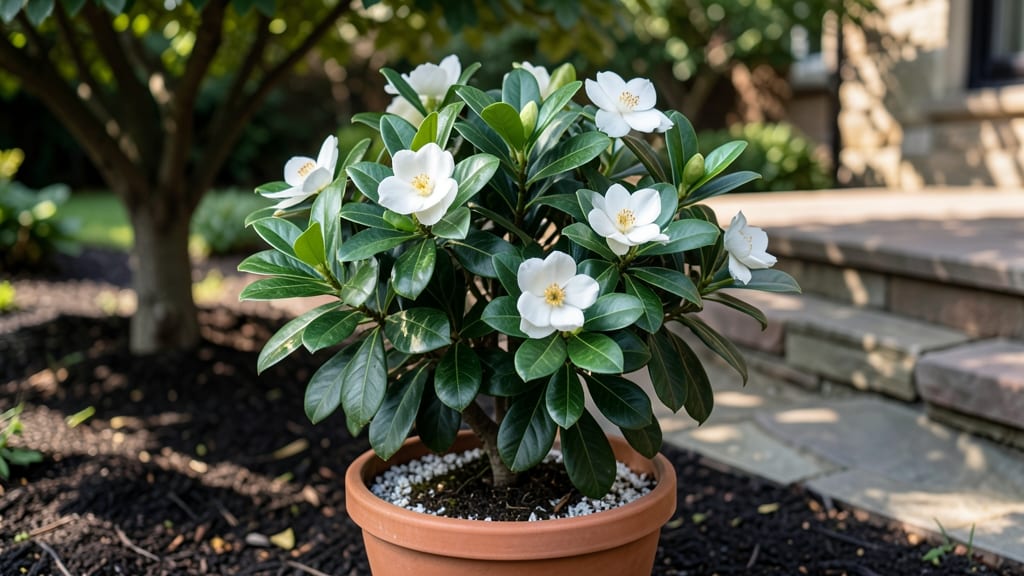
Understanding gardenia height and width is the first step to planning a fragrant, low-maintenance shrub that thrives in your space.
If you’re dreaming of fragrant white blooms but struggling to visualize how gardenias will fit in your garden, their mature size could make or break your landscaping plans—especially since varieties range from compact shrubs to towering specimens.
For example, the classic Gardenia jasminoides 🌸 can reach 4 to 6 feet tall with a spread of 3 to 5 feet, while dwarf varieties like ‘Radicans’ stay under 2 feet tall and wide. Sunlight, soil acidity, and pruning all play a role in keeping them within bounds.
Below, I’ll break down the mature sizes of popular varieties, share spacing tips for full blooms, and show you how to control their growth—whether you’re working with a small balcony or a sprawling backyard.

Gardenia mature height and width by variety: complete size comparison
Choosing the right gardenia variety isn’t just about fragrance—it’s about space planning. Some varieties grow like tall hedges, while others stay compact enough for container gardening.
Without knowing their mature dimensions, you might end up with a gardenia that outgrows its spot or fails to fill the space you intended. Let’s break down the height and width of 10 popular varieties so you can pick the perfect fit for your landscape.
Most gardenias thrive in USDA Zones 8-10, but some cold-hardy varieties like ‘Kleim’s Hardy’ extend their range to Zone 6. Their growth habits vary too—some grow upright and leggy, while others form dense mounds.
Understanding these differences helps you decide whether a variety will work as a foundation plant, privacy screen, or container specimen.
Here’s a quick look at what to expect at maturity, including spacing recommendations to ensure full blooms and healthy growth. Always account for 3-4 feet of clearance around the plant for airflow, which reduces disease risk.
How to control gardenia size: pruning tips for compact growth
Pruning is the secret to keeping your gardenia at your desired height and width while encouraging healthy blooms. Whether you’re dealing with a 6-foot giant or a dwarf variety, timing and technique matter.
The key is to trim at the right time—either right after blooming or during dormant season—to avoid cutting off next year’s flowers.
Before grabbing your shears, gather these essential tools: sterilized pruning shears, sharp bypass pruners, gloves, and disinfectant. Sterilizing your tools prevents spreading disease between cuts.
For dwarf varieties like ‘Radicans,’ use smaller hand pruners for precision. Always prune on a dry, sunny day to reduce stress on the plant.
-
Step 1: Identify Your Goal
Decide whether you want to reduce height, control width, or shape the shrub. For example, if your gardenia is too tall, focus on cutting back the top growth. For overgrowth, trim outward branches.
-
Step 2: Choose the Right Time
Trim right after blooming (late summer) to avoid cutting off next year’s flowers. Alternatively, prune during dormant season (late fall/winter) for a cleaner look. Never prune in early spring when buds are forming.
-
Step 3: Cut at the Right Angle
Make cuts just above a leaf node (the bump where leaves grow) at a 45-degree angle. This encourages new growth and prevents water from pooling on the cut. For thick branches, use three cuts to avoid tearing.
-
Step 4: Adjust for Variety
Dwarf varieties (e.g., ‘Radicans’) need light trims to maintain shape, while standard types (e.g., ‘Kleim’s Hardy’) can handle harder pruning. For upright growth, cut back the top third of the plant. For bushier growth, trim back outer branches.
-
Step 5: Clean Up and Fertilize
Remove all dead or diseased branches and dispose of them in the trash, not your compost. After pruning, apply a balanced fertilizer (10-10-10) to encourage new growth. Water deeply to help the plant recover.
For compact growth, avoid over-pruning—never remove more than one-third of the plant in a single session. This ensures your gardenia stays healthy and blooms abundantly. If you’re growing gardenias in containers, prune more frequently (every 4-6 weeks) to control their size and encourage bushier growth.
Pro tip: Use espalier training for gardenias in small spaces. This method involves tying branches to a trellis or wall to grow flat against it, saving space while keeping the plant manageable. It’s perfect for balconies or patios where vertical growth is ideal.
With consistent pruning, your gardenia will stay neat, fragrant, and proportional to your garden’s design. Start small, observe how it responds, and adjust your approach as needed. Happy pruning! 🌿✂️