Companion Plants
Gardening tropical plants 🌴 can feel like a challenge if your climate isn’t naturally humid—but it’s absolutely doable with the right approach.
Picture this: your ferns are crisping at the edges, your orchids are dropping buds, and your palms look more sad than lush. The problem isn’t your green thumb—it’s the air.
Tropical plants thrive in 70% humidity or higher, but most homes hover around 30-50%, leaving them parched even when the soil is damp.
Here’s the good news: you don’t need a greenhouse budget to recreate their natural environment.
From pebble trays that double as decor to strategic misting schedules, I’ll show you how to keep your tropical plants thriving year-round—whether you’re working with a sunroom, a balcony, or just a few pots on a windowsill.
You’ll learn which low-humidity-friendly varieties (like snake plants or bird-of-paradise) need less fuss, how to spot early signs of stress before it’s too late, and the one simple trick that saves my hibiscus from winter browning every year.
How to increase humidity naturally for tropical plant growth
Tropical plants like monstera deliciosa and calathea crave 60-80% humidity, but most homes hover around 30-50%. Without intervention, your fern leaves will crisp, and orchid blooms will wilt prematurely.
The good news? You don’t need fancy humidifiers—just a few low-cost, natural hacks to transform your space into a tropical paradise.
Start by understanding your plants’ needs. High-humidity lovers like philodendrons and peace lilies show stress first with brown leaf tips or curling fronds. These signs mean it’s time to act.
The methods below work for both indoor potted plants and outdoor garden beds, so pick what fits your setup.
Here’s how to boost humidity naturally, step by step:
Create a Pebble Tray
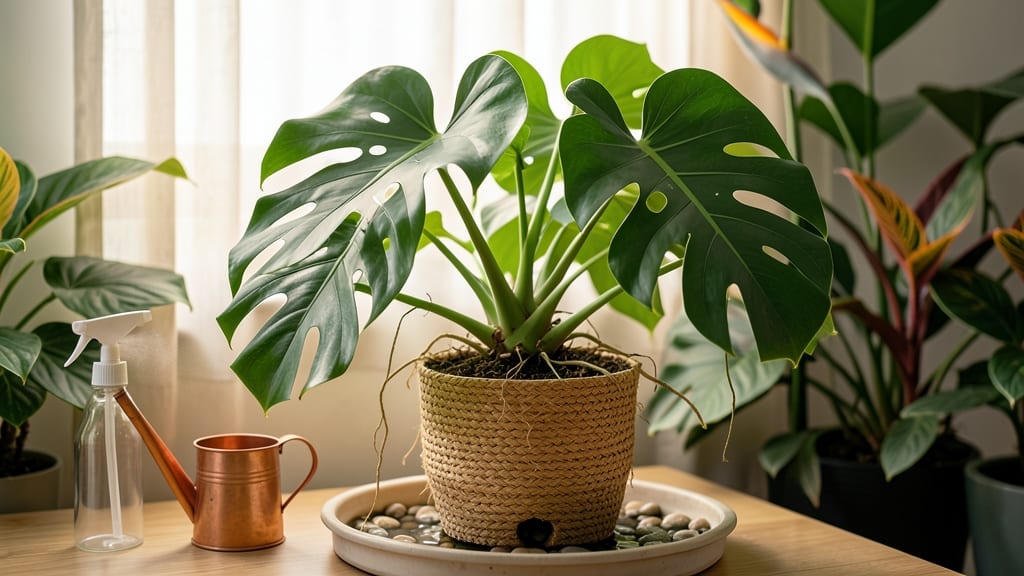
Fill a shallow tray with clean pebbles or gravel, add water until pebbles are half-submerged, and place your potted tropical plants on top. The evaporating water creates a microclimate of humidity around the plant.
Best for: Small to medium pots (e.g., calathea, pothos, fiddle-leaf fig)
Mist Lightly and Often
Use a spray bottle filled with room-temperature water to mist your plants’ leaves and soil 2-3 times daily. Focus on the undersides of leaves, where stomata absorb moisture. Avoid over-misting—soggy soil leads to root rot.
Best for: Small plants (e.g., orchids, bromeliads, seedlings)
Build a DIY Humidity Dome
Cover seedlings or cuttings with a clear plastic dome, plastic wrap, or even a cut-off plastic bottle to trap moisture. Remove daily for 10-15 minutes to prevent mold growth. Ideal for propagating or reviving stressed plants.
Best for: Seedlings, new cuttings, recovering plants
Group Plants Together
Cluster 3-5 tropical plants in one area—they’ll create their own humidity microclimate through transpiration. Add a small water feature, like a tabletop fountain or bowl of water, nearby to increase ambient moisture.
Best for: Living rooms, bathrooms, greenhouses
Use Moisture-Retaining Mulch
For outdoor gardens, topsoil with 2-3 inches of organic mulch like cocoa hulls or pine bark. Mulch slows evaporation and keeps root zones humid. Replenish every 3-6 months as it breaks down.
Best for: Outdoor beds, container gardens, palm trees
For indoor setups, pair these methods with a hygrometer to monitor humidity levels. Aim for 50%+ near your plants, especially during winter when indoor air gets dry.
If your leaves still crisp, try placing a moist towel over the top of the soil in pots—it’ll slowly release moisture as it dries.
Outdoor gardeners can take it a step further by installing a simple drip irrigation
Best tropical plants for low-humidity gardens (and how to care for them)
If you love the look of tropical plants but live in a dry climate, don’t despair! Some tropical varieties are surprisingly resilient when given the right care. I’ve grown these low-humidity survivors in my own arid garden, and they’ve thrived with minimal fuss.
The secret? Choosing the right plants and adjusting your care routine to mimic their natural environment—without needing a rainforest.
These hardy tropicals can handle 40-50% humidity (or even lower with extra attention) while still delivering that lush, exotic vibe. From drought-tolerant palms to air-purifying succulents, here’s my curated list of the best performers, plus the care tweaks that keep them happy in dry conditions.
My snake plant is the ultimate low-maintenance tropical—it survives on neglect and still purifies the air. I place mine near my south-facing window where it gets 6 hours of direct sun daily, and I only water it when the soil feels bone-dry.
The key with these plants is underwatering over overwatering—they’ll forgive dry air better than soggy roots.
For larger tropicals like bird-of-paradise, I’ve found that mulching with straw helps retain moisture in the soil while keeping humidity levels up around the roots. Grouping plants together also creates a microclimate that mimics their natural habitat.
Even in my 30% humidity climate, these plants stay lush because they’re not fighting for every drop of moisture.
If you’re new to tropical gardening, start with the ZZ plant or snake plant—they’re the most forgiving and will teach you the basics of low-humidity care. Once you’ve mastered those, graduate to rubber plants or dwarf palms for a bolder tropical look.
Remember, the goal isn’t to recreate a rainforest but to give your plants the right balance of care for their specific needs.
With these hardy tropicals and a few simple adjustments, you’ll have a thriving garden that feels like a vacation—no matter where you live. 🌿