
Tools
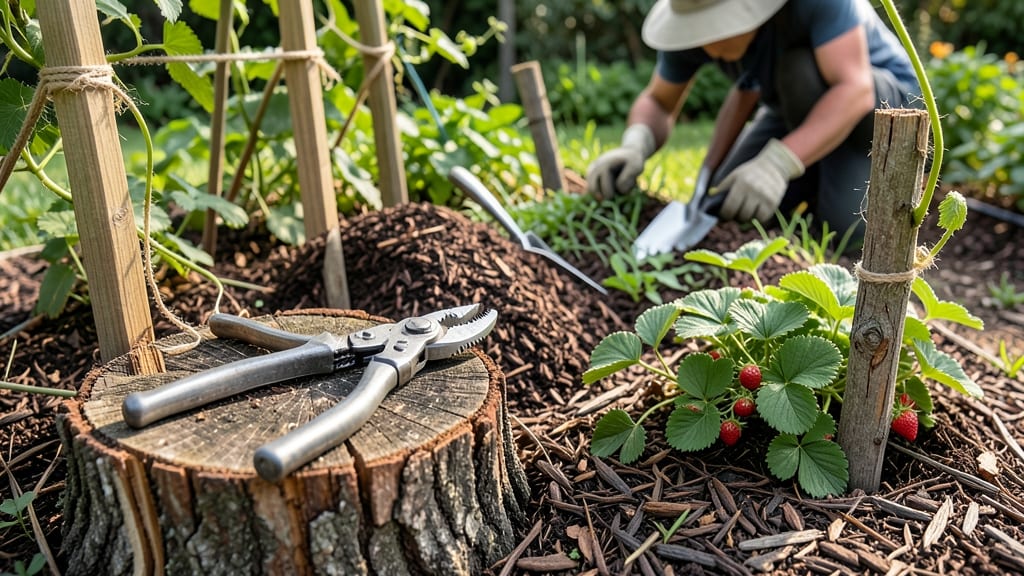
The Homeless Garden Project in Santa Cruz, CA, transforms urban spaces into thriving gardens that combat food insecurity through hands-on volunteer opportunities in composting, seed saving, and sustainable farming practices.
The Homeless Garden Project in Santa Cruz, CA, turns underused urban land into productive gardens that grow fresh produce for food banks and community members. 🌱 This initiative focuses on permaculture and regenerative farming to minimize waste while maximizing yields.
Volunteers don't just help grow food—they learn practical skills like composting techniques and seed-saving methods that can be applied to their own gardens.
What sets this project apart is its dual mission: addressing hunger while building community resilience. By teaching workshops and distributing organic produce, they create a cycle of sustainability that benefits everyone involved.
Whether you're a gardening novice or an experienced green thumb, there's a role for you to contribute to this meaningful work.
💡 In This Article
- How the Homeless Garden Project Transforms Urban Farming in Santa Cruz
- Step-by-Step Guide to Joining Santa Cruz’s Homeless Garden Project
How the homeless garden project transforms urban farming in Santa Cruz
The Homeless Garden Project (HGP) in Santa Cruz repurposes abandoned lots and underused urban spaces into vibrant, food-producing gardens using permaculture design principles. This approach mimics natural ecosystems to create self-sustaining systems that require minimal external inputs.
For example, their 2-acre site produces over 20,000 pounds of organic produce annually, much of which goes directly to local food banks like the Community Action Board of Santa Cruz County.
One of their most innovative techniques is composting systems that convert food waste into nutrient-rich soil amendments. Their vermicomposting bins (using worms) and aerated static pile composting methods break down organic waste at a rate 3-5 times faster than traditional composting, reducing landfill contributions while enriching garden beds.
The project also implements rainwater harvesting—collecting 50,000+ gallons annually—to irrigate crops without municipal water dependence.
Beyond food production, HGP addresses food insecurity through education and distribution programs. Their "Pay What You Can" farmstand offers fresh produce at accessible prices, while workshops on seed saving teach participants how to preserve heirloom varieties.
This hands-on learning creates a cycle where volunteers gain skills that empower them to grow food independently. The project's model has been replicated in other cities, proving its scalability as a solution to both hunger and environmental degradation.
What makes HGP's approach unique is its regenerative focus. Unlike conventional farming, which often depletes soil, their methods—like cover cropping with clover and vetch—build soil health over time.
These leguminous plants fix nitrogen in the soil, reducing the need for synthetic fertilizers. The result? Gardens that not only feed people but also restore ecosystems in an urban setting.
Consider the economic impact as well: Volunteers who learn composting techniques can apply these skills to home gardens, reducing their own food costs. Meanwhile, the project's produce distribution reduces reliance on industrial food systems.
It's a multi-layered solution where every action—from composting to harvesting—contributes to both community health and environmental sustainability.
For those curious about the science, the project's success hinges on closed-loop systems. Food waste becomes compost, which nourishes plants, which produce food that feeds people—all while minimizing resource waste. This circular approach is what makes HGP a model for urban agriculture worldwide.