
Blooming
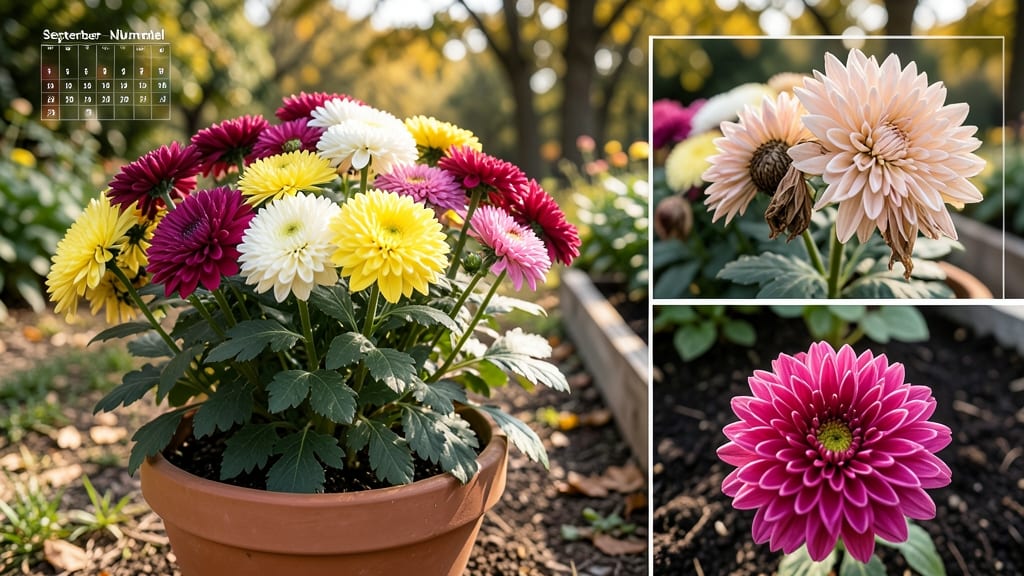
Garden mums bloom for 6 to 8 weeks during fall, starting in early September and lasting until the first hard frost. With consistent care, they can sometimes survive into early winter, particularly in warmer regions.
Garden mums thrive in cooler weather, which is why their blooming season aligns perfectly with fall's crisp air. 🌸 The key to extending their lifespan lies in protecting them from early frost—covering plants with frost cloth or moving potted mums indoors can add weeks to their display.
I've seen mums in USDA Zone 7 or warmer regions last well into November if given proper shelter and moisture.
What many gardeners don't realize is that these plants actually go dormant when temperatures drop, not die. With the right overwintering techniques—like mulching heavily and reducing watering—you can revive them the following spring. The secret is balancing care with nature's cycle rather than fighting it.
💡 In This Article
- Factors Affecting Garden Mum Longevity
- Tips to Extend Garden Mum Blooms
Factors affecting garden mum longevity
Garden mums thrive on a delicate balance of temperature and daylight, which is why their blooming window typically spans 6-8 weeks during fall.
These plants are sensitive to daylight hours, entering their peak flowering phase when days shorten to 12 hours or less—a natural trigger that occurs around early September in most temperate zones.
The cooler temperatures (50-65°F) during fall also slow their metabolic rate, conserving energy for extended blooming rather than rapid growth. 🌸
Soil conditions play a crucial role too. Mums prefer well-draining, slightly acidic soil (pH 6.0-6.5) with organic matter, which helps roots absorb moisture and nutrients efficiently. In heavy clay soils, roots can suffocate, accelerating decline, while sandy soils may dry out too quickly, causing stress.
The ideal soil mix mimics their natural habitat in mountainous regions, where they grow in rocky, well-aerated environments. In my own garden, I've noticed mums planted in raised beds with composted pine bark last 2-3 weeks longer than those in native soil.
Frost is the ultimate limiting factor, as temperatures below 28°F trigger dormancy by causing cellular damage in the leaves and stems. This isn't an instant kill—it's a survival mechanism where the plant redirects resources to its roots.
The first hard frost typically arrives in November in most of the U.S., but in Zone 5 or colder, it can hit as early as October.
What's fascinating is how the plant's response varies by cultivar: hardy varieties like 'Autumn Beauty' can tolerate 20°F for short periods, while tender types may show frost damage at 32°F. 🥶
Daylight exposure also creates regional variations. In southern climates (Zone 8+), where nights remain warm, mums may continue blooming until December or even January, while northern gardens (Zone 3-4) see blooms taper off by late October.
The difference comes down to the vernalization process—a biological response to cold that mums need to break dormancy. In warmer areas, this process happens later, extending the bloom window.
I've observed mums in San Diego lasting 10 weeks compared to just 5 weeks in Chicago, even when planted at the same time.
Watering patterns create another critical factor. Mums are drought-tolerant once established, but inconsistent moisture—either too much or too little—can shorten their lifespan. Overwatering leads to root rot, while underwatering causes buds to drop prematurely. The 1-inch-per-week rule works well: water deeply when the top 2 inches of soil feel dry.
In containers, this means every 2-3 days in hot weather, while in-ground plants may only need weekly watering. Proper hydration keeps the plant's vascular system functioning, ensuring nutrients reach the blooms for that vibrant display. 💧
Finally, the plant's natural aging process comes into play. Each bloom cycle uses up stored energy, and after 6-8 weeks, most mums have expended enough reserves to enter dormancy.
This is why you'll often see mums in nurseries labeled as "annuals"—they complete their life cycle in one season, though many gardeners successfully overwinter them. The key is understanding that their extended lifespan depends on mimicking their natural conditions rather than forcing unnatural growth patterns. 🌿