Light Requirements
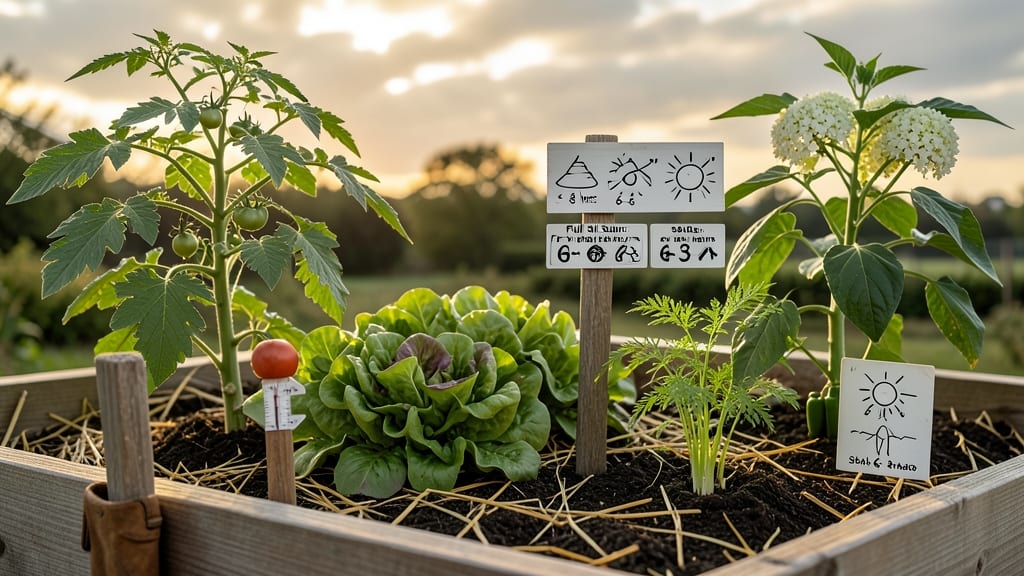
A veggie garden needs at least 6 hours of sunlight daily to thrive—more for sun-loving crops like tomatoes and peppers, less for leafy greens like lettuce.
Struggling to decide where to plant your veggies? Sunlight is the single most critical factor in determining whether your garden thrives or withers—yet most gardeners get it wrong. Too little light, and your plants stretch weak and leggy; too much, and they bolt or scorch.
The good news? With the right placement, you can maximize your harvest even in tricky spaces.
Not all vegetables are created equal when it comes to light. While tomatoes, peppers, and cucumbers crave full sun, leafy greens like spinach and kale can handle partial shade.
I’ll break down exactly how much light each crop needs, plus how to measure sunlight in your yard and tweak your layout for the best results.
Ready to stop guessing and start growing? By the end, you’ll know exactly where to plant every seedling—no more wasted space or sad, sun-starved plants. Let’s get started.

Sunlight requirements by vegetable type: full sun vs partial shade explained
Sunlight isn't just light—it's the lifeblood of your vegetable garden. Most gardeners assume all veggies need full sun, but the truth is more nuanced. Tomatoes and peppers thrive in 6+ hours of direct sun, while lettuce and spinach bolt in too much heat.
Understanding these differences can transform your garden from struggling to spectacular.
Before you plant, know this: 3-6 hours of sun qualifies as partial shade, and anything under 3 hours is shade-tolerant. The key is matching each plant's needs to your garden's light conditions. I've planted sun-loving crops in shady spots before—don't make my mistake!
| Vegetable | Sun Needs | Water Needs | Mature Size | Best For |
|---|---|---|---|---|
| Tomatoes | 6-8+ hrs (Full Sun) | 1-2" weekly (deep water) | 1-6 ft tall | Sauces, slicing, containers |
| Peppers (Bell, Jalapeño) | 6-8 hrs (Full Sun) | 1" weekly (consistent) | 1-3 ft tall | Fresh eating, drying |
| Cucumbers | 6-8 hrs (Full Sun) | 1-2" daily (high) | 5-10 ft vining | Pickles, salads, trellises |
| Green Beans | 6-7 hrs (Full Sun) | 1" weekly (moderate) | 2-5 ft tall | Bush or pole varieties |
| Lettuce (Leaf) | 3-6 hrs (Partial Shade) | 1" every 2 days | 6-12" tall | Spring/fall harvests |
| Spinach | 3-5 hrs (Partial Shade) | 1" every 2 days | 1-2 ft tall | Cool-season greens |
| Swiss Chard | 3-6 hrs (Partial Shade) | 1-2" weekly | 1-2 ft tall | Cut-and-come-again |
| Radishes | 3-6 hrs (Partial Shade) | 1" every 2 days | 6-12" tall | Fast harvest (30 days) |
| Carrots | 3-5 hrs (Partial Shade) | 1" every 3 days | 6-12" long | Loose, deep soil |
| Bok Choy | <3 hrs (Shade-Tolerant) | 1" every 2 days | 1-1.5 ft tall | Asian stir-fries |
| Kale | <3 hrs (Shade-Tolerant) | 1" every 3 days | 1-2 ft tall | Year-round harvests |
Notice how tomatoes and peppers dominate the full-sun category? These heat-lovers need intense sunlight to produce fruit. Without it, you'll get leafy plants with few tomatoes or peppers. I once planted bell peppers in a partially shaded spot—they produced tiny, bitter peppers instead of the juicy ones I expected.
On the other hand, leafy greens like lettuce and spinach actually prefer partial shade in hot climates. Too much sun causes them to bolt (go to seed) prematurely. I learned this the hard way
How to measure sunlight in your garden and adjust plant placement
Measuring sunlight in your garden isn’t just about eyeballing the sunniest spot—it’s about tracking light patterns throughout the day and across seasons. I’ve learned the hard way that what looks like full sun in summer might be partial shade in winter.
Start by observing your yard for at least one full week to account for cloudy days and seasonal shifts.
Begin by marking potential planting spots with stakes or flags. Use a sunlight tracker app (like Sun Surveyor or Plantix) to log hours of direct light each day. These tools automatically adjust for your location and time of year, giving you precise data.
For a DIY approach, place a white piece of paper in each spot—shadows will reveal how much light reaches the ground.
⚠️ WARNING: Most Veggie Gardens Fail Here ⚠️
⚠️ Sunlight needs vary WILDLY by crop—and by season. A tomato plant needs 6-8+ hours of direct sun daily, but if you plant it where it only gets 4 hours in summer, you’ll end up with small, bitter fruit. Even shade-loving lettuce will bolt if exposed to too much midday heat. Measure before you plant!
✅ DO: Test spots for 2-4 weeks before planting.
❌ DON’T: Assume "full sun" means all day—morning vs. afternoon sun matters too!
Adjust for seasonal changes—what’s full sun in June might be partial shade in December. Trees, buildings, and even your own height can block light at different times of year.
I recommend drawing a shadow map of your yard at solstices to plan accordingly. For example, a south-facing wall extends sunlight in winter but creates shade in summer.
Use reflective surfaces like white gravel or light-colored mulch to bounce extra light onto shade-prone areas. For containers, rotate them weekly to ensure even sun exposure.
If your garden has hot afternoon sun, prioritize shade-tolerant crops like bush beans or Swiss chard in those spots, while moving sun-lovers to morning-light areas.
Don’t forget to monitor plant health as you adjust. Leggy seedlings or yellowing leaves signal too little light, while crispy edges or wilting mean too much. By tweaking placement based on real-time observations, you’ll create a balanced, high-yield garden that works with your yard’s natural light.
Start small, track your results, and refine over time—your harvest will thank you!