
Watering
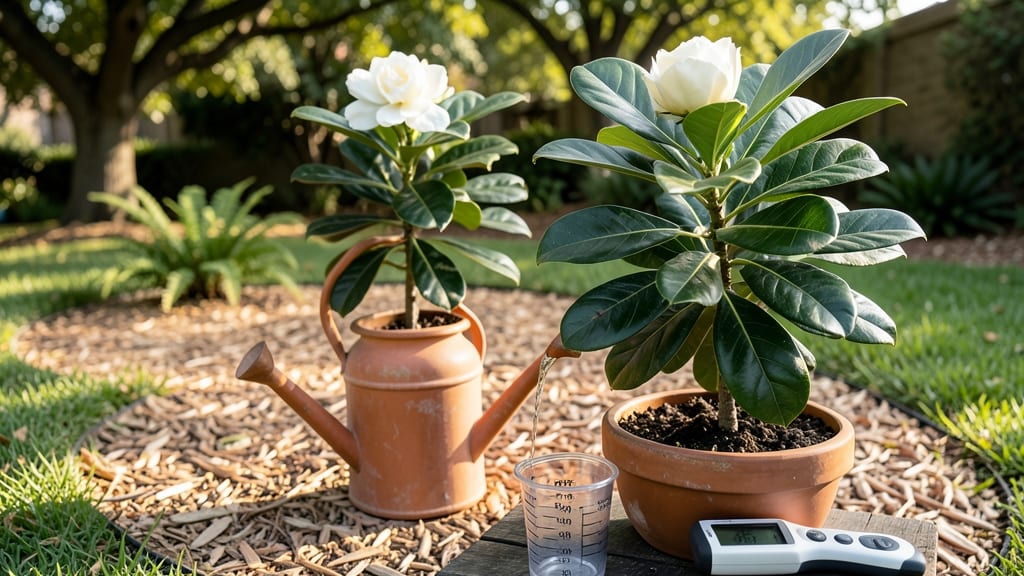
To keep your gardenia blooming with fragrant, glossy perfection, how much water do gardenias need—about 1 to 1.5 inches per week—is the secret weapon against wilted leaves and root rot.
Gardenias are prized for their intoxicating fragrance and glossy foliage—but overwatering or underwatering can turn your prized plant into a sad, wilted shadow.
This tropical beauty thrives on consistency, but its needs shift with the seasons. Too much water drowns its roots, while too little stunts its growth and blooms.
I’ll break down the exact schedule for spring’s thirst, summer’s deep soaks, and winter’s rest—plus how to tell if your gardenia is begging for a drink or drowning in pity.
By the end, you’ll know when to water, how deep to go, and why mulch is your gardenia’s best friend—so you can enjoy those heavy, creamy blooms all season long.
Gardenia watering schedule by season: daily vs weekly needs
Gardenias thrive when their watering routine mirrors their natural tropical habitat—consistent moisture without soggy roots. The key lies in balancing seasonal demands, soil conditions, and plant maturity. New gardenias need more frequent watering to establish roots, while mature bushes develop deeper root systems that store moisture.
Let's break down how to adjust your watering schedule by season to keep your gardenia blooming beautifully.
First, understand that gardenias prefer 1-1.5 inches of water per week during active growth (spring and summer). However, this changes dramatically in cooler months. Overwatering is the #1 killer of gardenias—it causes root rot and yellowing leaves, while underwatering leads to wilting and dropped buds.
The solution? A soil moisture test before each watering session.
Stick your finger 2-3 inches deep into the soil. If it feels dry at this depth, it's time to water. If it's still damp, wait another day or two.
This simple check prevents both overwatering and underwatering. For potted gardenias, check the moisture level daily since containers dry out faster than in-ground plantings.
Humidity and temperature play huge roles in your gardenia's water needs. In hot, dry climates, you may need to water daily, while cooler, humid regions might only require watering every 5-7 days. Always water in the early morning to allow foliage to dry before nightfall, reducing fungal risks.
⚠️ SUMMARY TABLE ⚠️
| Season | New Plants (0-2 yrs) | Mature Plants (3+ yrs) | Water Depth | Notes |
|---|---|---|---|---|
| Spring | Every 2-3 days | Every 3-4 days | 1-1.5 inches | Increase frequency with new growth |
| Summer | Daily or every other day | Every 2-3 days | 1.5-2 inches | Deep watering essential for blooms |
| Fall | Every 4-5 days | Every 5-7 days | 1 inch | Reduce as temps drop |
| Winter | Every 7-10 days | Bi-weekly | 0.5-1 inch | Dormant phase; minimal water |
Spring is all about reawakening growth. As temperatures rise and buds form, increase watering to every 2-3 days for new plants and every 3-4 days for mature bushes. Aim for 1-1.5 inches of water per session, delivered slowly at the soil base to encourage deep root development.
Mulch around the base with 2-3 inches of organic mulch to retain moisture and regulate soil temperature.
Summer demands the most attention. With high evaporation rates and intense heat, gardenias may need watering daily or every other day, especially in containers. Always water deeply—1.5-2 inches per session—to reach the roots.
Monitor for wilting between waterings, which signals it's time to hydrate. If your gardenia's leaves feel dry to the touch, increase frequency slightly.
Fall marks the transition to dormancy. As temperatures drop below 70°F, reduce watering to every 5-7 days for mature plants. New plants still need slightly more attention—every 4-5 days.
Cut back to 1 inch of water per session and avoid overhead watering to prevent fungal diseases like powdery mildew, which thrives in cool, damp conditions.
Winter care is minimal but critical. Gardenias enter dormancy, and their water needs drop significantly. Water bi-weekly for mature plants and every 7-10 days for new ones, providing just 0.5-1 inch of water per session.
Always check soil moisture before watering—overwatering in winter can suffocate roots and lead to rot. If your gardenia is in a pot, move it to a sheltered location to protect it from freezing winds.
Pro tip: Group your gardenias with other thirsty plants like hydrangeas or camellias to create a microclimate that retains moisture. Adding a layer of pine needles as mulch not only conserves water but also mimics the acidic soil gardenias love. Adjust your schedule based on
Signs your gardenia is overwatered or underwatered (and how to fix it)
Your gardenia might look stunning with its glossy leaves and fragrant blooms, but watering mistakes can quickly turn it into a sad, droopy mess. The key is spotting the visual warnings early—whether it's yellowing leaves from overwatering or crispy brown edges from thirst.
Let's decode these clues so you can rescue your plant before it's too late.
Overwatering and underwatering both cause stress, but the symptoms are polar opposites. Yellow leaves and mushy stems scream "too much water!" while wilted leaves and dry soil signal dehydration. The good news? Both issues are fixable with the right adjustments to your watering routine and soil conditions.
🌱 PROS-CONS BOX: Watering Gardenias – The Perfect Balance
- 💧 Water deeply 2-3x/week in summer
- 🌡️ Check soil moisture 1 inch down before watering
- 🪴 Use well-draining soil with perlite
- ☀️ Water in morning sunlight to reduce fungal risk
- 🚫 Water on a schedule without checking soil
- 🚫 Let soil stay soggy for days (root rot risk)
- 🚫 Use heavy clay soil without amendments
- 🚫 Water at night (encourages mold)
If your gardenia leaves are yellowing with soft spots, you're likely overwatering. This creates the perfect environment for root rot and fungal diseases. The fix? Let the top 2 inches of soil dry out between waterings and consider repotting with better-draining mix.
For potted gardenias, ensure the container has drainage holes and avoid saucers that trap water.
On the flip side, brown leaf edges and wilting foliage mean your plant is thirsty. Unlike many tropical plants, gardenias don't love drought, so adjust your schedule to water when the top 1 inch of soil feels dry.
In extreme cases, submerge the pot in water for 10-15 minutes to fully rehydrate the roots—just don't let it sit in standing water afterward.
For emergency recovery, trim any severely damaged leaves to redirect energy to healthy growth. If root rot is suspected, prune affected roots and treat with a fungicide before repotting.
Remember: gardenias thrive in consistent moisture, not soggy soil or bone-dry conditions. With these fixes, your plant should bounce back in 2-4 weeks.
Pro tip: Use a moisture meter or the finger test (stick your finger 1 inch deep) to avoid guessing. Your gardenia's health depends on finding that goldilocks zone—not too wet, not too dry, but just right for those show-stopping blooms! 🌸