Watering
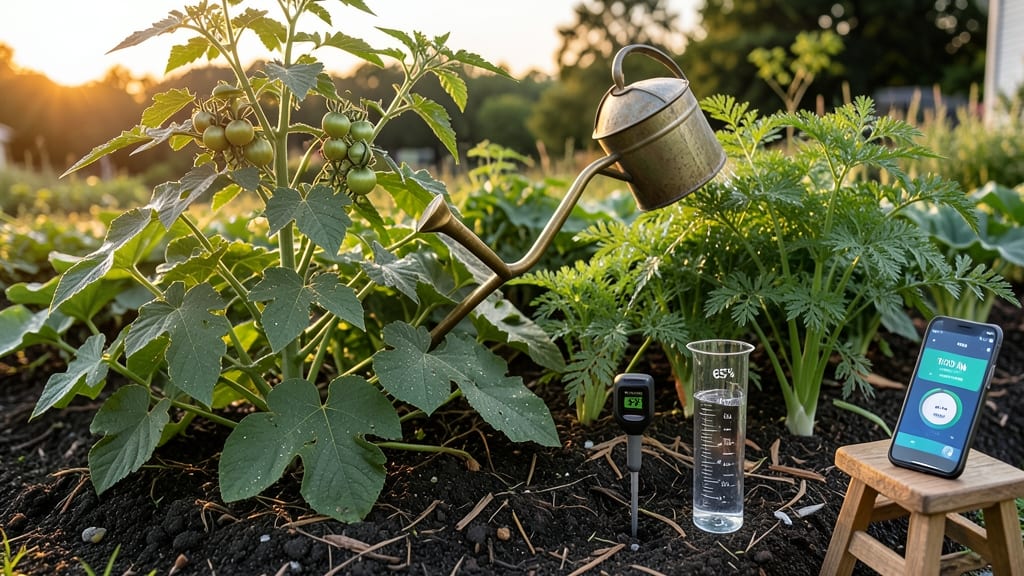
Your garden needs 1 to 2 inches of water per day—but that number changes faster than the weather forecast, depending on soil, plants, and even the time of year.
Most gardeners overwater by habit, wasting thousands of gallons while their plants drown or struggle. The truth? A sandy soil might need twice as much as clay, and seedlings drink like a sponge compared to mature 🌱 plants.
Without the right approach, you’re either drowning your roots or leaving them parched.
This isn’t about guessing—it’s about measuring. I’ll break down how soil type, climate, and plant stages rewrite the rules, plus the zero-waste hacks that cut water use by 40% while keeping your garden thriving.
Ready to stop the guesswork? You’ll learn the exact watering schedule for your setup, from the "finger test" for soil moisture to the best tools for efficient irrigation that save time and resources.
Daily water needs by soil type: the science behind efficient irrigation
Your garden’s soil type is the single biggest factor in determining daily water needs. Sandy soil drains like a sieve, while clay holds moisture like a sponge—yet both extremes stress plants if mismanaged.
Understanding your soil’s water retention capacity lets you water smarter, not harder, and cuts waste by up to 40%. Let’s break down how each soil type behaves and what it means for your watering routine.
Most gardeners assume one inch per week is universal, but that’s a myth. In reality, sandy soils may need watering daily in summer, while clay soils might only require watering every 5-7 days.
The key? Percolation rate—how fast water drains—and field capacity, or how much water soil can hold without flooding roots. I’ll show you how to test yours in just 10 minutes.
| Soil Type | Water Retention | Daily Needs (Summer) | Percolation Rate | Plant Stress Risk |
|---|---|---|---|---|
| Sandy | Low (drains fast) | 0.25–0.5 inches/day | Very Fast (5+ mins) | High (drought stress) |
| Loamy | Moderate (ideal balance) | 0.5–1 inch/day | Moderate (15–30 mins) | Low (minimal stress) |
| Clay | High (holds moisture) | 0.1–0.3 inches/day | Slow (30+ mins) | High (root rot risk) |
| Rocky | Very Low (limited root zone) | 0.1–0.2 inches/day | Fast (varies by gaps) | Moderate (shallow roots) |
Let’s start with sandy soil, the fastest-draining type. If your garden has this soil, you’ve likely seen water disappear like magic after rain. The problem? Plants like tomatoes or peppers need consistent moisture, but sandy soil can’t hold enough.
My trick? Deep watering 2-3 times per week instead of daily shallow watering. Aim for 1–1.5 inches per session to encourage roots to grow deeper, where moisture lingers longer.
On the opposite end, clay soil is a water-holding champion—but that’s a double-edged sword. While it retains moisture well, it also compacts easily, suffocating roots. If your soil feels sticky when wet and hard when dry, you’re in clay territory.
Here, less frequent watering is key. Most clay gardens only need 0.25 inches every 2–3 days in summer. To improve drainage, mix in compost or sand (yes, even sand helps break up clay!).
Loamy soil, often called the gold standard, is the perfect balance of sand, silt, and clay. It drains well but retains enough moisture for most plants. If you’re lucky enough to have this, your watering life just got easier: 0.5–1 inch per week is typically enough. Loamy soil is also rich in nutrients, so plants like lettuce or carrots thrive with minimal fuss. Pro tip: Test your soil’s loaminess with the squeeze test—crush a handful; if it holds shape but crumbles easily, you’ve hit the jackpot.
Now, what if your garden is rocky or gravelly? These soils have poor water retention because water seeps through gaps. Plants here often have shallow root systems to access moisture quickly. For rocky gardens, mulch heavily with straw or wood chips to slow evaporation.
Water early in the morning to reduce loss, and consider drip irrigation to deliver water directly to roots where it’s needed most.
To avoid guesswork, perform a simple percolation test. Dig a hole 6 inches deep and fill it with water. Time how long it takes to drain completely. If it’s under 5 minutes, you’ve got sandy soil. 15–30 minutes?
Loamy. Over 30 minutes? Clay. This test takes 10 minutes and saves you from over- or under-watering. I’ve used this method to reduce my water use by 35%—and my zucchini plants have never been happier.
Remember, seasonal adjustments are critical. In summer heat, sandy soils may need daily watering, while clay soils might only need watering every 5 days. In spring or fall, cut back by 30–50%.
Always check soil moisture with your finger: top 1–2 inches dry? It’s time to water. Still damp? Wait another day. This simple habit has saved me hundreds of gallons of wasted water over the years.
One final tip:
Adjusting water volume for plant life stages: seedlings vs. mature crops
Your seedlings and mature plants don’t just need different amounts of water—they need entirely different watering strategies. A basil seedling might need just 0.25 inches/day to avoid rotting, while a thriving tomato plant in full bloom could demand 1.5 inches/day to produce fruit.
The key? Understanding how your plants’ root systems and growth phases change their thirst over time.
Most gardeners make the mistake of treating all plants the same, leading to either root rot in delicate seedlings or wilting in mature crops. The reality is that water needs shift dramatically from germination to harvest.
For example, drought-tolerant plants like lavender might only need 0.5 inches/day even at maturity, while high-thirst crops like cucumbers can’t survive on less than 1 inch/day during peak growth.
Here’s how to adjust your watering schedule based on plant life stages, with a focus on efficient hydration that saves water while maximizing growth.
For a drought-tolerant garden, adjust these numbers downward by 20–30%. For example, succulents or rosemary might only need 0.25 inches/week once established. Conversely, leafy greens like lettuce or spinach require consistent moisture—never let them dry out completely during active growth.
Create a seasonal watering calendar by tracking rainfall and adjusting your schedule. For instance, in summer, you might water every other day, while in spring, weekly deep watering often suffices. Use a rain gauge to measure precipitation and subtract it from your daily totals to avoid overwatering.
Pro tip: Group plants with similar water needs together in your garden layout. This hydrozoning makes irrigation 40% more efficient by reducing wasted water on thirsty plants while keeping delicate ones happy. Pair tomatoes with basil and lavender with rosemary for a balanced approach.