Watering
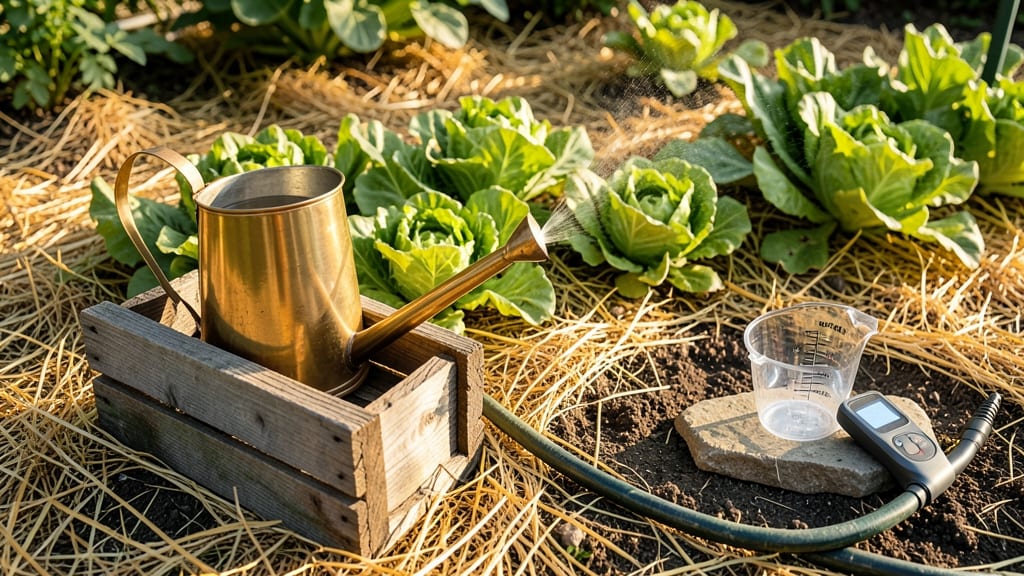
Your vegetable garden 🥕 needs 1 to 3 inches of water per week, but guessing the right amount is the difference between a bumper crop and a sad, wilted mess.
Picture this: You water your tomatoes every morning, but they still shrivel by afternoon. Or your lettuce bolts to seed because it’s thirsty one day and drowning the next.
The problem isn’t just how much—it’s when and how you deliver it. Too little, and roots scramble for moisture. Too much, and you’re inviting disease and wasted water.
Here’s the good news: With a few simple adjustments—like watering deeply in the morning, mulching to lock in moisture, and tailoring your schedule to your plants’ needs—you can cut waste by half while keeping your garden thriving.
Below, I’ll break down the exact weekly watering plan for leafy greens, root crops, and fruiting plants, plus the tools to make it effortless.
Ready to stop playing watering roulette? Let’s dive into the science-backed schedule that’ll keep your soil happy, your plants productive, and your water bill from spiking.
Science-backed water needs by vegetable type: weekly deep dive
Not all vegetables thirst the same way—some need 1-2 inches of water weekly, while others demand 3+ inches to thrive. The key lies in understanding each plant's biological needs and USDA zone adaptations.
Leafy greens like lettuce and spinach prefer consistent moisture, while root vegetables such as carrots and potatoes need deeper, less frequent watering to prevent splitting. Let’s break down the science so you can water like a pro.
Soil moisture is the real metric, not just rainfall. A deep watering session (1-2 inches) penetrates roots better than shallow sprinkles. Use a moisture meter or the "finger test"—stick your finger 2 inches into soil; if it’s dry, water.
Overwatering is just as harmful as underwatering, especially for fruiting plants like tomatoes and peppers, which rot in soggy soil.
Here’s the weekly watering breakdown by plant type, tailored for USDA Zones 5-8 (adjust for extreme climates). Mulching with straw or wood chips retains moisture and reduces evaporation by 30%—a game-changer for drought-prone areas.
Leafy greens like spinach and lettuce are the most sensitive to drought—they bolt (go to seed) or wilt within 24 hours of dry soil. Aim for daily light watering in summer or every other day in cooler months. Mulch heavily to lock in moisture, as these plants have shallow root systems that can’t reach deep water.
Root vegetables need a different approach: deep, infrequent watering prevents splitting and encourages straight growth. Carrots and beets, for example, can tolerate light drought but despise soggy soil. Water 2-3 times per week in clay soil (which drains poorly) and every 4-5 days in sandy soil (which drains too fast). Always water at the base, not overhead.
Fruiting plants like tomatoes and peppers are the divas of the garden—they demand consistent moisture to prevent blossom end rot (a calcium deficiency triggered by uneven watering). These plants need 2-3 inches of water weekly, delivered deeply 2-3 times per week. Drip irrigation is ideal to keep foliage dry and reduce fungal diseases like early blight. Avoid wetting leaves in the evening.
Herbs are the low-maintenance stars of the garden. Basil and cilantro thrive with 0.75–1.5 inches of water weekly and can handle short dry spells. Overwatering is rare, but soggy soil causes root rot. Use well-draining soil and water only when the top 1 inch feels dry. Herbs like rosemary and thyme are drought-tolerant and need even less.
Heavy feeders like corn, squash, and peas require the most water—2.5–3 inches weekly—because they produce large amounts of foliage and fruit. These plants transpire rapidly (lose water through leaves) and need frequent deep watering, especially during flowering and fruiting stages. Monitor soil moisture closely; these plants wilt quickly in dry conditions but also suffer in waterlogged soil.
Adjust these guidelines based on your local climate and soil type. In arid regions (e.g., USDA Zone 9-10), water early in the morning to reduce evaporation, and in humid zones (e.g., Zone 4), avoid evening watering to prevent fungal growth.
Always check soil moisture—trust your finger, not the calendar.
The 5-Zone watering system: when and how to irrigate for maximum yield
Watering your vegetable garden isn't one-size-fits-all—it's a 5-stage process that changes as plants grow. I've broken it down into zones based on plant development, so you can water efficiently without waste.
The key? Understanding when each zone needs hydration and how much. For example, seedlings crave frequent, shallow water, while fruiting tomatoes demand deep, infrequent soaks.
Timing matters just as much as volume. Watering in the early morning (before 10 AM) prevents fungal diseases and evaporation losses, while evening watering can leave plants vulnerable to blight.
My arid-zone garden thrives with morning watering, but humid climates might need afternoon sessions—just avoid the heat of midday. Let's dive into the zones and how to tailor your approach.
Soil type dictates your method: Sandy soil drains fast, so use flood irrigation for deep penetration, while clay soil holds moisture longer—opt for drip systems to avoid soggy roots. My loamy garden thrives with a mix: drip for tomatoes and soaker hoses for greens.
For arid climates, mulch with straw to retain moisture; in humid areas, raised beds improve drainage.
Adjust your schedule with this climate calculator: Subtract 1/4 inch per week in humid regions (like Florida) and add 1/2 inch in arid zones (like Arizona). For example, if your zone needs 1.5 inches weekly, bump it to 2 inches in summer heat.
Always check soil moisture 2 inches deep—if it's dry, water again.
Pro tip: Group plants by water needs. Place thirsty tomatoes near your water source and drought-tolerant herbs (like rosemary) together. This 5-zone system cuts my watering time by 40% while boosting yields. Start with your highest-need crops first—your garden will thank you! 🌱