Watering
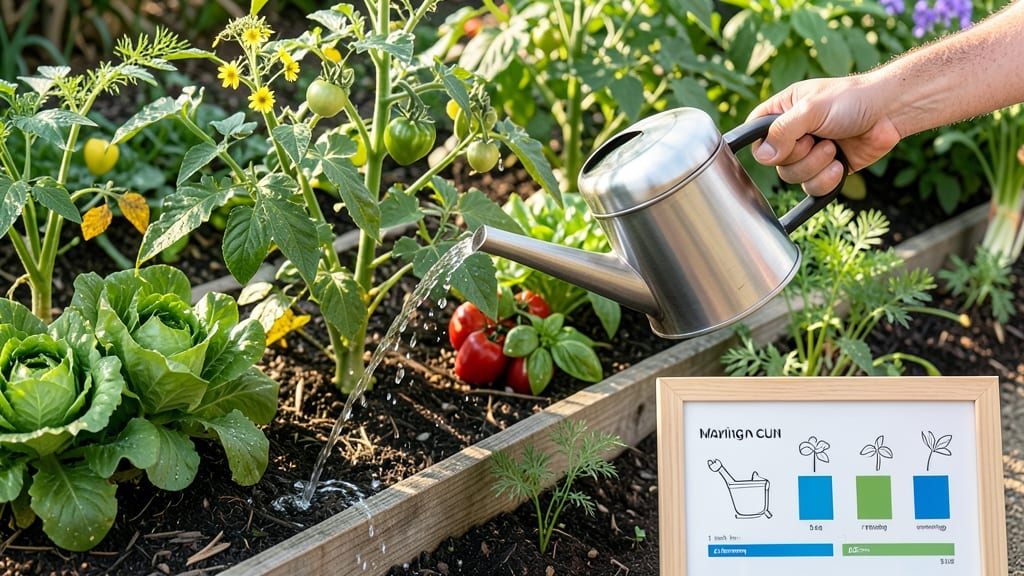
Watering your veggie garden the right way means knowing how often to water each type of plant—because one size never fits all.
Overwatering or underwatering your 🥬 can mean the difference between a bountiful harvest and wilted disappointment—but how do you know when to reach for the hose?
Some plants, like lettuce, need moisture almost daily, while tomatoes and peppers thrive with deep, less frequent watering. Soil type, climate, and even the season play a role in how often you should water.
Below, I break down the best watering schedule by plant type, plus smart strategies to keep your garden thriving without wasting a drop.
Watering frequency by vegetable type: expert schedule for common garden plants
Figuring out how often to water a veggie garden feels like solving a puzzle—too much or too little, and your plants suffer. The truth? Water needs vary wildly between leafy greens, root vegetables, and fruiting plants.
Even within the same category, basil and tomatoes demand completely different hydration strategies. Let’s break it down by plant type, soil conditions, and climate so you can water like a pro.
First, understand that soil type changes everything. Sandy soil drains fast, requiring daily watering in summer, while clay holds moisture longer, needing checks every 5-7 days.
Then factor in your local climate: desert gardens need deep, infrequent watering, while humid regions may struggle with fungal diseases from overhead watering. I’ll share science-backed intervals for 12 common veggies, plus how to adjust for your specific growing conditions.
Let’s start with leafy greens like lettuce and spinach, which have shallow roots and wilt faster. These plants need daily watering in summer—think of them like a sponge that dries out quickly. I water mine every 2-3 days, always in the morning, to prevent fungal diseases.
For root vegetables like carrots and radishes, the goal is consistent moisture at the soil surface. Uneven watering causes them to split or become woody. I aim for 3-5 days between waterings, checking the top 3-4 inches of soil.
Fruiting plants like tomatoes and peppers are thirsty but need deep hydration. Shallow watering stresses them, leading to blossom-end rot in tomatoes. I water these every 2-3 days using drip irrigation to keep moisture at the roots. Herbs like basil and parsley strike a balance—they dislike soggy soil but also hate drying out. I water them every 2-4 days, letting the topsoil dry slightly between sessions. This prevents root rot while keeping leaves vibrant.
Now, let’s talk soil type. If you have sandy soil, water evaporates fast, so I increase frequency to daily in summer for most plants. For clay soil, which holds moisture longer, I stretch watering to every 5-7 days.
A simple test: Stick your finger 2 inches into the soil. If it’s dry, it’s time to water. Pro tip: Mulch with straw or wood chips to lock in moisture and reduce evaporation by up to 30%. It’s a game-changer for drought-prone gardens.
Climate plays a huge role too. In hot
Signs your veggie garden needs water (or less water) right now
Your veggie garden speaks volumes through its leaves, stems, and soil—if you know what to listen for. Wilting leaves, yellowing foliage, or cracked soil are all signals your plants need water (or a break from it).
The key is reading these visual cues before they turn into bigger problems like root rot or stunted growth.
I’ve learned the hard way that guessing your garden’s thirst level leads to wasted water or dead plants. Instead, focus on soil moisture, leaf texture, and root exposure to dial in the perfect watering schedule.
Let’s break down the most reliable signs and what they mean for your veggies.
Most gardeners assume more water = better growth, but soggy soil suffocates roots and invites fungal diseases. Here’s how often you should water a veggie garden by season:
- Spring/Fall: Every 3-5 days (deep soak, 1-2 inches)
- Summer: Daily or every other day (early morning only)
- Winter: Every 2 weeks (minimal watering)
Pro Tip: Stick your finger 1 inch into soil—if it’s dry, water. If it’s damp, wait.
Start with the soil test: Stick your finger about 1-2 inches into the soil. If it feels dry, your plants need water. If it’s damp or sticky, hold off—overwatering is a silent killer. Clay soil stays wet longer, while sandy soil dries out faster, so adjust accordingly.
Next, check the leaves. Wilting in the afternoon is a classic sign of thirst, but yellowing leaves or brown edges often mean too much water. For example, lettuce wilts fast in heat, while tomatoes may develop blossom-end rot from inconsistent moisture.
Exposed roots are a red flag—especially in container gardens or raised beds. If roots peek above the soil, they’re desperate for moisture. But if the soil smells sour or roots look mushy, you’ve overdone it. Root rot spreads fast in waterlogged conditions, so act quickly by improving drainage.
Weather plays a huge role. On hot, windy days, plants lose moisture faster and may need watering twice a day. After heavy rain, skip watering entirely—1 inch of rain equals 1 inch of water.
Use a rain gauge or tuna can to measure rainfall and adjust your schedule accordingly.
Troubleshoot common mistakes: Watering at night encourages fungal growth, while shallow watering promotes weak roots. Always water at the base of plants in the morning to give foliage time to dry. For herbs like basil, let the soil dry slightly between waterings, while leafy greens prefer consistently moist soil.