
How To
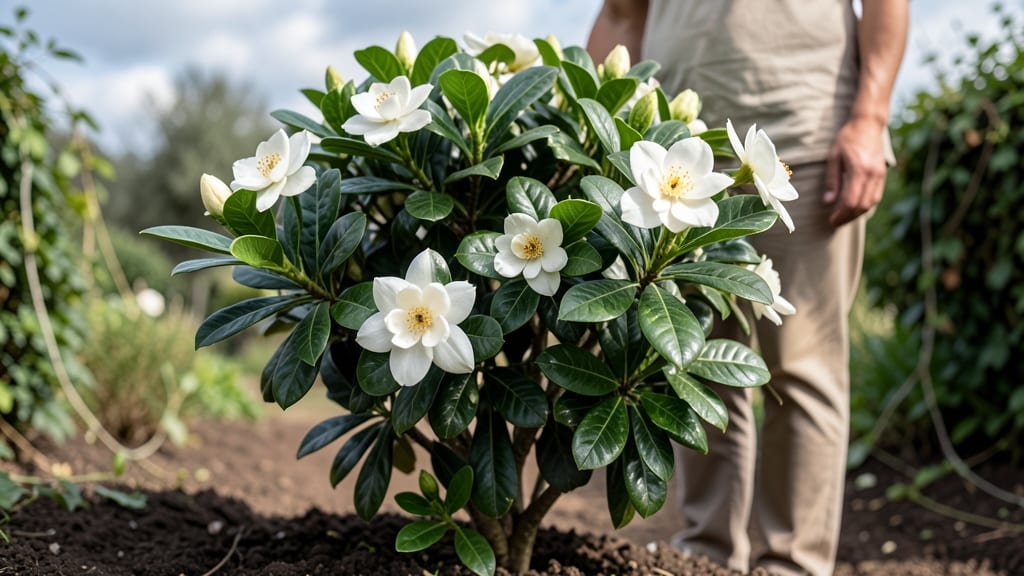
Gardenia shrubs grow anywhere from 2 to 6 feet tall at maturity, depending on the variety and care you provide—so choosing the right type for your space is the first step to success.
If you're dreaming of fragrant, glossy gardenias but wondering whether they’ll fit in your garden’s layout, their height could make or break your plans. Some varieties stay compact while others tower dramatically—here’s how to choose the perfect size for your space.
For example, dwarf gardenias like Gardenia radicans max out around 2 to 3 feet, making them ideal for containers or small gardens, while standard types like Gardenia jasminoides can reach 4 to 6 feet if left unpruned.
Below, I’ll break down height expectations by variety, share pruning tips to control growth, and reveal the care secrets that keep your gardenia bushier and healthier—no matter how tall you want it to be.

Gardenia height by variety: which types stay short vs. tall?
Choosing the right gardenia variety isn’t just about fragrance—it’s about finding the perfect fit for your garden’s layout. Some varieties stay under 3 feet while others reach towering 6 feet, making height a critical factor in placement.
Whether you’re planning a container garden or a lush hedge, knowing these differences will help you select the ideal variety for your space.
Most gardenias belong to the Gardenia jasminoides species, but even within this group, heights vary dramatically. Dwarf varieties like 'Radicans' stay low to the ground, perfect for borders, while standard types like 'Kleim's Hardy' grow tall enough to serve as privacy screens.
Let’s break down the height ranges so you can visualize how each will look in your garden.
🌿 Visual Tip: Use nearby objects to gauge size—most gardenias mature between the height of a standard mailbox (4 feet) and a person (6 feet). Dwarf varieties often stay closer to knee-high (2 feet), making them ideal for small spaces.
If you’re working with limited space, 'Radicans' and 'Fortuniana' are excellent choices for containers or small gardens. Their compact sizes make them versatile for patios, balconies, or even as accent plants in mixed borders.
Meanwhile, 'Kleim's Hardy' and Gardenia augusta are better suited for larger landscapes where height isn’t a concern.
One variety that often surprises gardeners is Gardenia augusta, which can grow into a small tree, reaching heights of 6–10 feet. This tropical beauty thrives in warm climates and is perfect for creating a dramatic focal point in a garden.
However, it requires more space and care compared to its dwarf counterparts.
For those who love the idea of gardenias but need a low-maintenance option, consider 'Radicans'. This trailing variety spreads horizontally, making it ideal for ground covers or cascading over walls. Its 1–2 foot height keeps it manageable while still delivering that signature gardenia fragrance.
Another factor to consider is how quickly these varieties grow. Most gardenias grow about 6–12 inches per year, so a 3-foot variety at maturity might only be 1 foot tall after its first year. Patience is key—give your gardenia time to establish before expecting full-size blooms.
💡 Pro Tip: If you’re unsure about height, start with a dwarf variety in a container. You can always transplant it to the ground later if it outgrows its space. This approach lets you test how well a gardenia thrives in your climate before committing to a permanent spot.
Finally, remember that height isn’t the only factor—spread matters too! Some gardenias, like 'Kleim's Hardy', can spread 5–7 feet wide, so plan accordingly if you’re using them as hedges or privacy screens. Always leave room for lateral growth to avoid overcrowding.
With this height guide, you’re now equipped to choose the perfect gardenia for your space. Whether you’re aiming for a compact accent plant or a towering tropical statement, there’s a variety that fits your vision—just match it to your garden’s layout and care capacity.
How to control gardenia height: pruning and care tips for compact growth
If your gardenia is reaching for the sky when you’d rather it stay compact, don’t worry—you’re not stuck with a towering shrub. With the right pruning techniques and care adjustments, you can guide its growth to fit your space perfectly.
Gardenias naturally grow between 2 to 6 feet, but with strategic pruning, you can encourage a bushier, shorter shape while keeping those fragrant blooms coming.
Pruning isn’t just about cutting back—it’s about understanding how gardenias respond to light, nutrients, and seasonal changes. For example, light exposure plays a huge role: too much sun can stretch stems, while proper soil acidity (pH 5.0-6.0) ensures healthy, controlled growth.
Let’s break down the steps to keep your gardenia at your desired height without sacrificing its beauty.
Step-by-Step Guide to Pruning and Care
- 1 Choose the right time: Prune after flowering (late summer to early fall) to avoid cutting off next year’s blooms. Avoid heavy pruning in spring when new growth is forming.
- 2 Use clean, sharp tools: Sterilize pruners with rubbing alcohol to prevent disease. Cut at a 45-degree angle just above a leaf node or bud to encourage new growth.
- 3 Remove overgrown branches: Focus on vertical stems that are growing taller than desired. Cut back by 1/3 of the branch length to promote bushiness.
- 4 Adjust light exposure: Place your gardenia in morning sun (4-6 hours) and protect it from hot afternoon rays to prevent leggy growth. Use sheer curtains indoors if growing in pots.
- 5 Fertilize for compact growth: Use a balanced fertilizer (10-10-10) with high phosphorus in spring and summer. Avoid over-fertilizing, which can lead to rapid, unchecked growth.
- 6 Maintain soil acidity: Test soil pH and amend with sulfur or peat moss to keep it between 5.0-6.0. Acidic soil helps gardenias absorb nutrients efficiently, supporting healthy, controlled growth.
After pruning, your gardenia will focus energy on producing new lateral branches instead of reaching upward. For container-grown gardenias, repotting every 2-3 years into a slightly larger pot with fresh soil also encourages compact growth.
Remember, patience is key—it may take a season or two to see dramatic changes in shape.
If you’re growing gardenias in containers**, limit root growth by choosing pots with drainage holes and avoiding overwatering. Overcrowded roots can lead to leggy, weak stems. Mulch around the base with organic matter like pine bark to retain moisture and regulate soil temperature, which further supports healthy, controlled growth.
With these techniques, you’ll enjoy a gardenia that fits your space while still delivering those intoxicating blooms. Whether you’re aiming for a 2-foot dwarf variety or simply trimming back a standard shrub, the secret lies in timing, light, and a little strategic pruning. Happy gardening!