
Tools
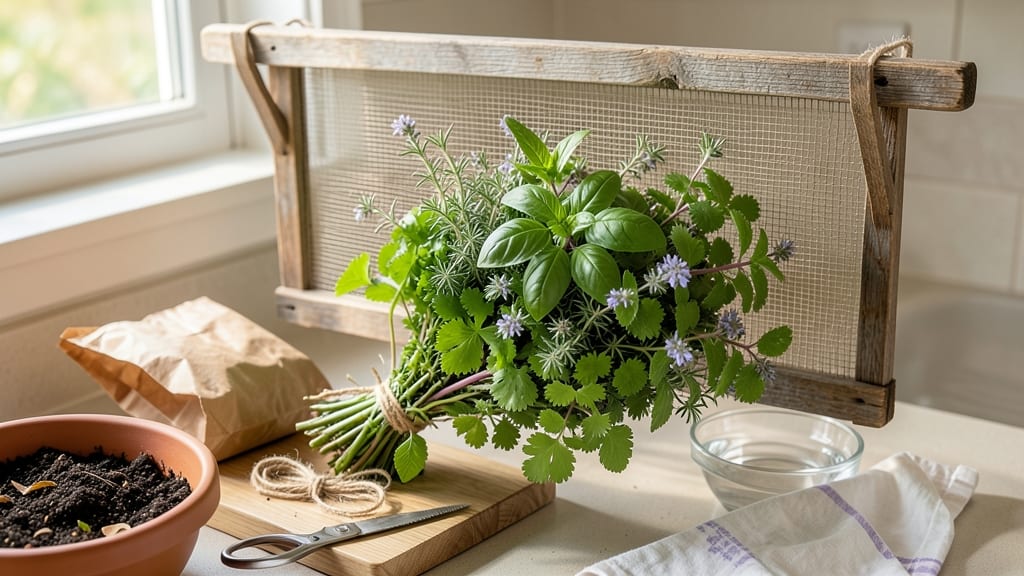
Drying fresh herbs from the garden preserves their flavor and extends their shelf life. Bundle stems and hang upside down in a warm, dark, well-ventilated space for 1-3 weeks. For faster results, use a food dehydrator (2-6 hours) or lay leaves on a drying rack. Once completely crisp and brittle, trim stems and store in airtight containers.
Preserving herbs this way locks in their aromatic oils, which evaporate quickly when exposed to heat or light. 🌿 The key is patience—rushing the process with high heat can turn vibrant flavors into dull, bitter notes.
I’ve found that herbs like rosemary and thyme handle traditional hanging best, while delicate leaves like basil and cilantro benefit from the dehydrator’s gentle airflow. Proper storage in opaque containers away from sunlight keeps them potent for up to a year.
For best results, harvest herbs in the morning after dew has dried but before the sun peaks. This timing maximizes essential oil content. If you’re short on time, a dehydrator set to 95°F works wonders—just monitor closely to avoid over-drying.
Store containers in a cool pantry rather than the fridge, as moisture buildup can ruin your harvest.
💡 In This Article
- Best Drying Methods for Preserving Herb Flavor and Potency
- Storage Tips to Maximize Freshness and Shelf Life of Dried Herbs
Best drying methods for preserving herb flavor and potency
Herb flavor lives in their essential oils, which evaporate when exposed to light, heat, or improper airflow. The traditional hanging method works best for hardy herbs like rosemary and thyme because it mimics natural drying conditions.
Bundle stems with rubber bands or twine and hang upside down in a space with 50-70% humidity and temperatures between 60-80°F. This slow process (1-3 weeks) preserves up to 90% of volatile oils, while high heat methods can reduce potency by 30-50%. 🌿
The dehydrator method accelerates drying while maintaining quality when set to 95-115°F. Spread leaves in a single layer on trays with good airflow—overcrowding causes uneven drying and mold. Delicate herbs like basil and mint dry in 2-4 hours, while heartier varieties like oregano take 4-6 hours.
The key is consistent airflow; dehydrators with fans circulate air better than static models. For comparison, oven-drying at 200°F works but risks oxidation, turning vibrant green herbs dull brown.
Light exposure destroys essential oils—never dry herbs in direct sunlight. UV rays break down chlorophyll and aromatic compounds, which is why dark, well-ventilated spaces (like a pantry or closet) work better than sunny windowsills.
Humidity control matters too: too much moisture breeds mold, while below 50% humidity speeds drying but can make herbs brittle. A small fan on low setting helps maintain airflow without disturbing the drying process. 💨
For herbs with large leaves (like sage or tarragon), consider the "paper towel method": lay leaves flat between sheets of paper towels, then press gently to remove excess moisture before drying. This prevents leaf curling and ensures even drying.
The paper towels absorb surface moisture without trapping humidity like plastic bags might. Test for doneness by crumbling dried leaves—if they shatter easily, they're ready for storage.
Temperature extremes are the enemy of herb potency. Dehydrators above 120°F start destroying delicate compounds, while oven methods above 250°F can create bitter flavors. The ideal drying zone is 95-115°F, where moisture evaporates without cooking the plant material.
For large batches, rotate trays halfway through the drying cycle to ensure uniform results. 🌡️
Herbs with high moisture content (like cilantro or parsley) benefit from pre-drying treatments. Pat leaves thoroughly with paper towels before drying to reduce initial moisture levels. This cuts drying time by 30-40% while preventing mold growth.
Store prepped herbs in the freezer for 3 months if you can't dry them immediately—they'll retain more flavor than improperly dried herbs stored long-term.