Planting
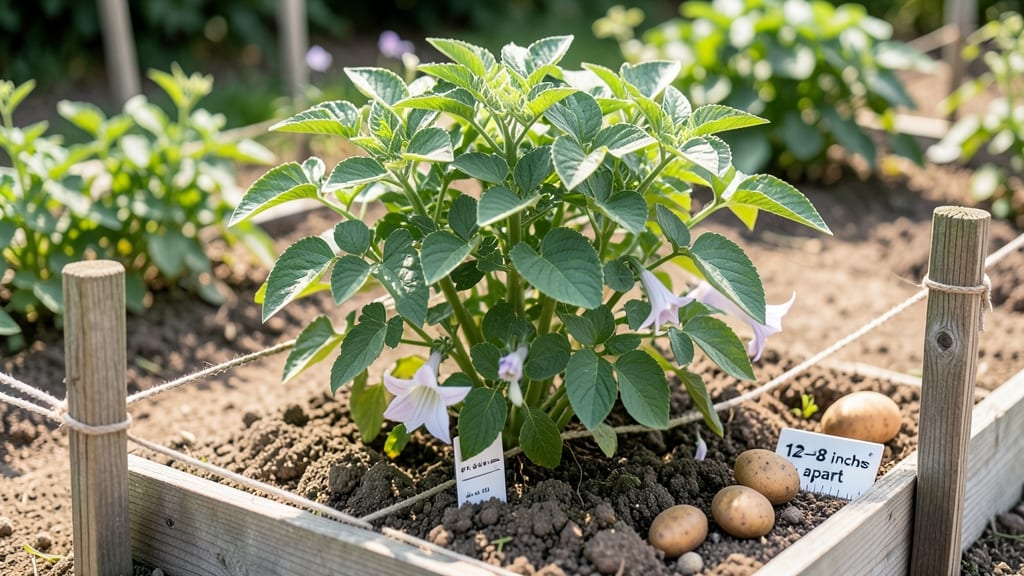
Proper potato spacing in your garden is the difference between a bountiful harvest and a disappointment — and most gardeners get it wrong.
Picture this: you’ve planted your 🥔 seed potatoes, but by midsummer, the vines are tangled, the soil stays damp too long, and you’re fighting blight instead of harvesting. That’s the cost of guessing.
The right spacing isn’t just about fitting more plants in—it’s about airflow, soil health, and giving those tubers room to swell without competing for nutrients.
In this guide, I’ll break down the exact row spacing, hill dimensions, and depth for different potato varieties, plus how to adjust for small gardens or containers.
You’ll learn why 3 feet between rows is the gold standard, when to thin seedlings, and how to spot the early signs of overcrowding before it’s too late.
Whether you’re working with a full plot or a few 5-gallon buckets, these spacing rules will help you double your yield while keeping your potatoes healthy and disease-free.
Optimal potato spacing by variety: rows, hills, and depth explained
Potatoes thrive when given the right amount of space to spread their vines and develop tubers without competing for nutrients. Spacing affects airflow, disease prevention, and final yield—so getting it right means bigger, healthier harvests.
Early varieties need less room than late-season types, and organic gardens often require slightly wider spacing to boost soil health. Let’s break down the science-backed spacing for every stage of growth.
Start with planting depth, which is just as critical as spacing. Seed potatoes should sit 2-4 inches deep—too shallow and they’ll rot; too deep and they’ll struggle to reach the surface.
After sprouting, you’ll mound soil around the stems (called "hilling") to encourage tuber formation. This process also prevents light exposure, which turns potatoes green and toxic.
For row spacing, most gardeners aim for 3 feet between rows to allow easy access for hilling and harvesting. However, this can vary based on your potato variety and garden layout.
Smaller plots or container gardens may need tighter spacing, while large-scale organic farms often use wider rows to accommodate machinery and improve soil health through cover cropping.
Now, let’s compare the ideal spacing for early, mid-season, and late-season potatoes in the table below. These guidelines balance yield, airflow, and ease of maintenance—whether you’re growing in traditional rows, hills, or containers.
For organic gardens, wider spacing isn’t just about yield—it’s about soil health. Looser plant arrangements allow for better companion planting (like marigolds to deter pests) and easier access to mulch or compost.
If you’re using organic methods, consider adding compost tea or fish emulsion to compensate for reduced plant density.
When creating hills for potatoes, start with a base of loose, well-draining soil. As the plants grow, mound soil around the stems every 2-3 weeks until the hill reaches 12-18 inches tall.
This encourages tubers to form at multiple soil levels. Pro tip: Use a garden fork to loosen the soil before hilling—this prevents compaction and improves root growth.
If you’re working with small gardens or containers, you can reduce spacing by 20-30%, but be prepared for slightly lower yields. For example, in a 5-gallon bucket, plant 1-2 seed potatoes per container with 3-4 inches of soil depth.
Just ensure the container has drainage holes to prevent rot. In raised beds, maintain standard spacing but add extra compost to boost nutrient density.
One common mistake is overcrowding, which leads to blight and rot from poor airflow. Another is uneven hilling, which causes tubers to form in clumps. To avoid this, use a level tool or your hand to create consistent hills.
For late-season varieties, prioritize wider spacing—they produce larger tubers but need more room to develop.
Remember, soil type matters. In sandy soil, potatoes dry out faster, so reduce spacing slightly to retain moisture. In clay soil, wider spacing helps prevent waterlogging. Always amend your soil with compost or aged manure before planting to improve drainage and fertility.
Finally, rotate your crops every year to prevent disease buildup. Potatoes are heavy feeders, so follow them with legumes or brassicas to restore nitrogen to the soil. With these spacing guidelines, you’ll be well on your way to a bountiful, disease-free harvest—no matter your garden size!
How to adjust spacing for small gardens, containers, and high-density planting
If you’re growing potatoes in a small urban garden or containers, standard 3-foot row spacing feels like a luxury. But don’t despair—with the right adjustments, you can still grow a healthy, high-yield harvest without sacrificing your patio or balcony.
The key is understanding trade-offs: tighter spacing often means smaller tubers or higher disease risk, but smart techniques like vertical growing and companion planting can help.
For example, in a 5-gallon bucket, you can fit 2-3 potato plants instead of one, but you’ll need to harvest earlier to avoid overcrowding. Meanwhile, raised beds let you squeeze in 18-inch row spacing while still allowing airflow.
Let’s break down the best methods for maximizing space without sacrificing your harvest.
One of my favorite space-saving tricks is companion planting with marigolds or bush beans. Marigolds repel pests like Colorado potato beetles, while beans fix nitrogen in the soil, giving your potatoes a nutrient boost.
Plant them 12 inches apart in the same row—close enough to benefit from their partnership but far enough to avoid competition.
For containers, prioritize early-maturing varieties like ‘Yukon Gold’ or ‘Red Pontiac,’ which can be harvested in as little as 70 days. In a 5-gallon bucket, place 2-3 seed potatoes 4-6 inches deep and 6 inches apart.
As the plants grow, mound soil around the stems to encourage more tuber formation, but avoid overcrowding the roots.
If you’re using raised beds, reduce row spacing to 18 inches instead of 3 feet, but keep plants 12 inches apart within the row. This still allows for good airflow while fitting more plants in a small area.
Just be prepared to harvest earlier, as tubers may not grow as large as in a full garden bed.
Remember, the goal isn’t just to fit more plants in—it’s to balance yield, health, and space. Overcrowding leads to disease, while too much space wastes precious real estate. Experiment with these methods, and you’ll find the sweet spot for your unique growing conditions.