
Size
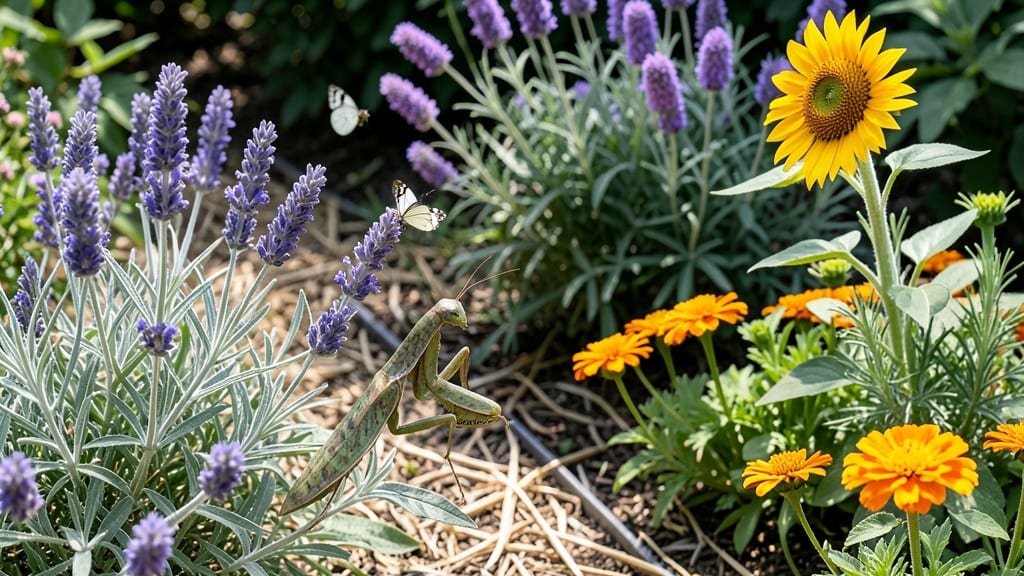
Growing a garden with the value of a praying mantis offers natural pest control by eliminating harmful insects like aphids, beetles, and caterpillars, cutting pesticide use while boosting garden biodiversity through their predatory instincts.
The value of a praying mantis in your garden lies in its ability to act as a natural pest controller.
These beneficial predators thrive on garden pests without harming plants or pollinators—making them a perfect eco-friendly solution. 🌿 I've seen firsthand how mantises can reduce aphid populations by up to 90% in just a few weeks, saving both time and money on chemical treatments.
Their presence also encourages other helpful insects like ladybugs, creating a balanced ecosystem that naturally keeps pests in check.
To maximize their benefits, focus on creating a mantis-friendly environment with tall grasses, flowering plants, and shallow water sources. Avoid broad-spectrum pesticides, as these can eliminate mantises along with the pests you're trying to control.
With the right setup, you'll notice healthier plants and fewer pest problems within a single growing season.
💡 In This Article
- How Praying Mantises Naturally Control Garden Pests
- Best Practices for Attracting and Maintaining Praying Mantises in Your Garden
How praying mantises naturally control garden pests
A praying mantis's hunting strategy is a masterclass in precision and efficiency. These predators rely on their exceptional eyesight—each eye contains up to 12,000 individual lenses—to spot prey from 20 feet away.
When they strike, their front legs snap forward at speeds of 0.05 seconds, creating a vacuum-like seal around their target.
This rapid motion allows them to catch insects like aphids, beetles, and caterpillars before the pests can cause significant damage to plants. 🔥 Their diet is surprisingly diverse, including over 100 different insect species, making them one of nature's most effective pest controllers.
The key to their effectiveness lies in their dietary selectivity. Mantises primarily target soft-bodied insects and larvae, which are often the most destructive to gardens. For example, a single mantis can consume 200-300 aphids per day, while adult moths and grasshoppers are also high on their menu.
Unlike many predators, mantises avoid pollinators like bees and butterflies, preserving the garden's ecological balance. This selective feeding pattern means they reduce pest populations without disrupting the natural pollination process that keeps plants thriving.
What makes mantises even more valuable is their role in the garden's food web. By controlling pest populations, they indirectly support other beneficial insects like ladybugs and lacewings, which also feed on garden pests.
This creates a cascading effect where fewer pests mean less stress on plants, leading to healthier growth and higher yields. Their presence alone can reduce the need for chemical pesticides by up to 70%, making them a cost-effective and sustainable solution for gardeners.
However, their effectiveness depends on maintaining a healthy population. Mantises are sensitive to environmental changes, particularly the use of broad-spectrum pesticides that can kill them along with their prey. Even residual pesticides from previous applications can linger in the soil and harm mantis populations.
To ensure they thrive, gardeners should focus on creating habitats that support their natural behaviors, such as providing tall grasses for camouflage and shallow water sources for hydration.
Another fascinating aspect of mantis predation is their hunting behavior during different life stages. Nymphs (young mantises) primarily feed on smaller pests like mites and small caterpillars, while adults can handle larger prey, including beetles and even small frogs.
This progression ensures that pests of all sizes are kept in check throughout the growing season. Their ability to adapt their diet based on availability makes them a versatile and reliable pest control option for any garden.
To maximize their benefits, observe their activity patterns. Mantises are most active during the early morning and late afternoon, when temperatures are cooler, and prey is most abundant.
By understanding these patterns, gardeners can strategically place mantis-friendly plants in areas where pests are most active, further enhancing their pest control capabilities. 🌿