
Tools
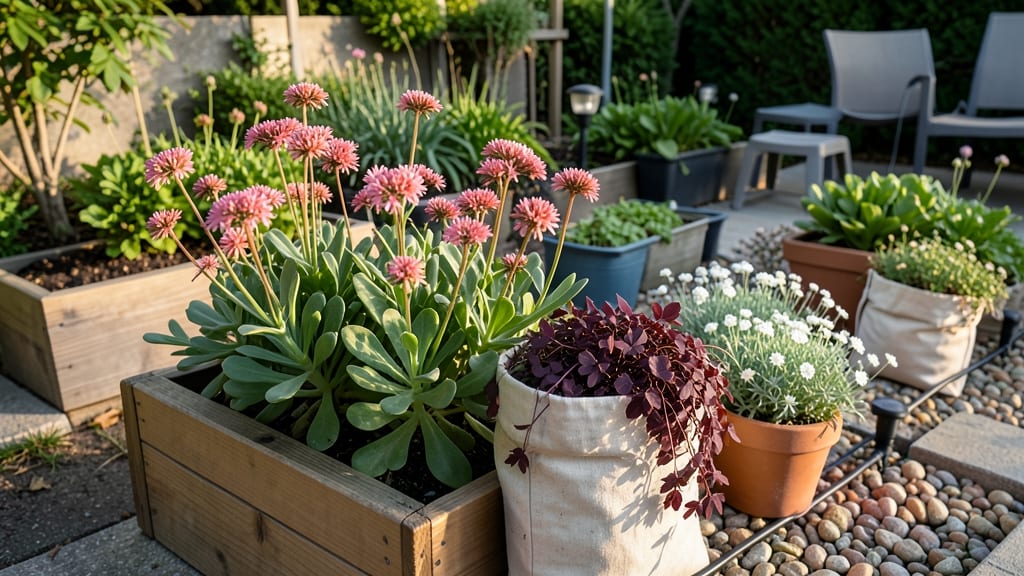
A roof terrace garden creates stunning greenery by using compact, shallow-rooted plants like succulents, herbs, and dwarf citrus trees while staying within weight limits of about 20-60 lbs per square foot. Opt for lightweight containers with drainage holes and focus on native varieties to minimize structural stress and upkeep.
A roof terrace garden transforms limited urban space into a thriving oasis without compromising your building's structural integrity. 🌿 The key lies in selecting plants that balance beauty with weight efficiency—think sedum for drought resistance or cherry tomatoes for edible rewards.
Most flat roofs can handle 20-60 lbs per sq ft, but always check with a structural engineer before loading up containers. I've found that grouping plants by water needs (like pairing lavender with rosemary) cuts maintenance time while keeping the weight distributed evenly across the surface.
For containers, prioritize materials like plastic or fiberglass—they're lightweight yet durable. Add gravel at the bottom for drainage and to reduce overall weight. Native plants like thyme or dwarf olive trees often require less watering and fewer nutrients, making them ideal for rooftop conditions where resources might be limited.
The right plant choices can turn a potentially risky project into a low-stress, high-reward gardening experience.
💡 In This Article
- How to Calculate Weight Limits for Roof Terrace Gardens
- Best Low-Maintenance Roof Garden Plants for Small Spaces
How to calculate weight limits for roof terrace gardens
Roof gardens rely on precise weight calculations to prevent structural damage. Flat roofs typically handle 20-60 lbs per sq ft, but this varies dramatically based on construction.
For example, a standard residential flat roof might support 15-20 lbs/sq ft for lightweight gardens, while commercial roofs can often bear 60-80 lbs/sq ft with proper reinforcement. The key factor is your roof's live load capacity—the maximum weight it can safely support beyond its own structure.
Always consult your building plans or a structural engineer before planting.
Container weight distribution is where most gardeners make mistakes. A 10-gallon pot filled with soil and plants can weigh 30-50 lbs when saturated—far exceeding casual estimates. To stay safe, multiply your plant's mature weight by 3-5x to account for soil, water, and container.
For instance, a small dwarf citrus tree might weigh 15 lbs at maturity, but its container system could add 40-50 lbs total. Spread containers evenly across support beams rather than clustering them in one area.
Roof type dramatically affects weight limits. Pitched roofs (like those on houses) distribute weight more efficiently than flat roofs, which bear loads directly downward. Wood decks typically support 10-20 lbs/sq ft, while metal decks can handle 30-50 lbs/sq ft. The solution?
Use lightweight growing mediums like coconut coir or perlite mixes (which weigh 20-30 lbs per cubic foot) instead of traditional soil (80-100 lbs per cubic foot). Adding drainage layers with gravel or recycled rubber reduces overall weight while preventing waterlogging.
Here's what happens when you exceed limits: Excessive weight causes deflection (visible sagging) or worse—structural failure like cracked membranes or collapsed supports. I've seen cases where 100 lbs of containers on a 200 sq ft roof (average 0.5 lbs/sq ft) led to 1-inch deflection—enough to damage waterproofing.
The fix? Use modular trays with built-in weight distribution or hanging planters for edible plants like strawberries, which keep weight off the roof entirely.
Consider these key factors when planning:
- Roof age: Older roofs lose strength over time—reduce weight limits by 20-30% for roofs over 20 years.
- Climate: In snowy regions, add 10-15 lbs/sq ft for seasonal snow load.
- Container material: Plastic (2-5 lbs) is lighter than ceramic (10-20 lbs).
For maximum safety, start with 50% of your calculated limit and monitor for signs like uneven settling or water pooling. Even with perfect calculations, always have a drainage plan—water weighs 8.34 lbs per gallon, so overwatering can quickly exceed your roof's capacity. 🔥