
Tools
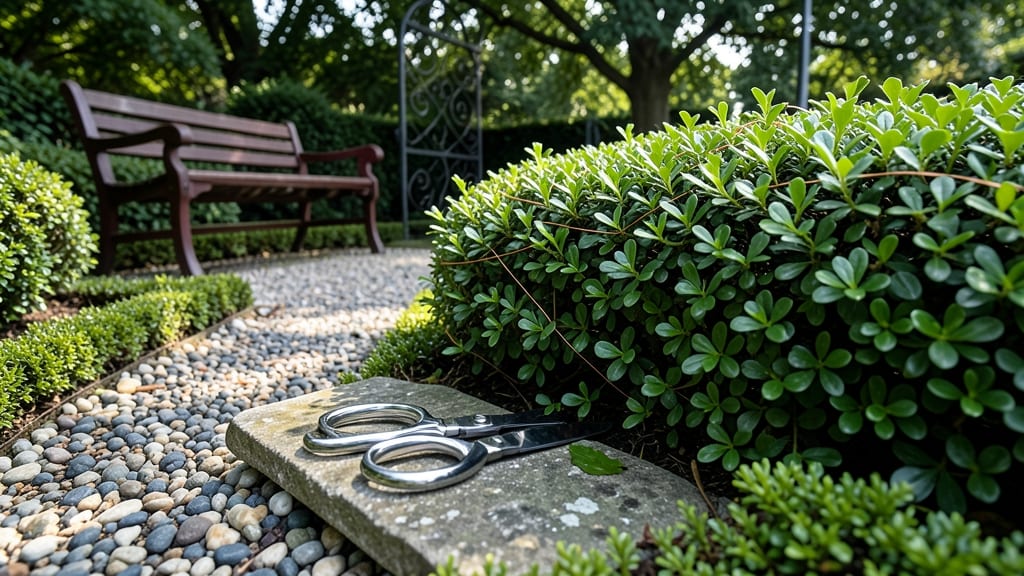
A small formal garden creates refined elegance in compact spaces through precise geometric layouts, balanced symmetrical plantings, and neatly trimmed hedges that guide the eye toward focal points like statues or fountains. Choose slow-growing perennials and layered planting beds to maintain a polished look with minimal upkeep.
A small formal garden thrives on discipline—every element must serve a purpose in the overall design. 💫 The key lies in creating visual harmony through repetition and proportion; think of it as a living painting where each plant, path, and structure contributes to the composition.
For instance, using boxwood hedges in precise rows or incorporating gravel pathways with clean edges instantly elevates the space's sophistication. Even in tight areas, strategic placement of mirrors or water features can make the garden feel larger while reinforcing its formal aesthetic.
When selecting plants, prioritize those with controlled growth habits—like dwarf holly or ornamental grasses—that won't outgrow their designated spots. Pair them with durable materials like slate pavers or gravel that complement the structured look while requiring minimal maintenance.
The result? A garden that feels intentional, not cramped, where every inch of space works for you.
💡 In This Article
- Design Principles for Formal Garden Layouts in Tight Spaces
- Top Space-Saving Plants and Materials for Formal Gardens
Design principles for formal garden layouts in tight spaces
Formal gardens rely on mathematical precision to create visual harmony, and in small spaces, this principle becomes even more critical. The foundation is a grid-based layout—think of it as a painter's canvas where every line, curve, and plant placement follows strict geometric rules.
For example, a 4' x 4' square planting bed with a 2' gravel pathway between rows creates perfect proportions that feel intentional rather than cramped.
This grid system also allows you to use axial lines (imaginary centerlines) to guide the eye toward focal points like a small fountain or a sculptural bench.
The magic happens in the details: symmetrical plantings (mirrored on both sides of a path) and structured hedges (like boxwood or yew) trained to precise heights—typically 2-3 feet tall for small gardens—create a sense of order. These hedges act as "walls" that define spaces without overwhelming them.
For instance, a 2-foot-tall boxwood hedge along a 3-foot-wide path gives the illusion of depth while keeping the garden feeling open. 🌿 Even in tight corners, a single well-placed urn or a small topiary can anchor the design and draw the eye upward, making the space feel larger.
Proportional scaling is another game-changer. In a small formal garden, every element—from plant spacing to pathway width—should relate to the overall size. For example, if your garden is 6 feet wide, a 1.5-foot-wide gravel path with 1-foot-wide planting beds on either side maintains balance.
This scaling ensures no single element dominates, which is especially important in limited spaces where visual clutter can make a garden feel chaotic. Even water features (like a narrow wall fountain) or mirrors (placed strategically to reflect greenery) can expand perceived space while reinforcing the formal aesthetic.
Hedgerow training is a technique where plants like boxwood or privet are pruned into tight, uniform shapes—often spherical, conical, or rectangular—to create structured borders. This method isn’t just about looks; it’s about controlling growth and maximizing impact.
For example, a dwarf holly hedge trained to 18 inches tall in a 3-foot-wide bed can define a pathway while requiring minimal pruning. The key is consistency: if one hedge is 2 feet tall, all should be, even if it means using smaller varieties in tight spots.
This uniformity is what makes formal gardens feel polished and intentional.
Lighting and materials also play a role in perceived space. Low-voltage path lights (placed every 4-5 feet) along gravel pathways add depth and safety, while light-colored pavers (like slate or light gray gravel) reflect light, making the area feel brighter and more open.
Even the choice of furniture—like a small wrought-iron bench or a compact metal table—should align with the garden’s scale. These elements work together to create a cohesive, elegant space that feels designed, not squeezed.
Finally, don’t underestimate the power of negative space. In formal gardens, what you don’t plant is just as important as what you do. Leaving 1-2 feet of open gravel or mulch between plantings prevents the garden from feeling crowded.
This breathing room is what allows the structured elements—like hedges and pathways—to truly shine. The result? A garden that feels intentional, not cramped, where every detail contributes to a sense of refined elegance. ✨