
Tools
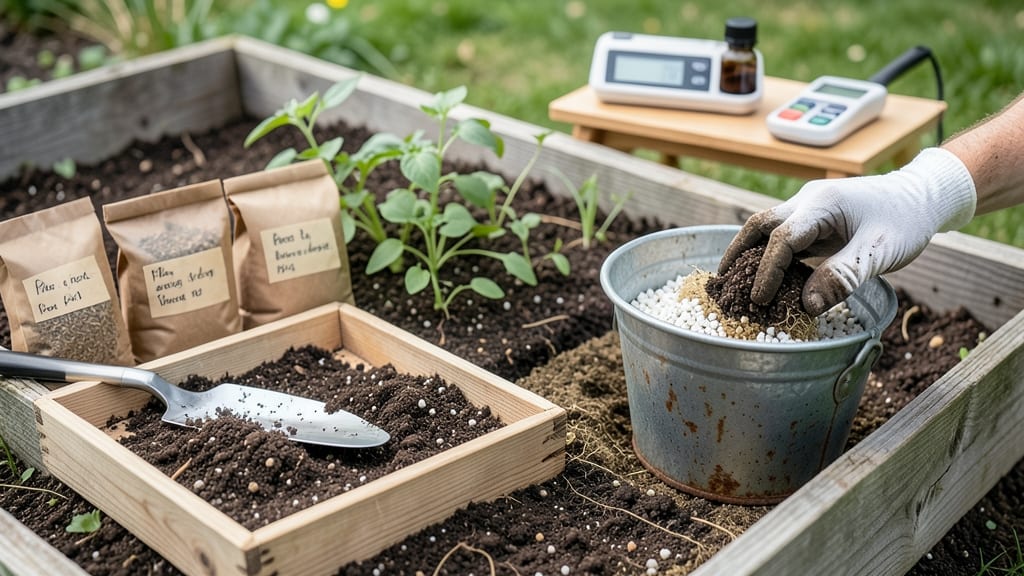
A balanced soil mixture for vegetable gardens combines 60% topsoil, 20% compost, 10% perlite or vermiculite, and 10% coarse sand to ensure proper drainage while retaining essential nutrients for root development and plant health. Adjust ratios based on clay or sandy native soil types.
A well-balanced soil mixture for vegetable gardens serves as the foundation for healthy plant growth by optimizing both drainage and nutrient availability.
The compost component enriches the soil with organic matter, improving microbial activity and nutrient retention, while perlite or vermiculite creates air pockets that prevent compaction and promote root respiration. Coarse sand further enhances drainage, especially in clay-heavy soils, preventing waterlogging that can suffocate roots. 🌱 This blend supports diverse vegetable types—root crops like carrots thrive with slightly looser mixes, while leafy greens benefit from higher organic content to sustain rapid growth.
For container gardens, consider adding 10% coconut coir to improve moisture retention during hotter months.
The ideal soil composition also depends on your local climate and native soil type. Sandy soils, which drain too quickly, may need an extra 5-10% compost to boost water retention, while clay soils benefit from increased perlite or coarse sand to prevent water pooling.
Regular soil testing helps fine-tune the pH balance—most vegetables prefer a slightly acidic to neutral range (6.0-7.0)—and allows you to adjust amendments like lime or sulfur as needed. Seasonal amendments, such as adding fresh compost in early spring, ensure your garden soil remains productive throughout the growing season.
💡 In This Article
- Science Behind the Ideal Vegetable Garden Soil Composition
- Customizing Your Vegetable Garden Soil Mix by Plant Type
Science behind the ideal vegetable garden soil composition
The foundation of any thriving vegetable garden lies in understanding how each soil component works together at a microscopic level. Compost acts like a sponge, holding onto essential nutrients (nitrogen, phosphorus, potassium) and slowly releasing them to plant roots through microbial activity.
Think of it as a living ecosystem where beneficial bacteria and fungi break down organic matter, creating a nutrient-rich environment. This process, called mineralization, ensures roots have a steady supply of food without overloading the soil—similar to how a slow-release fertilizer works but with added benefits for soil structure.
When it comes to aeration, perlite or vermiculite plays a critical role by creating tiny air pockets (up to 30% air space in the mix). These lightweight minerals expand when heated, forming a porous network that prevents soil compaction—a common issue in heavy clay soils.
For example, clay particles pack tightly, reducing oxygen flow to roots by 50% or more compared to well-aerated soil. The result? Roots suffocate, stunting growth. Perlite's rough, angular texture also improves water infiltration, reducing surface runoff that can erode garden beds during heavy rains.
Coarse sand serves as the drainage regulator, preventing water from pooling around roots—a problem that can lead to root rot within 24-48 hours in waterlogged conditions. Unlike fine sand, which clumps and reduces aeration, coarse sand (with particles 0.5-2mm in diameter) creates larger voids that allow excess water to drain while still holding onto moisture for root uptake. This balance is especially crucial for vegetables like tomatoes, which need consistent moisture but can't tolerate soggy soil. The sand also helps prevent the "pancaking" effect in container gardens, where soil compacts under plant weight.
Don't overlook the importance of pH balance, which directly affects nutrient availability. Most vegetables thrive in a slightly acidic to neutral range (6.0-7.0 pH), where essential nutrients like nitrogen (for leafy growth) and calcium (for cell structure) remain soluble.
For instance, in acidic soils (pH <5.5), phosphorus becomes locked away in insoluble forms, starving plants even when ample compost is present.
A simple soil test can reveal these imbalances—something I always do before planting—allowing me to adjust with amendments like crushed limestone (to raise pH) or elemental sulfur (to lower it).
Here's how these components interact in real-world scenarios: In a clay-heavy soil, adding 20% perlite and 15% coarse sand can transform it from a dense brick-like texture to a crumbly, workable medium.
Meanwhile, sandy soils benefit from extra compost (30%) to improve water retention, as sand holds only 1-2% moisture compared to clay's 30-50%. The key is creating a soil that mimics the natural forest floor—loose enough for roots to explore but rich enough to sustain growth without constant fertilization.
For container gardens, where soil volume is limited, I often replace 5% of the sand with coconut coir. This fibrous material holds 4-6 times its weight in water while still allowing aeration, making it ideal for hot climates where moisture evaporates quickly.
The coir also breaks down slowly, adding organic matter over time—unlike peat moss, which can acidify soil and deplete nutrients faster. 🌱
The science doesn't stop at the mix itself—it's about creating a dynamic system where each component supports the others. For example, the microbial activity boosted by compost actually helps break down perlite and sand particles over time, further improving soil structure.
This is why I recommend testing your soil every 2-3 years and adjusting the mix seasonally, especially after heavy harvests that deplete nutrients. The goal isn't just a pretty garden bed; it's a living, breathing ecosystem that works as hard as you do.