
Tools
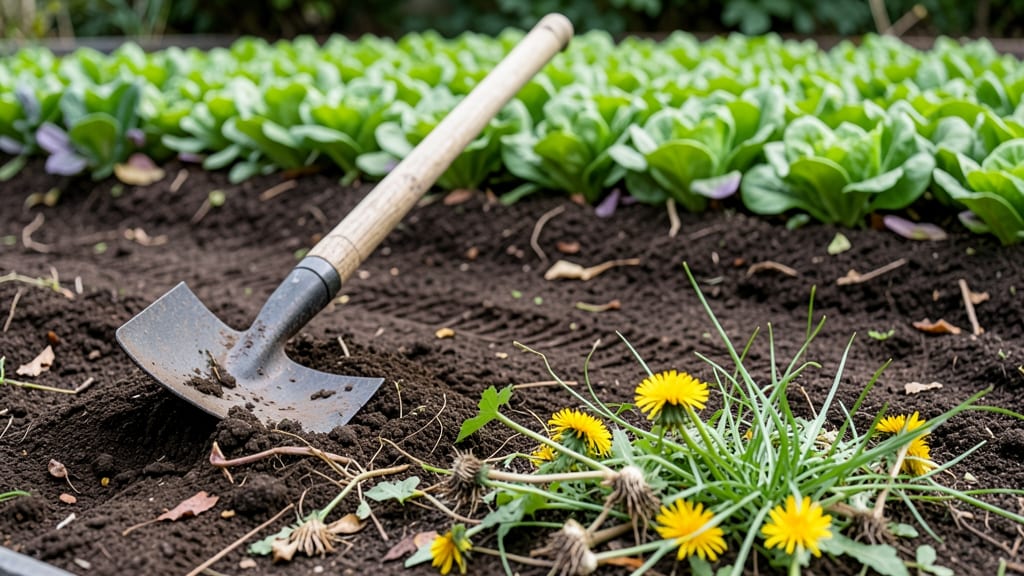
A garden hoe is used for breaking up soil, removing weeds, leveling garden beds, and creating furrows for planting. Its versatile blade helps cultivate, aerate, and maintain garden health efficiently with minimal effort.
A garden hoe transforms your gardening workflow by tackling five core tasks: chopping through stubborn weeds at the root, aerating compacted soil to boost root growth, and shaping raised beds for better drainage. 🌱 The blade's design—whether flat or stirrup—lets you scrape away debris while leaving the soil structure intact, unlike heavy tillers that can disrupt beneficial microbes.
I've found that using a hoe regularly keeps my garden beds weed-free and ready for planting, cutting down on backbreaking work later in the season.
Beyond basic weeding, hoes excel at creating precise planting rows that guide seeds or seedlings into straight lines, making harvests easier. The right technique—light passes for cultivation versus deeper cuts for breaking up clods—lets you customize your approach based on soil type and plant needs.
For instance, a draw hoe glides effortlessly through loose soil, while a warren hoe handles tougher terrain with its pointed tip.
💡 In This Article
- How Garden Hoes Improve Soil and Plant Growth
- Top 5 Tasks to Use a Garden Hoe Effectively
How garden hoes improve soil and plant growth
The magic of a garden hoe lies in its blade design, which determines how it interacts with soil and weeds.
Flat blades like those on draw hoes create a slicing motion that severs weed roots at the soil surface, while stirrup hoes with their U-shaped blades scrape soil upward to expose buried weeds.
This targeted approach prevents soil disturbance deeper than 2-3 inches, preserving the delicate ecosystem of microbes and earthworms near the surface that enrich soil fertility.
When you work a hoe through compacted soil, the blade's edge acts like a mini plow, breaking up hardpan layers without flipping the entire soil profile. This aeration is crucial because roots need oxygen—compacted soil can reduce oxygen levels by up to 50% in heavy clay, stunting plant growth.
The hoe's shallow cuts also create tiny air pockets that improve water drainage while maintaining soil structure, unlike rototillers that can destroy this balance by over-turning the earth.
Weed suppression works through a dual mechanism: physical removal and growth inhibition. Hoeing interrupts weeds' life cycle by cutting off their access to sunlight before they establish deep roots. Research shows that consistent hoeing can reduce weed biomass by 70-80% compared to untreated plots.
The key is timing—young weeds with shallow roots are easiest to remove, while mature weeds require more force and may leave fragments that regrow.
Proper technique prevents soil compaction that often comes from heavy foot traffic or machinery. By working the hoe in a pushing motion rather than stomping, you distribute your weight evenly and avoid compressing the soil beneath your feet.
This is especially important in vegetable gardens where root crops like carrots and beets need loose soil to grow straight and uniform. A well-maintained hoe with a sharp edge requires 30-50% less force than a dull one, making the job easier on your back and the soil.
Consider the soil type when choosing your approach: Sandy soils benefit from lighter passes to avoid creating clods, while clay soils need deeper cuts to break up their dense structure.
The hoe's versatility extends to creating planting rows—simply drag the blade through soil to form 2-4 inch deep furrows that guide seeds into straight lines. This precision makes thinning seedlings and harvesting easier later in the season.
For advanced gardeners, a warren hoe with its pointed tip can handle tougher tasks like harvesting root vegetables or chopping through thick weed mats.
The pointed design lets you work in tight spaces where flat blades might struggle, making it ideal for container gardens or small plots. 🌱 What most people don't realize is that the hoe's effectiveness depends as much on the tool as it does on your technique—using it at the right angle and depth maximizes its benefits while protecting your garden's delicate ecosystem.