
Pests and Diseases
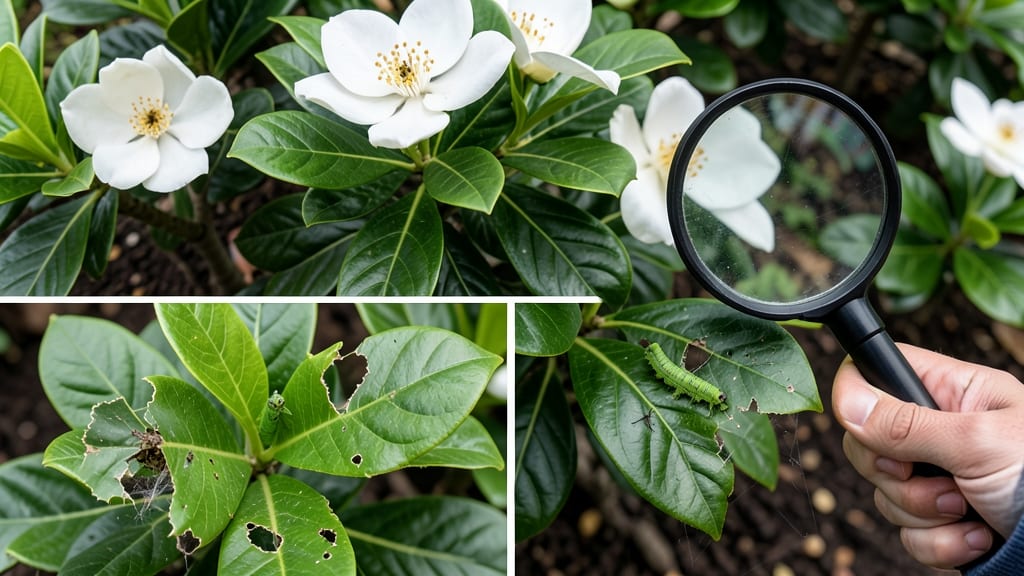
If your gardenia leaves are being eaten, the culprits are likely caterpillars, spider mites, aphids, snails, or deer—each leaving unique damage patterns. Examine the leaf edges, undersides, and stems for clues, then use targeted organic treatments or barriers for quick results.
Gardenias are particularly vulnerable to pests because their tender leaves attract insects and wildlife. 🌿 The key to fast fixes is acting early—aphids, for example, cluster on the undersides of leaves, while caterpillars leave jagged notches along the edges.
Deer, on the other hand, typically chew entire leaves, often at night. I’ve found that neem oil works wonders for soft-bodied pests like spider mites, while diatomaceous earth creates a barrier that deters snails and slugs.
For severe cases, consider companion planting with marigolds or lavender, which naturally repel many garden pests. The faster you identify the culprit, the easier it is to protect your gardenia’s delicate foliage and keep those fragrant blooms thriving.
💡 In This Article
- How to Spot Gardenia Leaf Pests by Damage Type
- Organic Pest Control Methods for Gardenias
How to spot gardenia leaf pests by damage type
Caterpillars are the most dramatic culprits, leaving behind irregular, jagged holes along leaf edges. These larvae often hide during the day and emerge at night to feed, which is why you might notice new damage overnight.
Look for green or brown caterpillars (like tomato hornworms) or their silken cocoons tucked under leaves. Their feeding patterns create a "lace-like" appearance, and they can devour entire leaves within 24-48 hours if unchecked.
Spider mites, on the other hand, are microscopic but leave telltale signs: fine webbing on leaf undersides and a stippled, yellowish pattern on the surface. These pests thrive in dry, hot conditions and multiply rapidly, creating 10-20 new generations per year.
Unlike caterpillars, they don't chew leaves—they pierce cells with their mouthparts, sucking out sap and causing leaves to curl or drop prematurely. A 10x magnifying glass can help spot their tiny red or yellow bodies.
Aphids cluster in sticky, sugar-rich colonies that resemble tiny green or black beads, often on new growth. Their feeding leaves behind a glossy, sticky residue called honeydew, which attracts ants and promotes sooty mold.
These pests reproduce asexually, meaning a single female can give birth to 50-100 live nymphs without mating. Check leaf undersides and stems for these soft-bodied insects, which are easily crushed between fingers.
Snails and slugs leave behind shiny, slime trails and smooth, ragged edges where they've fed. Unlike caterpillars, their damage is often irregular and uneven, with larger areas missing entirely. These pests are most active at night and during humid conditions, hiding in mulch or under pots during the day.
A flashlight at dusk can reveal their presence, along with their 1-inch-wide, coiled shells or gray, slimy bodies.
Deer are the largest culprits, often targeting gardenias in late spring when new growth is tender. Their damage is clean, straight cuts along leaf margins, resembling a "windowpane" effect. Unlike insects, deer feed at night and can strip entire plants in one sitting.
Look for browsing patterns at the plant's edge or on lower branches, where deer can't reach higher foliage. Their droppings near the plant are another dead giveaway.
Seasonal activity peaks vary by pest: caterpillars and aphids thrive in warm spring and summer months, while spider mites prefer dry, hot conditions of late summer. Snails and slugs are most active during humid spring and fall evenings, and deer browsing increases in early spring when new shoots emerge.
Understanding these patterns helps you time your interventions effectively.