
Tools
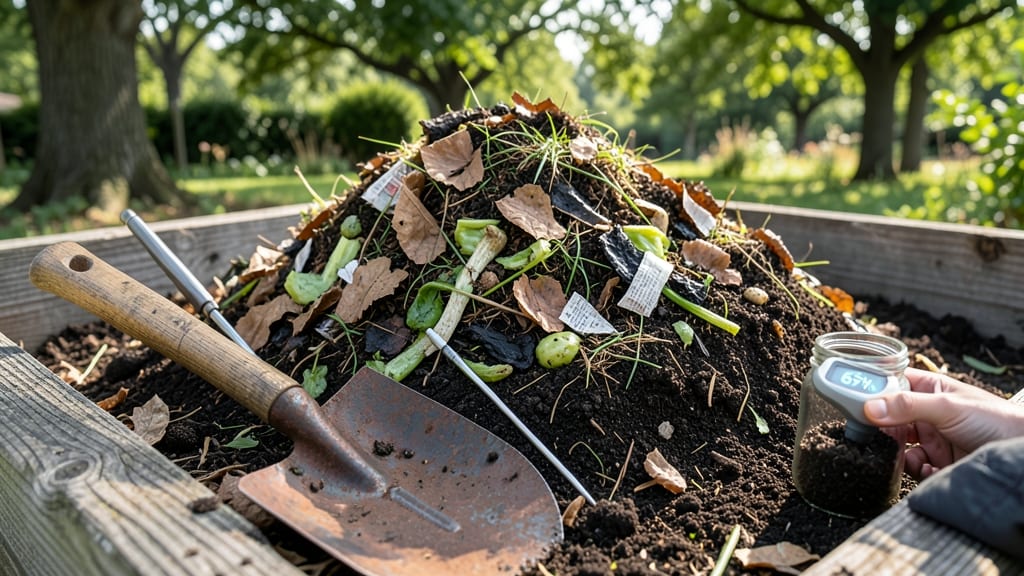
Garden compost is decomposed organic matter from yard waste, food scraps, and plant debris that transforms into nutrient-rich soil, boosting plant growth, moisture retention, and soil structure over time. Unlike synthetic fertilizers, it provides slow-release nutrients that improve soil health naturally.
Garden compost forms through natural decomposition by microbes, worms, and fungi, breaking down organic materials into dark, crumbly humus. 🌱 This process releases essential nutrients like nitrogen, phosphorus, and potassium gradually, unlike chemical fertilizers that deliver quick but short-lived boosts.
The result is healthier soil that supports stronger root systems and better water absorption.
Think of compost as nature's way of recycling nutrients back into the ecosystem. When you add it to your garden, you're not just feeding plants—you're building a thriving soil environment that improves with each use.
The best compost has a rich, earthy smell, dark brown color, and a texture similar to crumbly coffee grounds.
💡 In This Article
- How Garden Compost Forms and Its Key Nutriitional Benefits
- Choosing the Right Compost for Your Garden Needs
How garden compost forms and its key nutritional benefits
Garden compost forms through a biological process called decomposition, where microorganisms like bacteria and fungi break down organic materials. This process requires three key elements: oxygen (for aerobic decomposition), moisture (to keep microbes active), and a carbon-to-nitrogen ratio of about 30:1.
When these conditions are met, microbes convert yard waste, food scraps, and plant debris into humus—a dark, crumbly substance packed with nutrients. The breakdown happens in stages: first, simple sugars and starches decompose quickly, followed by cellulose and lignin, which take months to years. 🌱
The nutrient profile of finished compost is what makes it so valuable. A typical batch contains 0.5-3% nitrogen, 0.2-1% phosphorus, and 0.1-0.5% potassium, along with micronutrients like calcium, magnesium, and trace minerals.
Unlike synthetic fertilizers, which deliver nutrients in concentrated bursts, compost releases these nutrients slowly as microbes continue to break down the organic matter. This gradual release creates a more stable food source for plants, reducing the risk of nutrient burn while supporting long-term soil health.
One of the most significant benefits of compost is its ability to improve soil structure. The humus created during decomposition binds soil particles together, forming aggregates that enhance aeration and water retention.
For example, sandy soil—which drains too quickly—can hold 30-50% more water when amended with compost, while clay soil becomes lighter and easier to work with. The porous structure also encourages beneficial microbial activity, creating a thriving ecosystem that supports plant roots. 🌿
Comparing compost to other soil amendments highlights its unique advantages. While manure provides quick nutrients, it can also introduce weeds or pathogens if not properly aged. Synthetic fertilizers deliver immediate results but often harm soil biology over time.
Compost, on the other hand, improves soil fertility without the downsides, making it a sustainable choice for both home gardeners and large-scale agriculture. Its slow-release nature ensures plants receive a steady supply of nutrients, promoting healthier growth and resilience against pests and diseases.
To visualize the difference, consider a compost pile's temperature as a gauge of activity. A well-managed pile reaches 130-160°F during active decomposition, killing weed seeds and pathogens while accelerating nutrient breakdown. This heat also signals the presence of beneficial microbes and earthworms, which further enrich the soil.
The end result is a nutrient-dense, crumbly material that transforms barren soil into a fertile growing medium. 🔥