
Tools
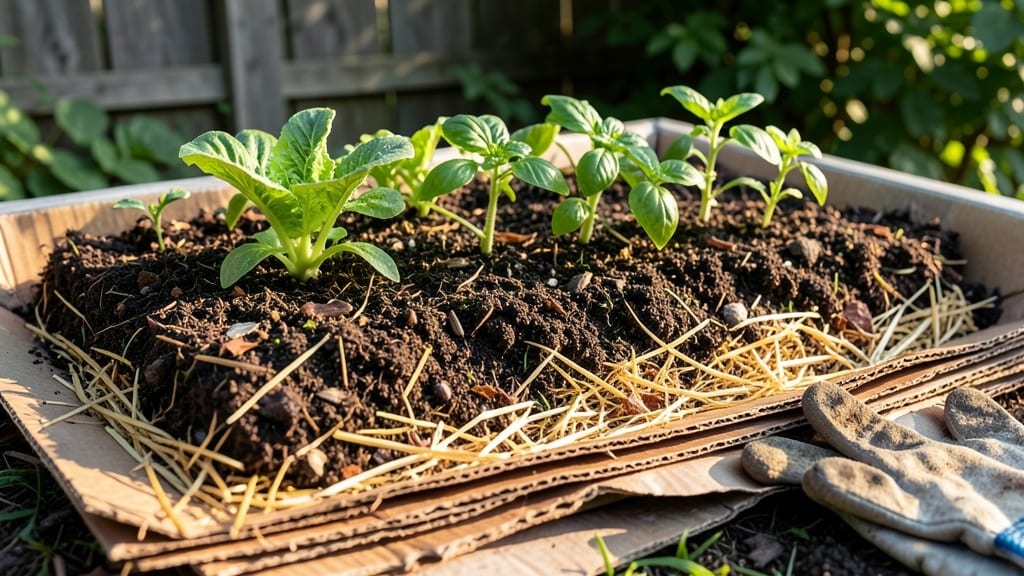
Lasagna gardening is a no-dig planting method that mimics compost layers by stacking organic materials like cardboard, leaves, and grass clippings to create nutrient-rich soil beds for plants. This technique improves soil health without tilling, saving time and effort while reducing weeds and erosion.
Lasagna gardening works by replicating the natural decomposition process you'd find in a forest floor. 🌿 Each layer—from cardboard as a weed barrier to nitrogen-rich grass clippings—breaks down over time, creating a crumbly, fertile growing medium.
Unlike traditional tilling, which disrupts soil structure and releases carbon, this method builds soil organically while suppressing weeds through the cardboard's smothering effect.
The key is balancing "brown" carbon-rich materials (like leaves or straw) with "green" nitrogen sources (such as manure or vegetable scraps) to accelerate decomposition without creating anaerobic pockets.
This approach is particularly valuable for gardeners with poor soil quality or limited mobility, as it eliminates the need for heavy equipment and reduces physical strain. The layers also retain moisture better than loose soil, making it ideal for drought-prone areas.
I've seen firsthand how lasagna beds outperform tilled plots in my own garden—they warm up faster in spring, support deeper root systems, and maintain fertility with minimal annual amendments.
💡 In This Article
- How Lasagna Gardening Builds Fertile Soil
- Step-by-Step Guide to Starting a Lasagna Garden Bed
How lasagna gardening builds fertile soil
Lasagna gardening replicates how nature builds soil through layering—a process called stratification. In a forest, fallen leaves (carbon-rich) mix with decomposing plants (nitrogen-rich) over centuries. This method accelerates that process by stacking materials in 3-4 inch layers, creating a controlled decomposition environment.
The carbon-to-nitrogen ratio (typically 30:1) ensures microbes break down materials efficiently without creating anaerobic pockets that produce foul odors.
The decomposition process releases nutrients gradually, feeding plants over months rather than all at once. Unlike traditional tilling—which disrupts soil structure and releases stored carbon—lasagna beds build soil from the ground up. The cardboard base blocks weeds while breaking down into cellulose, while straw or leaves provide structure.
Over 6-12 months, this transforms into a fluffy, loamy texture with 5-10% organic matter, ideal for root growth. 🌱
This method also improves soil aeration by creating air pockets between layers. Traditional tilling compacts soil over time, but lasagna beds maintain a porous structure that supports beneficial microbes. The lack of disturbance means earthworms and fungi thrive, further enriching the soil.
Studies show lasagna beds can increase microbial activity by up to 40% compared to tilled plots, leading to healthier plant roots and higher yields.
One key difference from tilling is the absence of soil inversion. When you till, you bury organic matter deep where it decomposes slowly. In lasagna gardening, all materials stay near the surface where plant roots can access nutrients immediately.
This surface-focused approach also reduces erosion by keeping the soil covered, protecting it from wind and rain. The moisture retention from layered materials can cut watering needs by 30-50%.
For best results, maintain a 1:1 ratio of browns (carbon) to greens (nitrogen). Browns include dried leaves, straw, or shredded paper, while greens are grass clippings, coffee grounds, or manure. This balance prevents odors from anaerobic decomposition while maximizing nutrient release.
The layers also insulate roots, protecting them from temperature extremes—keeping soil 10-15°F warmer in winter and cooler in summer than tilled beds.