
Landscaping
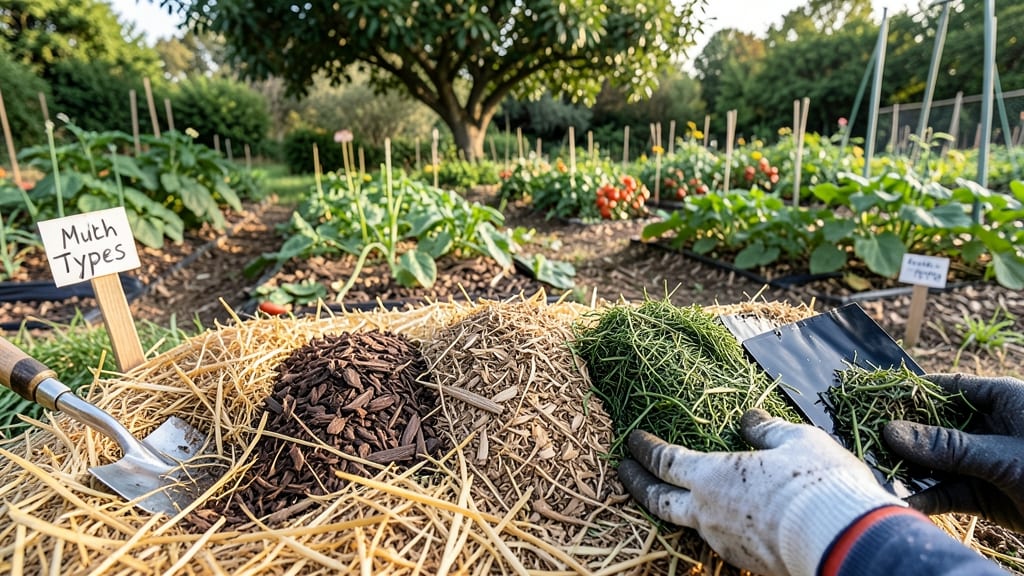
When choosing what mulch to use for vegetable gardens, straw is ideal for moisture retention and weed control while decomposing, while shredded leaves or grass clippings enrich soil with nutrients as they break down. For long-term weed suppression, inorganic options like landscape fabric work but must be installed carefully to prevent plant suffocation.
Choosing the right mulch depends on your garden's specific needs.
Straw is fantastic for tomatoes and peppers because it stays in place while breaking down slowly, but it can harbor pests if not fresh. 🌱 Shredded leaves or grass clippings are excellent for nitrogen-loving crops like corn or squash, as they add organic matter to the soil.
Inorganic options like black plastic mulch can raise soil temperatures for faster germination, but they require precise cutting for planting holes to avoid damaging roots.
For root vegetables like carrots or beets, I recommend using wood chips—they help regulate soil temperature while keeping weeds at bay. However, avoid fresh wood chips for nitrogen-heavy plants like leafy greens, as they can temporarily deplete soil nitrogen as they decompose.
Always consider your crop type and seasonal conditions when selecting mulch, as the wrong choice can either boost or hinder growth.
💡 In This Article
- How Different Mulch Types Affect Soil Health and Crop Growth
- Best Mulch Choices for Specific Vegetable Garden Crops
How different mulch types affect soil health and crop growth
Organic mulches like straw and wood chips work by creating a protective layer that slows water evaporation, maintaining soil moisture levels up to 30-50% higher than unmulched soil.
Straw, for example, has a loose, fibrous structure that traps moisture while allowing air and water to penetrate—ideal for warm-season crops like tomatoes and peppers that thrive in consistently damp conditions.
The decomposition process also feeds beneficial soil microbes, which break down organic matter into nutrients like nitrogen and phosphorus over 3-12 months, depending on the material.
Shredded leaves or grass clippings take this a step further by adding carbon-rich organic matter that improves soil structure and water retention. When these materials decompose, they create a sponge-like environment that holds 2-3 times more water than bare soil.
However, fresh grass clippings can initially draw nitrogen from the soil as they break down—a process called "nitrogen theft"—which is why I recommend mixing them with compost or using them on nitrogen-loving crops like corn or squash where this temporary effect is less critical. 🌱
Inorganic mulches like landscape fabric or black plastic take a different approach by blocking sunlight to suppress weeds while regulating soil temperature. Black plastic, for instance, can raise soil temperatures by 5-10°F in spring, accelerating seed germination for crops like cucumbers or melons.
However, these materials don't contribute to soil fertility and must be removed after one season to avoid disrupting soil ecosystems. The trade-off is clear: inorganic mulches excel at weed control and temperature management but don't improve soil health over time.
Decomposition rates vary dramatically between mulch types. Straw breaks down in 6-12 months, while hardwood chips can take 2-3 years to fully decompose. This affects nutrient release timing—fast-decomposing mulches like grass clippings provide quick nitrogen boosts, while slow-decomposing wood chips offer long-term carbon enrichment.
Understanding these rates helps match mulch types to your planting schedule and crop needs.
Another critical factor is pH impact. Organic mulches generally have a neutral pH, but some, like pine straw, can acidify soil over time (pH dropping by 0.5-1.0 units annually). This makes pine straw less ideal for acid-sensitive crops like potatoes or Brussels sprouts.
Always test your soil's pH before choosing mulch, especially if you're working with acid-loving plants like blueberries or rhubarb.
For maximum benefits, aim for a 3-4 inch thick mulch layer—thicker layers can suffocate plants by blocking oxygen, while thinner layers may not provide adequate weed suppression or moisture retention.
The right balance depends on your climate, soil type, and crop requirements, but this thickness is a reliable starting point for most vegetable gardens. ✨