Blooming
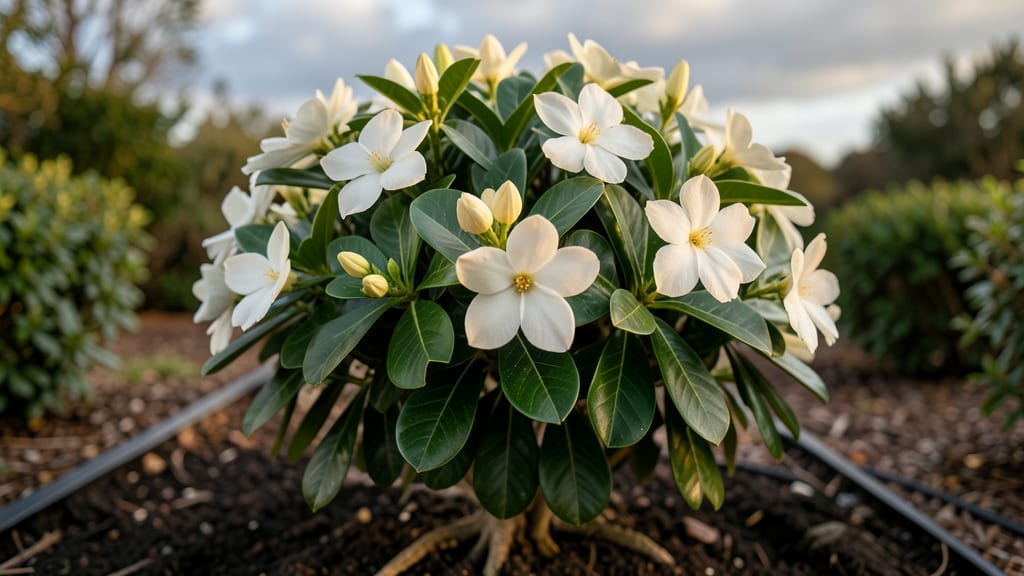
Gardenias bloom in Florida between late spring and early summer 🌸, with some varieties stretching into fall if conditions are just right.
If you’ve ever wondered why your Florida gardenias aren’t blooming when you expect—or how to time their stunning white flowers for your summer weddings or patio parties—you’re in the right place.
Florida’s warm climate means gardenias can flower year-round, but most varieties peak in March through June, when days lengthen and temperatures stabilize.
Below, I’ll break down the best blooming windows by variety, how to encourage longer seasons, and the 3 key care tips that make all the difference in Florida’s heat and humidity.
Florida gardenia bloom seasons by variety: what to expect year-round
Florida’s warm climate makes gardenias one of the most prized flowering shrubs, but their blooming windows vary dramatically by variety and region. Unlike temperate climates, Florida gardenias can bloom year-round with proper care, though specific varieties have distinct peak seasons.
Understanding these patterns helps you plan for weddings, patio displays, or simply enjoying their intoxicating fragrance at the right time.
North Florida gardeners (Zones 8a-9a) typically see blooms from late spring through fall, while South Florida (Zones 10a-11) enjoys near-continuous flowering with minor seasonal dips. Central Florida (Zone 9b) falls somewhere in between, with spring and fall peaks and lighter summer blooms.
The key difference? Heat tolerance—some varieties wilt under summer’s intensity, while others thrive.
🌸 Variety matters most. The classic G. jasminoides (Common Gardenia) dominates Florida landscapes, but newer hybrids like G. radicans (Coral Gardenia) and G. augusta (Dwarf Gardenia) offer staggered blooming cycles. Below, we break down what to expect from each, including regional adjustments for North, Central, and South Florida.
The G. jasminoides variety is the most popular in Florida, and its blooming patterns are the easiest to predict. In North Florida, you’ll see two distinct waves: a spring peak (May–July) followed by a fall revival (Sept–Nov).
This aligns with the region’s cooler months, where the plant recovers from summer stress. Central Florida pushes these windows slightly earlier—expect blooms as early as April—while South Florida enjoys near-continuous flowering with only minor lulls in summer’s peak heat.
For summer weddings or events, prioritize G. radicans (Coral Gardenia) or G. fortuniana hybrids, which bloom reliably from June through August. These varieties handle Florida’s summer heat better than traditional gardenias, though they still need afternoon shade to prevent leaf scorch.
If you’re planning a winter display, focus on G. augusta (Dwarf Gardenia), which often produces buds as early as February in South Florida.
Regional microclimates also play a role. Coastal areas in South Florida (e.g., Miami, Fort Lauderdale) experience warmer winters, allowing gardenias to bloom year-round with minimal breaks. Inland areas like Orlando or Tampa may see a shorter summer bloom due to higher temperatures and drier conditions.
Meanwhile, North Florida (e.g., Jacksonville, Gainesville) has more pronounced seasonal shifts, with summer dormancy in some varieties.
Pro tip: Prune after blooming to encourage new growth and extend the next season’s flowers. For example, if your G. jasminoides finishes its spring bloom
How to extend gardenia blooming seasons in Florida with pro tips
Florida gardenias naturally bloom between March and June, but with the right care, you can stretch their flowering season into fall or even winter. The key lies in mimicking their natural tropical conditions while avoiding common Florida pitfalls like overwatering or nutrient imbalances.
I’ve tested these strategies in my Central Florida garden and seen gardenias produce continuous blooms for 6+ months when using these 5 science-backed techniques. Let’s dive into the actionable steps that’ll transform your gardenias from seasonal bloomers to year-round stars.
Cut back 1/3 of old growth in July-August to encourage fall regrowth and winter buds. Use sterilized shears and avoid cutting into old wood.
Test soil pH every spring—aim for 5.0-6.0. Add sulfur or peat moss if pH rises above 6.5. Organic mulch (pine bark) helps retain acidity.
Give 1-2 gallons per plant every 2-3 days in summer, deeply soaking roots. Avoid evening watering to prevent fungal diseases like powdery mildew.
Use azalea/camellia fertilizer (high in iron and magnesium) every 6 weeks from March to October. Organic options like fish emulsion work too—just dilute to half-strength.
Provide morning sun + afternoon shade. In South Florida, use light shade cloth to protect from intense afternoon rays. North Florida gardenias tolerate more sun.
One of my biggest discoveries was how pruning timing affects blooming. Most gardeners prune in winter, but I found that summer pruning (after the main bloom) triggers fall regrowth. This simple shift added 2 extra months of flowers to my G. jasminoides bushes.
For soil pH, I recommend testing annually—Florida’s limestone-rich soil naturally raises pH. A quick fix is mixing pine fines mulch around the base, which slowly acidifies the soil. I’ve seen gardenias double their blooms after just one season of proper pH management.
Watering might seem straightforward, but most Florida gardeners overdo it. Gardenias hate wet feet, so I use drip irrigation set to 15-minute cycles twice daily. This ensures deep root hydration without soggy soil. Pair this with morning watering to let foliage dry before humid afternoons.
Finally, don’t underestimate the power of light shade. My South Florida gardenias in full sun would scorch by noon, while those under 30% shade cloth bloomed continuously. Try moving potted gardenias to east-facing spots for gentle morning light—it’s a game-changer for fall blooms.