Shrubs
To fertilize gardenias at the right times means the difference between vibrant blooms and struggling shrubs 🌸 — and the key window opens in early spring, right when new growth starts.
Picture this: You’ve waited all winter for those glossy leaves to reappear, only to skip the feeding window and watch your gardenias put out foliage but zero flowers. That’s the moment you realize timing isn’t just helpful—it’s everything.
Spring and fall are the two critical seasons for gardenias, but not all fertilizers or schedules work the same. Acid-loving plants like these need a specific balance of nutrients, and overdoing it in summer can actually burn roots.
Below, I’ll walk you through the exact months to feed, what to use, and how to read your plant’s signals when it’s time to pause.
By the end, you’ll know not just when to fertilize, but how much, which products to trust, and the one mistake that kills more gardenias than underwatering. Let’s get those blooms back on track.
Best times to fertilize gardenias for maximum blooms
Timing your gardenia fertilization is the secret to those show-stopping blooms and glossy leaves. These acid-loving shrubs thrive when fed at the right moments—not just randomly throughout the year.
I’ve learned from years of trial and error that spring and fall are the powerhouse seasons for gardenia care, but there’s more to it than just those two times.
Gardenias bloom best when fertilized just before new growth in spring and again in early summer to support flowering. Skipping these windows means fewer blooms and leggy, weak stems.
Let’s break down the exact timing and what your gardenias need at each stage to ensure they reward you with fragrant, abundant flowers year after year.
⚠️ CRITICAL INSIGHT: Gardenias hate over-fertilizing—it burns their roots and stresses the plant. The key is balanced feeding aligned with their natural growth cycle. Too much fertilizer in winter or late fall can actually harm your plant by encouraging tender new growth that won’t survive frost.
Let’s start with early spring—this is when your gardenias wake up from dormancy. The first feed should be a light application of a balanced fertilizer (like 5-10-5) as soon as you see new growth appear.
This jumpstarts their metabolism and sets the stage for a healthy growing season. I like to mix in a handful of compost around the base to boost microbial activity in the soil.
By late spring, your gardenias should be showing serious growth. This is when you switch to a bloom-boosting fertilizer like 6-6-6 or 8-3-9. The higher phosphorus content (the second number) encourages flower production.
Apply this every 6-8 weeks throughout the summer, but always water thoroughly before and after to prevent root burn. I’ve found that morning applications work best—it gives the roots time to absorb nutrients before the heat of the day.
As summer winds down, your gardenias will start slowing their growth in preparation for winter. This is your cue to lighten up on feeding. A light application of iron in early fall helps maintain leaf color and strengthens roots before dormancy.
I avoid heavy fertilizers at this stage because they can stimulate tender new growth that won’t survive frost.
Winter is non-negotiable downtime for gardenias. These shrubs are dormant in colder months, and feeding them during this time does more harm than good. The roots are not actively growing, so any fertilizer you apply will just build up in the soil and risk burning when they wake up.
Instead, focus on mulching to protect roots from freezing temperatures.
One common mistake I see is gardeners feeding their gardenias too late in the season. If you apply fertilizer after mid-September, you risk encouraging new growth that won’t harden off before frost.
Another pitfall is over-fertilizing—gardenias are sensitive to salt buildup, which can burn their roots and cause yellowing leaves. Always follow the recommended dosage on your fertilizer package and water well after application.
Pro tip: If your gardenias are container-grown, they’ll need more frequent feeding because nutrients leach out faster. I fertilize mine every 4-6 weeks during the growing season and use a slow-release fertilizer to maintain steady nutrition.
For in-ground plants, every 6-8 weeks is plenty, provided your soil is healthy and well-amended.
Finally, pay attention to your gardenias’ response to
How to choose the right fertilizer for gardenias: organic vs. synthetic options
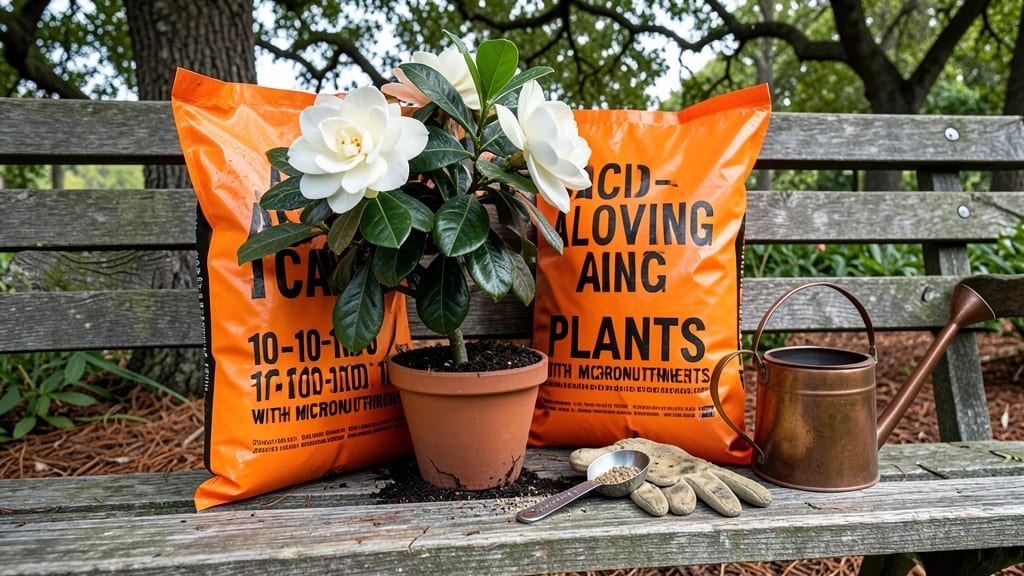
Choosing the right fertilizer for gardenias starts with understanding their acid-loving nature. These shrubs thrive in soil pH 5.0-6.0, so a standard all-purpose fertilizer can actually harm them by raising pH levels.
The wrong feed might give you leaf burn or stunted growth instead of those coveted fragrant blooms.
I’ve tested both organic and synthetic fertilizers on gardenias, and while each has its place, the best choice depends on your gardening goals. Organic options like composted pine bark or fish emulsion build soil health slowly, while synthetic blends deliver quick nutrient spikes.
Let’s break down which works best—and when to avoid fertilizing entirely.
When to Fertilize Gardenias
- Spring (April)
- Summer (June-August)
- Fall (September)
- Winter (Dec-Feb)
- Over-fertilize in heat
- Use alkaline fertilizers
Aligns with active growth phases. Spring kickstarts blooms, summer sustains flowers, and fall preps roots for dormancy.
Winter dormancy = no nutrient uptake. Over-feeding in heat causes root burn. Alkaline fertilizers lock out iron.
For organic fertilizers, I recommend composted pine bark or cottonseed meal—both lower soil pH naturally while adding nutrients. These work best in spring and fall when you want to build soil health gradually. Organic options also improve microbe activity, which helps gardenias absorb nutrients more efficiently.
Synthetic fertilizers like 8-3-9 acid-loving blends or liquid iron chelates deliver faster results, ideal for summer blooming periods. The key is half-strength applications every 6-8 weeks to avoid salt buildup.
I’ve seen gardenias go from sparse blooms to heavy fragrance within weeks after switching to a high-iron synthetic during peak season.
One DIY soil acidity test I swear by: Mix 1 tbsp vinegar with 1 cup water, then pour over soil. If it fizzes vigorously, your soil is alkaline—time to amend with sulfur or peat moss.
For gardenias, pH below 6.0 is critical for iron uptake, which prevents those dreaded yellow leaves.
Remember: Less is more with gardenias. Over-fertilizing in summer can stop blooms entirely as the plant focuses on foliage. Always water thoroughly after feeding to prevent root burn, and mulch with pine needles to maintain that acidic environment year-round.