
Container Gardens
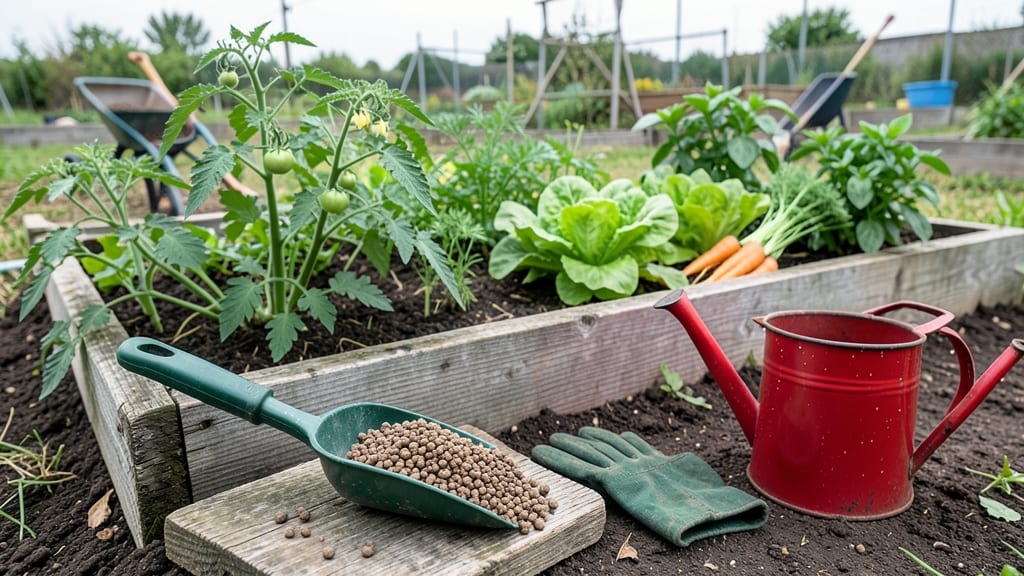
To fertilize your garden effectively, time it with your plants' growth stages: use slow-release fertilizer in early spring for cool-season crops, mid-spring for warm-season plants, and again mid-season when flowering or fruiting begins. Always test your soil first to prevent nutrient overload.
Timing matters because plants absorb nutrients most efficiently during specific growth phases. 🌱 Cool-season crops like lettuce and spinach need nutrients when they're establishing roots in early spring, while warm-season plants like tomatoes and peppers thrive when soil warms up in mid-spring.
Mid-season feeding boosts flowering and fruiting, but overdoing it can burn roots or pollute groundwater. I've learned that organic fertilizers release nutrients gradually, while synthetic ones work faster but require more careful monitoring.
For container gardens, I recommend using a balanced 10-10-10 fertilizer in early spring, then switching to a bloom booster (like 5-10-10) when plants start flowering. 🌸 The key is matching fertilizer type to your plants' current needs—vegetative growth demands more nitrogen, while fruiting phases need phosphorus and potassium.
Always water thoroughly after applying to help nutrients reach the roots.
💡 In This Article
- How Plant Life Cycles Dictate Fertilizer Timing
- Seasonal Fertilizer Schedule by Common Garden Plants
How plant life cycles dictate fertilizer timing
The key to effective fertilization lies in understanding how plants grow naturally. During the seedling stage, plants focus on developing roots and leaves, which requires more nitrogen. This is why early spring applications of balanced fertilizers (10-10-10) work best for cool-season crops like broccoli or kale.
The soil temperature threshold for root development is typically 45-55°F, signaling it's time to feed these hardy plants.
When soil warms to 60-65°F in mid-spring, warm-season plants like tomatoes and peppers enter their vegetative growth phase. This is when they need a boost of phosphorus (5-10-10 ratio) to develop strong root systems.
I've noticed that plants in this stage show rapid leaf growth and can double in size within 2-3 weeks with proper feeding. The timing here is critical—applying fertilizer too early can stunt growth, while waiting too long delays the plant's ability to produce flowers and fruit.
Flowering and fruiting stages demand different nutrients. Phosphorus and potassium become essential for energy transfer and fruit development. This is why a bloom-boosting fertilizer (like 5-10-10) works best in mid-season. For example, tomatoes need this feeding when they start setting fruit, usually 6-8 weeks after transplanting.
The plant's natural cues—like the appearance of flower buds—tell you it's time to adjust your fertilizer approach.
Soil temperature plays a surprising role in nutrient uptake. Cooler soils (50-60°F) slow down microbial activity, which means organic fertilizers release nutrients more slowly. Warmer soils (70°F+) speed up this process, so synthetic fertilizers work faster but require more precise timing.
I've learned to monitor soil temperature with a simple soil thermometer—it's the best way to avoid over- or under-fertilizing.
One common mistake is fertilizing at the wrong growth stage. For instance, applying high-nitrogen fertilizer during flowering can lead to lush foliage but fewer fruits. The plant's energy gets diverted to leaves instead of reproductive structures.
This is why understanding your plants' life cycles—from seed to harvest—is essential for successful fertilization. 🌱
For container gardens, the timing is even more critical because plants in pots have limited root zones. I recommend a 3-4 week schedule of liquid fertilizer during the growing season, adjusted based on the plant's current needs.
For example, herbs like basil need frequent feeding every 2 weeks during their rapid growth phase, while succulents can go months without fertilizer.
Remember, every plant has its own rhythm. Observing growth patterns—like the emergence of flower buds or the first signs of fruit—gives you the best cues for when to fertilize. This natural timing ensures your plants get nutrients exactly when they need them most. ✨