Picking
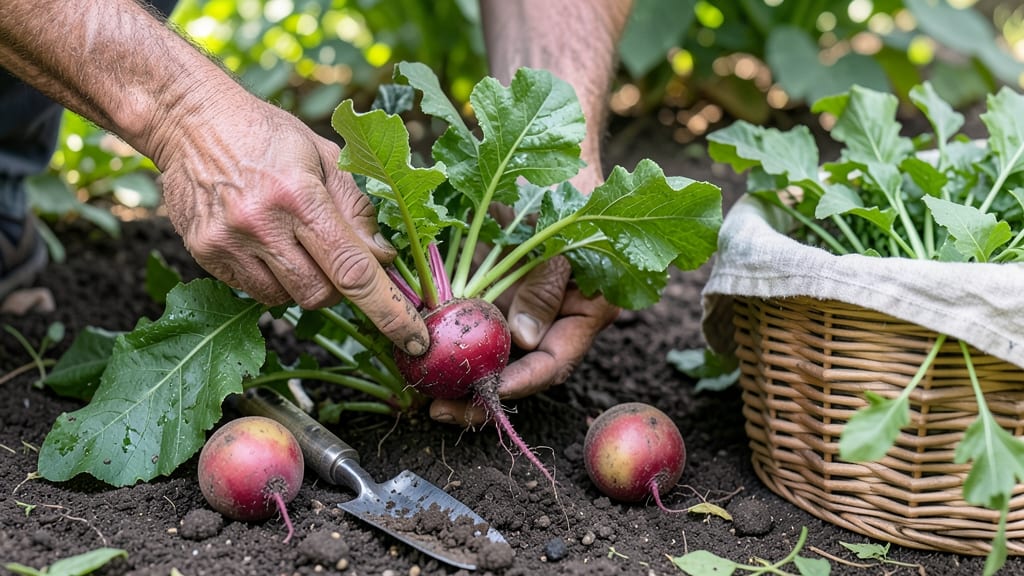
To pick beets from your garden at their sweetest, time it right when roots are 1-3 inches wide and leaves reach 4-6 inches tall—any later and they’ll turn tough and woody.
Imagine sinking your fingers into the soil and pulling up a vibrant 🍠 with deep, glossy skin—only to realize it’s past its prime because you waited too long. That’s the difference between a tender, flavorful harvest and a bitter disappointment.
Most beet varieties hit peak sweetness 60-70 days after planting, but color and size vary by type. Detroit beets, for example, are ready when their shoulders turn bright red, while Chioggia’s striped patterns deepen as they mature.
Below, I’ll walk you through the exact visual cues, seasonal timing, and how to check for tenderness so you never miss the perfect moment to harvest.


3 Visual signs your beets are ready for harvesting
Beets are one of those garden rewards where timing makes all the difference. Harvest too early, and you’ll end up with tiny, underdeveloped roots that lack sweetness. Wait too long, and they’ll become woody, tough, and bitter—or worse, bolt before you get a chance to enjoy them.
The key is learning to read your plants like a pro. Here are the three visual cues that tell you your beets are ready to pull from the soil.
First, pay attention to the size of the beet roots. For most varieties like Detroit Dark Red, the ideal harvest window is when roots reach about 1-3 inches in diameter.
If you’re growing Chioggia beets (the striped ones), aim for roots that are slightly larger—around 2-4 inches—since their intricate patterns develop fully at this size. Smaller than 1 inch, and they’re still too young; larger than 3-4 inches, and they risk becoming fibrous.
Next, check the foliage height and maturity. When the beet greens grow to about 4-6 inches tall, the roots below are typically ready. The leaves should look deep green and healthy, not yellowing or wilted.
For baby beets, you can harvest even earlier when the greens are just 2-3 inches tall—these are perfect for quick salads or pickling. Ignore this cue, and you might miss the sweetest window.
Finally, examine the skin color and texture. Mature beets develop a rich, consistent color—deep red, golden yellow, or vibrant stripes, depending on the variety. The skin should feel smooth and firm when gently pressed; if it gives slightly, it’s ready.
Pale or patchy color means they’re not fully matured yet, while overly tough skin signals overmaturity.
Pro tip: If you’re unsure, dig up one beet to test. Cut it open—if the center is deeply colored and tender, the rest are ready. If it’s still pale or fibrous, wait a few days.
This method works especially well for heirloom varieties, which can vary more in size and color.
Don’t forget that seasonal timing matters. In cooler climates, beets mature more slowly, so they may take longer to reach harvest size. Conversely, in hot summers, they might bolt before reaching full size.
Adjust your expectations based on your USDA zone—typically, beets are ready 60-70 days after planting, but this can shift by a week or two depending on weather.
Once you’ve mastered these visual cues, you’ll never again wonder when to pick beets from your garden. The difference between a sweet, tender beet and a woody, bitter one comes down to these simple checks. Grab your gardening gloves, and enjoy the harvest!
🌱
Optimal harvest windows by beet variety and season
Not all beets mature at the same pace, and seasonal temperatures dramatically impact their sweetness. Spring-planted beets in cooler climates develop slower but store better, while summer heat accelerates growth but can make roots tougher if harvested too late.
Understanding these patterns ensures you pick beets when their sugars peak and before they bolt.
Heirloom varieties like Chioggia (striped) and Detroit Dark Red (round) have distinct harvest windows compared to hybrids such as Boltardy (heat-tolerant). Below, I’ve broken down the ideal harvest times by type and season, so you can plan your garden for maximum flavor and storage potential.
Spring-planted beets benefit from cooler temperatures, which slow their growth and allow sugars to concentrate. Harvest Detroit Dark Red varieties in late June when their shoulders turn deep red—this signals peak sweetness.
In contrast, Chioggia beets mature faster in spring, so check their striped patterns for deepening colors by early June.
Summer heat changes the game entirely. Hybrid varieties like Boltardy thrive in warmer months because they resist bolting, but you’ll need to harvest them earlier to avoid tough, fibrous roots.
Aim for early August for the best balance of size and tenderness. Always test for doneness by gently squeezing the root—it should yield slightly but feel firm.
Fall-planted beets often produce sweeter roots because cooler nights slow growth and boost sugar development. If you’re growing a second crop, start seeds in late August for a harvest in October. These late-season beets store exceptionally well, making them ideal for winter root cellars.
Pro tip: Morning harvests in summer prevent beets from overheating, which can make them bitter. Pull them early in the day, rinse gently, and store in a cool, dark place (50-55°F) to preserve freshness for up to a month.