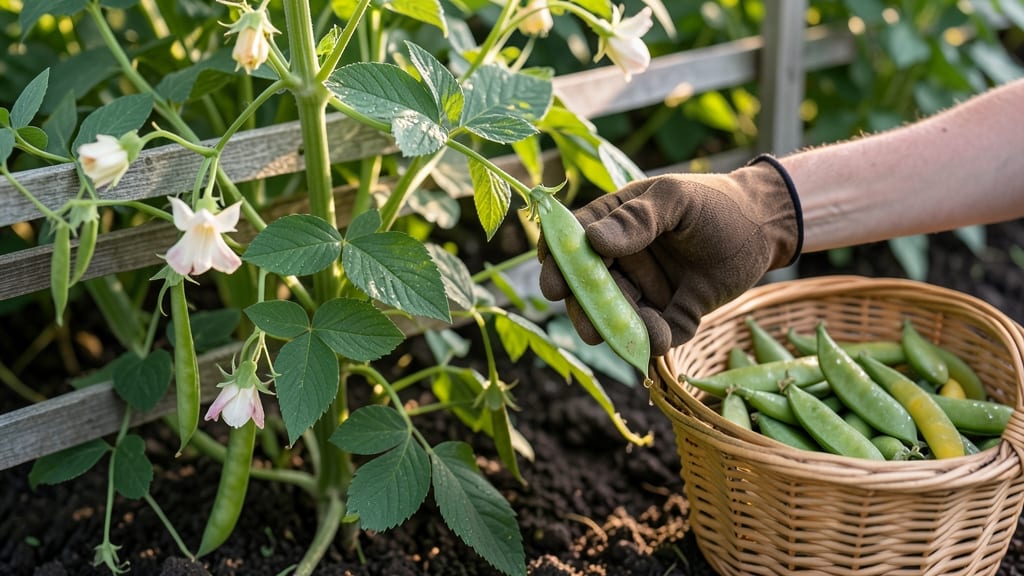
To pick peas from your garden at the perfect moment, watch for pods that are 2-2.5 inches long and bright green—this is when they’re sweetest and most tender.
Peas are one of the fastest-growing vegetables in your garden, but timing their harvest wrong can mean the difference between sweet, tender pods and tough, stringy failures. Knowing exactly when to pick peas—before they overmature—ensures a bountiful harvest packed with flavor.
You’ll want to check your 🌱 peas every 2-3 days once they start flowering, as they ripen quickly. The key is to harvest them before the pods start to swell with seeds or turn yellowish, which signals they’ve passed their prime.
Here’s what you’ll learn: how to test ripeness with a simple squeeze, the best time of day to pick for freshness, and how often to harvest to keep your plants producing all season. Let’s make sure your pea harvest is as productive as it is delicious!
❌ Not Ready
🟢 Pods are small and under 1 inch long
🟡 Pods are pale green or yellowish
💦 Pods feel soft or mushy when squeezed
✓ Pick Now!
🟢 Pods are 2-2.5 inches long and firm
✅ Pods are bright green and glossy
🌱 Seeds inside are visible but not overly large
How to test pea pod ripeness: the squeeze method and visual clues
Harvesting peas at the perfect moment transforms your garden into a flavor factory. The key lies in mastering two simple techniques: the squeeze test and visual inspection. These methods ensure you pick peas when they're sweetest and most tender—before they turn tough or stringy.
For shelling peas, timing is especially critical since overripe pods develop thick skins and large seeds that compromise texture.
Start by examining the pod size. Ideal harvest size varies slightly by variety, but most gardeners aim for pods that are 2 to 2.5 inches long. Smaller pods (under 1 inch) are underdeveloped, while larger ones signal overmaturity.
Pay attention to the pod shape too—it should be plump and evenly rounded, not elongated or swollen with seeds.
Now for the squeeze method: Gently press a pod between your thumb and forefinger. A perfectly ripe pea pod should yield slightly under pressure but not feel mushy or split open. If it feels too firm, it's not ready; if it's soft or leaking, it's past its prime.
This tactile check is your secret weapon against stringy peas, which develop when pods mature too long.
Color is another critical clue. Bright green pods with a slight glossy sheen indicate peak ripeness. Look for vibrant, uniform coloring—no yellowing or brown spots. For snow peas, the pods should be flat and bright green, while snap peas will be slightly thicker but still crisp.
Dull or fading colors are red flags for overripe pods.
Here’s where many gardeners go wrong: they wait until the pods look "full" but forget to check the seed development. Inside a perfectly ripe pod, seeds should be visible but not overly large.
If you can see distinct, plump seeds through the pod wall, it’s time to harvest. Overlooking this detail leads to tough, fibrous peas that ruin even the best recipes.
🌱 Pro Tip: Harvest peas in the morning when they’re cool and crisp. This timing preserves their freshness and makes the squeeze test more reliable. Avoid harvesting after rain, as wet pods can feel softer than they actually are.
| Pea Type |
Pod Size |
Color |
Texture |
Seed Visibility |
Harvest Time |
| Shelling Peas |
2-2.5 inches |
Bright green |
Firm, yields slightly |
Visible, small |
60-70 days |
| Snap Peas |
1.5-2 inches |
Bright green |
Crisp, snaps cleanly |
Visible, tiny |
55-65 days |
| Snow Peas |
2-3 inches |
Bright green |
Flat, tender |
Visible, small |
60-70 days |
| Overripe Peas |
3+ inches |
Dull green/yellow |
Mushy, tough |
Large, hard |
Pea harvesting frequency and best practices to maximize yield
Harvesting peas at the right time isn't just about getting a few pods—it's about unlocking your garden's full potential. Shelling peas, snap peas, and snow peas all have different ideal harvest windows, but the golden rule is consistency.
When you pick regularly, you encourage plants to produce more pods for weeks, not just a single flush. For most varieties, this means harvesting every 2-3 days once pods appear.
Your pea plants will thank you with continuous production if you follow a simple routine: check for ready pods daily and harvest them immediately. Shelling peas should be picked when pods are 2-2.5 inches long and plump but before seeds bulge. Snap peas and snow peas need even tighter timing—they're ready when pods are 1.5-2 inches long and crisp.
Overlooking these cues means tough, fibrous pods that ruin the sweet flavor.
-
1
Shelling peas: Harvest when pods are 2-2.5 inches and bright green. Pick every 2-3 days to prevent overmaturity.
-
2
Snap peas: Ready at 1.5-2 inches with crisp texture. Harvest every 1-2 days for best flavor.
-
3
Snow peas: Pick when flat pods reach 2-3 inches and are tender. Harvest every 2 days to maintain sweetness.
-
4
Morning harvests: Always pick in the cool morning to preserve freshness and crispness.
-
5
Handle with care: Use clean scissors or pinch pods gently to avoid damaging vines.
Proper handling after harvest makes all the difference. Store peas in the fridge for up to 5 days in a perforated bag to maintain moisture. For long-term storage, blanch and freeze them—this locks in nutrients and flavor for months.
If you're growing dwarf varieties, you'll need to harvest more frequently since they produce pods faster than tall vines.
One common mistake gardeners make is waiting too long between harvests. If you let pods overmature, the plant will stop producing and focus energy on seed development. Instead, think of your pea patch like a self-renewing crop: the more you pick, the more it gives.
Even if you only have a few plants, consistent harvesting will keep them productive for 6-8 weeks.
For container gardening, the same rules apply, but watch your plants even more closely. Potted peas often ripen faster due to warmer soil temperatures. If you notice pods yellowing or drying on the vine, it's a sign you've missed the window.
Always prioritize frequency over quantity—small, regular harvests beat one big haul of tough peas.
Remember, the key to a successful pea harvest is observation and action. Spend just 10 minutes daily checking your plants, and you'll enjoy a steady supply of sweet, fresh peas all season long.
The effort pays off with better flavor, higher yields, and plants that keep producing until frost.
★★★★★4.8(9 reviews)
|