Planting
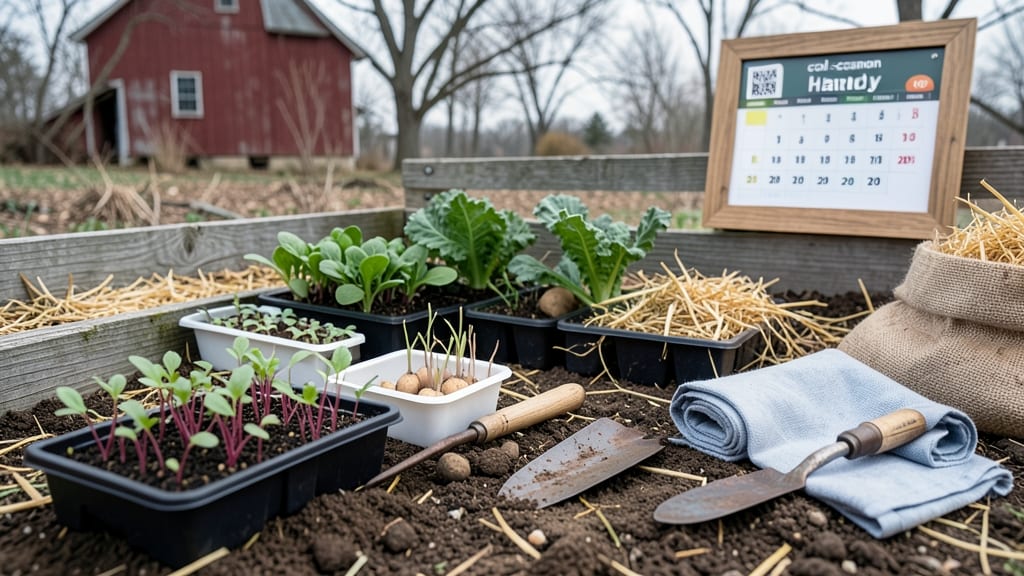
Planting a garden in Minnesota means timing your General Garden 🌱 just right—waiting until after the last frost in late April to mid-June to give your crops the best shot at thriving in Zone 3-5.
Miss that window, and a late frost can turn months of work into a sad pile of withered seedlings. But get it right, and you’ll enjoy a bounty of hardy veggies like potatoes, peas, and kale that actually make it to harvest.
The key is knowing your region’s frost dates, soil temperatures, and which crops play nice with Minnesota’s short growing season. I’ll break down the exact planting schedule for cool-season and warm-season crops, plus how to stretch your season with row covers or cold frames.
By the end, you’ll know exactly when to plant, what to watch for, and how to adjust if Mother Nature throws you a curveball—because even in Minnesota, a little planning goes a long way.
Minnesota planting timeline by season: what to start when
Minnesota’s Zone 3B climate demands precision when planting—just 120-165 frost-free days mean every week counts. I’ve broken down the ideal month-by-month schedule to help you plant cool-season crops early, warm-season veggies at the perfect time, and extend your harvest with smart strategies like row covers and cold frames.
Let’s dive into what to start when to make the most of your short but productive growing season.
Start with cool-season crops like peas, spinach, and kale in late March to early April—they thrive in 40-50°F soil and can handle light frosts. These hardy plants give you an early harvest before warm-season crops like tomatoes and peppers can safely go in the ground.
For Zone 3B gardeners, timing is everything, so mark your calendar for these key milestones.
🌱 SUMMARY TABLE: Minnesota Planting Timeline
| Month | Cool-Season Crops | Warm-Season Crops | Extension Tips |
|---|---|---|---|
| March | Peas, spinach, kale, lettuce | Start indoors: tomatoes, peppers | Use cold frames for early starts |
| April | Radishes, carrots, onions, broccoli | Hardening off seedlings | Apply row covers for frost protection |
| May | Potatoes, beets, Swiss chard | Plant after last frost: cucumbers, beans | Monitor soil temps (50°F+ for warm crops) |
| June | Late cabbage, Brussels sprouts | Succession plant: lettuce, bush beans | Mulch to retain moisture and warmth |
| September | Spinach, arugula, radishes | None (too late for warm crops) | Use hoop houses to extend fall harvests |
In late May to early June, after the last frost (typically mid-May in most of Minnesota), it’s time for warm-season crops. Tomatoes, peppers, and squash need soil temperatures above 50°F and 6-8 hours of sunlight daily.
If your soil is still cold, use black plastic mulch to warm it faster. I always test soil temp with a soil thermometer—it’s a game-changer for avoiding failed plantings.
For extension strategies, row covers and cold frames are my go-to tools. They can push your last frost date back by 2-4 weeks in spring and extend your fall harvest by 4-6 weeks.
For example, I’ve grown spinach and kale well into November using a simple hoop house. Just ensure good airflow to prevent fungal diseases like powdery mildew.
Don’t forget succession planting—it’s how I keep my garden productive all season. After harvesting early peas or lettuce, I replant with radishes or bush beans to fill the gap. This technique maximizes your 120-165 frost-free days and ensures a steady supply of fresh produce.
Even in Zone 3B, with the right planning, you can enjoy homegrown veggies from May through October.
If you’re new to Minnesota gardening, start small with cold-hardy crops like potatoes, peas, and kale. These thrive in our cool springs and give you confidence before tackling heat-loving crops.
I began with just a 4x8-foot raised bed and now have a full 1,000-square-foot garden—all because I learned to work with (not against) our climate.
Pro tip: Keep a gardening journal to track your last frost dates and plant progress. Over time, you’ll notice microclimate differences in your yard—maybe your south-facing bed warms up faster than the north side.
Adjust your planting dates based on these observations. For example, I plant tomatoes two weeks earlier in my south-facing bed compared to the north side.
For fall planting, focus on cool-season crops again in late August to early September. Spinach, arugula, and radishes grow quickly and can be harvested before first frost (mid-October). I’ve even grown garlic
How to adjust planting dates for Minnesota’s unpredictable frost dates
Minnesota’s frost dates can shift by weeks, leaving gardeners scrambling to adjust planting schedules. The average last frost date for most of the state falls between May 10-20, but urban areas like Minneapolis often see frost 2-3 weeks later than rural zones.
To avoid losing your cool-season crops like spinach or warm-season favorites like tomatoes, I’ve developed a foolproof system for calculating safe planting windows.
Start by checking the National Weather Service’s frost probability maps or your local University of Minnesota Extension resources. These provide historical frost data for your specific county—critical for adjusting planting dates.
For example, Zone 3B areas in northern Minnesota may have a last frost date as early as May 5, while southern Minnesota’s Zone 4B might not see frost until May 25.
Always err on the side of caution by waiting 2 weeks past the average last frost date for warm-season crops.
⚠️ callout warning
Minnesota’s frost dates aren’t set in stone! Urban areas (like Minneapolis) often see frost 10-14 days later than rural zones due to the urban heat island effect. If you’re planting near concrete or pavement, wait 3 weeks past the average last frost date for heat-loving crops like peppers or eggplants. For rural gardens, stick to the 2-week buffer rule. Always monitor soil temperatures—most warm-season crops need soil at 55°F+ to thrive.
Microclimates play a huge role in Minnesota gardening. A south-facing slope or sunny garden bed can warm up 2-3 weeks faster than a shady spot. I recommend planting early cold-hardy crops like peas or lettuce in these warm microclimates 2 weeks before the average last frost date.
For warm-season crops, use row covers or cold frames to extend the season by 3-4 weeks—just remove them when plants are established to avoid overheating.
Succession planting is your best friend when frost dates are unpredictable. Instead of planting all your bush beans or radishes at once, stagger plantings every 2 weeks from late May through early July. This ensures a continuous harvest even if an early frost hits.
For example, plant 50% of your lettuce seeds right after the last frost, then repeat every 14 days until July 1. This strategy also works for fast-growing crops like radishes or spinach.
Choose frost-tolerant varieties to give yourself flexibility. Crops like Swiss chard, kale, and potatoes can handle light frosts down to 25°F, while broccoli and cabbage tolerate 20°F with minimal damage.
For warm-season crops, opt for early-maturing varieties like ‘Early Girl’ tomatoes (55 days to harvest) or ‘Black Beauty’ eggplants (65 days). These give you a better chance of harvesting before the first frost in mid-October.
If all else fails, prepare for frost with protective covers. Lightweight floating row covers can raise temperatures by 5-8°F, while hoop houses or cloches add 10-15°F of protection.
I’ve saved entire tomato plants from 28°F frosts using clear plastic tunnels—just remove them during the day to prevent overheating. For extreme cold snaps, use old blankets or cardboard draped over plants for 24 hours.