Planting
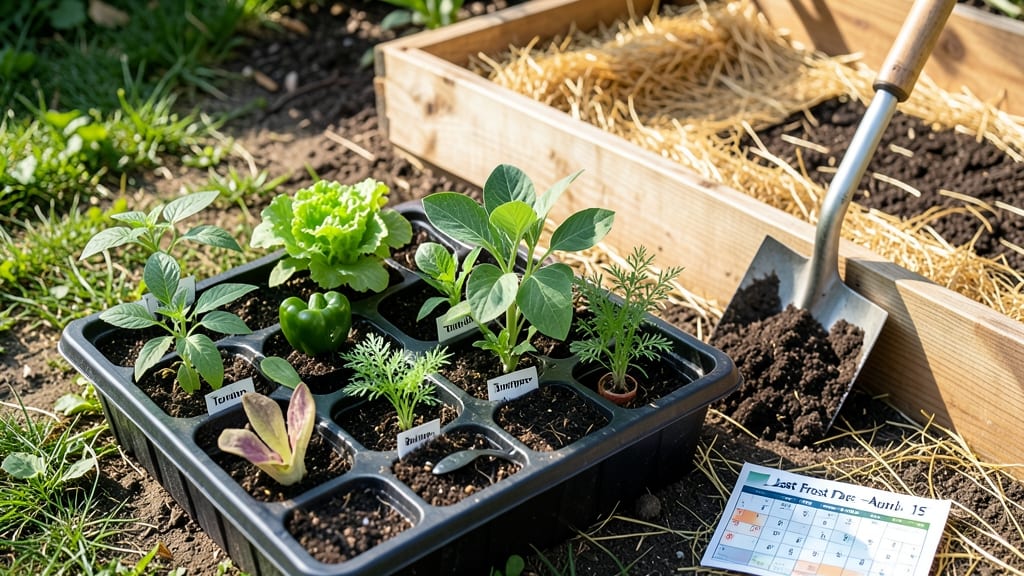
To plant a vegetable garden in Missouri, time your cool-season crops 4-6 weeks before your last frost date—typically by early March in Zone 5b or late February in Zone 7a 🥬.
Missouri’s unpredictable frost dates can make or break your vegetable garden—plant too early, and you risk losing your harvest to late frosts; too late, and you miss peak yields. Timing is everything, and knowing the exact frost dates by crop type is your secret weapon for a thriving garden.
This isn’t just about avoiding frost—it’s about maximizing your growing season. In St. Louis (Zone 6a), for example, you’ve got a 120-150-day window between last and first frost, while Kansas City’s slightly shorter season demands smarter crop choices.
Whether you’re sowing spinach in February or tomatoes in May, getting the timing right means the difference between a bountiful harvest and a sad, wilted disappointment.
Below, I’ll break down the ideal planting windows for your region, share a foolproof frost-date calculator, and reveal the one trick that adds 2-4 extra weeks to your growing season—no greenhouse required.
Missouri frost dates by region: when to start planting cool- and warm-season vegetables
Missouri’s diverse climate zones create unique challenges for gardeners, especially when timing cool-season and warm-season crops. The last frost date in your area determines when to plant heat-loving vegetables like tomatoes and peppers, while the first frost signals the end of the growing season for delicate greens.
Without precise frost dates, you risk losing your hard work to unexpected freezing temperatures.
Missouri spans USDA Zones 5b through 7a, with regional variations that can shift frost dates by weeks. For example, Southeast Missouri (like Cape Girardeau) enjoys a longer growing season, while Northwest Missouri (like Kirksville) faces earlier frosts.
Understanding these differences ensures you plant at the optimal time for maximum yield and plant health.
Below is a detailed breakdown of frost dates by region, including last frost dates for cool-season crops and first frost dates for warm-season crops. Use this as your guide to plan your vegetable garden with confidence.
For cool-season crops like spinach, peas, and broccoli, aim to plant seeds 4-6 weeks before your region’s last frost date. This gives seedlings time to establish roots before the ground warms up.
For example, in St. Louis (Zone 6a), start planting cool-season crops by March 15 to ensure they’re ready by April 15.
Warm-season crops like tomatoes, peppers, and cucumbers need to wait until after the last frost date when soil temperatures reach at least 60°F.
In Southeast Missouri (Zone 7a), this typically means planting after April 20, while in Northwest Missouri (Zone 5b), wait until April 1 has passed. Use a soil thermometer to confirm readiness.
Microclimates can shift these dates by 1-2 weeks. For instance, a south-facing slope or urban heat island may warm up faster than the surrounding area. If you’re unsure, opt for frost-tolerant varieties or use row covers to extend your growing season.
Always monitor local weather forecasts, as late spring frosts can still occur.
Pro tip: Keep a gardening journal to track your local frost dates over the years. This helps you refine your planting schedule and adapt to climate shifts. Over time, you’ll develop a deeper understanding of your specific microclimate’s patterns.
By aligning your planting schedule with these frost date guidelines, you’ll minimize risks and maximize your vegetable garden’s productivity. Whether you’re growing heirloom tomatoes or crisp baby carrots, timing is the key to a successful harvest! 🌱
Best planting schedule for Missouri’s most popular vegetables: from seed to harvest timing
Missouri gardeners know timing is everything—especially when it comes to vegetable planting. The key to a bountiful harvest lies in understanding frost dates and crop-specific windows. For example, tomatoes and peppers need warm soil, while spinach and kale thrive in cooler temperatures.
Let’s break down the month-by-month schedule for Missouri’s top 12 vegetables, including succession planting tips to keep your garden productive all season.
Start with cool-season crops like lettuce and peas in early spring, then transition to warm-season favorites such as tomatoes and cucumbers after the last frost.
Missouri’s USDA zones 5b-7a mean frost dates vary—St. Louis typically sees its last frost around April 15, while Southeast Missouri can be a week earlier. Always check your local University of Missouri Extension resources for precise dates, but this schedule gives you a solid starting point.
Missouri-specific varieties like 'Missouri Golden' tomatoes and 'Burpee’s Bush Blue Lake' beans are bred to thrive in our climate. These varieties not only produce better but also resist common Missouri pests like tomato hornworms and squash vine borers. Pairing the right variety with the right timing maximizes your yield and minimizes stress on your plants.
Pro Tip: Use succession planting to stretch your harvest. For instance, sow bush beans every 2 weeks from June to July for a continuous supply. This technique works for lettuce, radishes, and carrots too. Even in Missouri’s short growing season, you can enjoy fresh produce for months!
| Vegetable | Planting Time (St. Louis) | Harvest Time | Missouri Variety | Succession Tip |
|---|---|---|---|---|
| Tomatoes | May 15 - June 1 (after frost) | July - October | 'Missouri Golden' | Sow seeds indoors 6-8 weeks before last frost |
| Peppers | May 1 - May 15 (after frost) | July - September | 'Carolina Wonder' | Use row covers for early starts |
| Lettuce | March - April, August - September | May, October | 'Black Seeded Simpson' | Sow every 2 weeks for continuous harvest |
| Beans (Bush) | June - July | July - September | 'Blue Lake' | Plant every 2 weeks for extended harvest |
| Carrots | March - April, August | June, October | 'Danvers' | Thin seedlings to 2 inches apart |
| Cucumbers | May 15 - June 1 | July - September | 'Straight Eight' | Train vines on trellis for space-saving |
| Spinach | March - April, August - September | May, October | 'Bloomsdale Long Standing' | Harvest outer leaves to prolong production |
| Squash (Zucchini) | May 15 - June 1 | July - September | 'Golden Zucchini' | Plant 3-4 seeds per hill for better pollination |
| Peas | March - April | May - June | 'Sugar Snap' | Use trellis for vertical growth |