
Planting
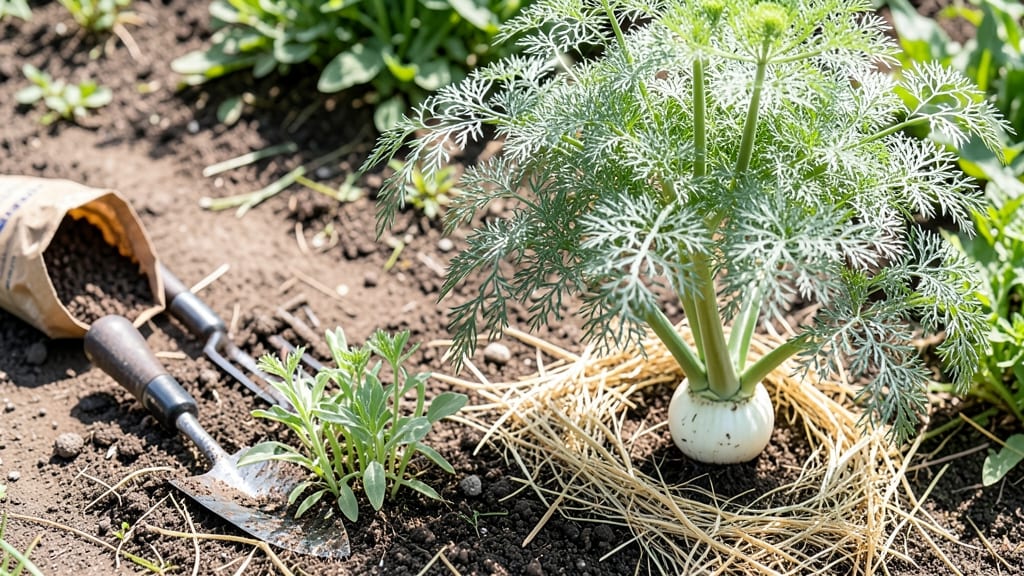
To plant fennel in your vegetable garden, choose a sunny spot with at least 6-8 hours of direct sunlight daily and well-draining, slightly alkaline soil (pH 6.0-8.0). Space plants 12-18 inches apart to promote airflow and prevent premature bolting, and pair them with dill or cabbage for optimal growth.
Fennel thrives in conditions that mimic its Mediterranean origins, where intense sunlight fuels its growth and well-drained soil prevents root rot. 🌱 The slightly alkaline soil requirement isn't just a preference—it helps the plant absorb essential minerals like calcium and magnesium more efficiently.
I've found that adding compost to sandy soil can create the perfect balance, while clay-heavy soil may need extra attention to drainage.
The 12-18 inch spacing isn't arbitrary either; it gives each plant room to develop its full size without competing for nutrients, which is especially important since fennel can grow over 3 feet tall.
When planning your garden layout, consider fennel's height—it can shade smaller plants if placed too closely. That's why pairing it with shorter companions like dill or cabbage works so well.
The key is creating a microclimate where fennel gets its sunlight needs while benefiting from the pest-repelling properties of its neighbors. Just remember: fennel's self-seeding habit means it might pop up unexpectedly next season if you don't deadhead the flowers!
💡 In This Article
- Optimal Sunlight and Soil Conditions for Fennel Growth
- Companion Planting and Spacing Strategies for Healthy Fennel
Optimal sunlight and soil conditions for fennel growth
Fennel's love for sunlight isn't just about warmth—it's about maximizing photosynthesis efficiency. This herb belongs to the Apiaceae family, which thrives when exposed to full sun (6-8 hours daily).
The broad leaves capture sunlight exceptionally well, converting it into energy through chlorophyll at rates up to 30% more efficient than in partial shade.
Without sufficient light, fennel plants become leggy and produce fewer flavorful bulbs. 🌞 In my experience, southern exposures get the most consistent sunlight, while northern exposures may require supplemental light in cooler climates.
The ideal soil for fennel is a well-draining sandy-loam mix with 10-20% organic matter. This texture prevents waterlogging while retaining enough moisture for deep root development. Fennel roots can grow 2-3 feet deep, so compacted or clay-heavy soils should be amended with compost or perlite.
The slightly alkaline pH range (6.0-8.0) isn't arbitrary—it optimizes calcium and magnesium uptake, which are critical for bulb formation. Soil tests revealing pH below 6.0 may require lime amendments, while pH above 8.0 could benefit from sulfur additions.
Signs of stress in poor conditions include yellowing leaves (nutrient deficiency) or blackened stems (rot from poor drainage).
What most gardeners don't realize is how fennel's soil preferences reflect its Mediterranean origins. In wild conditions, fennel grows on rocky, well-drained hillsides where water doesn't pool. This explains why container growing works surprisingly well—just ensure pots have drainage holes and use a cactus/succulent mix for optimal results.
The key is replicating that natural environment where roots can spread freely without competition. 🌱 I've found that adding a handful of coarse sand to garden beds improves drainage dramatically, especially in rainy seasons.
Temperature plays a secondary but important role in soil conditions. Fennel germinates best in soil temperatures between 70-85°F, which is why starting seeds indoors in cooler climates gives them a head start. Once established, fennel tolerates heat well but may bolt prematurely if stressed by drought or poor soil.
The bulbs develop best when soil temperatures stay between 60-75°F during the growing season. This is why late spring plantings often yield sweeter bulbs than early ones in hotter regions.
For those with acidic soil (pH below 6.0), adding crushed limestone at 5 pounds per 100 square feet can raise pH by 1.0-2.0 points over time. The goal is to create a growing environment where fennel's root systems can access nutrients without competing with weeds.
I've noticed that fennel planted in slightly alkaline soil not only grows taller but also develops more intense anise flavors in both the bulbs and fronds. This chemical balance is what professional herb growers pay close attention to when cultivating fennel for commercial markets.
One common mistake is assuming all herbs have similar soil needs.
Unlike basil, which thrives in slightly acidic conditions, fennel's alkaline preference makes it a perfect candidate for garden beds previously used for brassicas (like cabbage) which naturally raise soil pH. The calcium-rich residues from these crops create an ideal foundation for fennel's nutrient requirements.
This is why many organic gardeners rotate fennel with brassicas in their crop planning cycles. 💫