
Tools
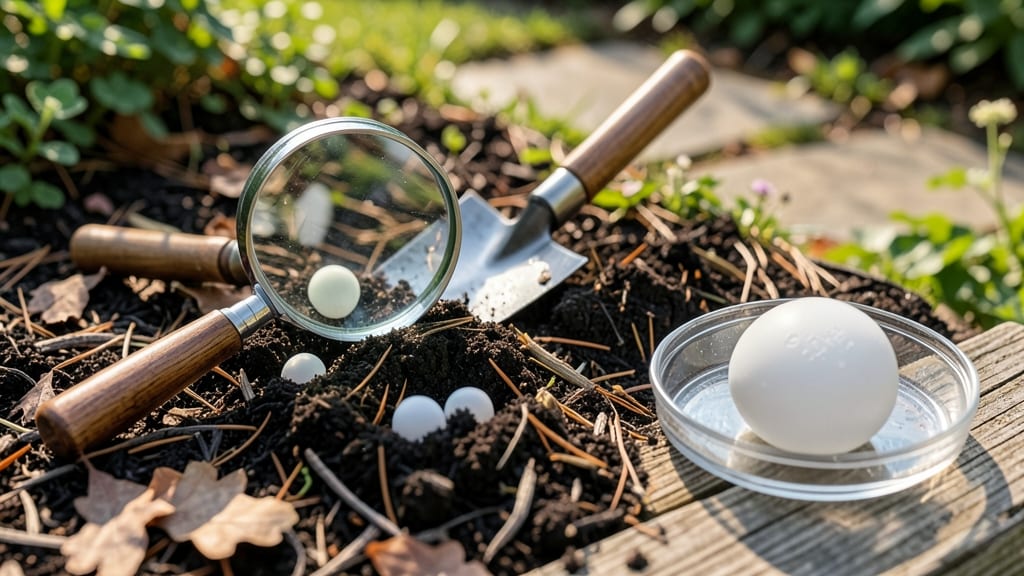
White balls in garden soil are typically harmless gypsum crystals or calcium deposits from water evaporation, but they can also be beneficial fungal nodules or signs of pest activity like grubs. Proper identification helps you decide whether to remove them or leave them for plant health.
These mysterious white specks form through different processes—some are natural byproducts of mineral-rich water drying in soil, while others indicate biological activity. 🌱 For example, gypsum crystals appear when calcium sulfate combines with water, while mycorrhizal fungi create nodule-like structures that actually boost root systems.
The key is examining their texture and location: smooth, chalky balls are usually harmless, but irregular shapes near plant roots might signal pest eggs needing intervention.
If you're unsure what you're dealing with, try a simple vinegar test: sprinkle white vinegar on the balls. Fizzing suggests calcium carbonate (safe), while no reaction could mean gypsum or organic matter.
For persistent issues, consider testing your soil's pH—high alkalinity often creates these deposits and may require organic amendments like compost or sulfur to restore balance.
💡 In This Article
- Identifying Common White Balls in Garden Soil
- How to Manage White Soil Balls for Healthy Plants
Identifying common white balls in garden soil
These white specks form through distinct chemical and biological processes. Gypsum crystals appear when calcium sulfate combines with water in alkaline soils, creating smooth, chalky 1-5mm spheres that dissolve slowly in water.
Calcium carbonate (lime) deposits form when hard water evaporates, leaving behind gritty, powdery residues that fizz when touched with vinegar. Mycorrhizal fungal nodules, on the other hand, develop as symbiotic relationships with plant roots, appearing as 2-10mm irregular white or beige growths with a slightly rubbery texture.
The formation process reveals their nature: gypsum and lime deposits occur in dry conditions where water evaporates, leaving minerals behind. 🌡️ In contrast, fungal nodules thrive in moist soil with active root systems, often appearing near the rhizosphere (root zone).
Pest eggs, like those from grubs, typically have a more organic, sometimes translucent appearance with visible segmentation under magnification. The key difference lies in their origin—mineral deposits are abiotic (non-living), while fungal nodules and eggs are biotic (living organisms).
Visual identification starts with texture: mineral deposits feel gritty or powdery, while fungal nodules have a slightly spongy consistency.
Location matters too—mineral deposits often appear on soil surfaces or in top layers, whereas fungal nodules cling to roots. 🔍 For precise identification, perform a vinegar test: sprinkle white vinegar on the sample. Fizzing indicates calcium carbonate (safe), while no reaction suggests gypsum or organic matter.
A microscope can reveal pest eggs with their characteristic segmented structures.
Soil pH plays a critical role in formation: gypsum thrives in pH 7.0-8.5 soils, while calcium carbonate dominates in pH 8.0+ environments. Fungal nodules prefer slightly acidic to neutral conditions (pH 6.0-7.5). Understanding these conditions helps predict what you're likely to find in your garden.
For example, sandy soils with hard water often develop lime deposits, while clay soils may accumulate gypsum due to their higher calcium content.
Consider the season too: mineral deposits become more visible during dry periods when evaporation accelerates. Biological activity like fungal growth peaks during warm, moist conditions. 🌱 This seasonal pattern can help narrow down the possibilities.
For instance, if you spot white balls after a dry spell, they're more likely mineral deposits. If they appear during active growing seasons, fungal nodules or pest activity become more probable.
Advanced gardeners often use a simple soil test kit to measure calcium, magnesium, and sulfate levels. High calcium readings often correlate with gypsum presence, while elevated pH suggests lime deposits.
These tests provide quantitative data to complement visual inspections. For example, a soil test showing 2,000+ ppm calcium with pH 8.2 strongly indicates lime deposits rather than gypsum.
Remember that some white balls are beneficial: mycorrhizal fungi enhance nutrient uptake by plants, while gypsum can improve soil structure in compacted areas. 🌿 The key is recognizing which type you're dealing with before deciding on action.
Mineral deposits generally require no intervention unless they create a hardpan, while fungal nodules should be preserved, and pest eggs need targeted removal.